Bayard Rustin warned bluntly that rising antisemitism in Black communities was both morally wrong and politically self-destructive, threatening to collapse the very coalitions that had advanced civil rights. He urged Black leaders to confront the issue directly, reminding readers of the long history of Jewish legal, political, and abolitionist support for Black freedom.
Historical Context:
By the mid-1960s, antisemitism was rising in Black communities. The Civil Rights Movement had fractured. Young Black activists were moving toward Black Power and away from the coalitions that had sustained the movement. Economic resentment at Jewish landlords and merchants in Black neighborhoods fed the antisemitism. Some Black Power advocates deliberately deployed anti-Jewish rhetoric. No one was stopping it. Black leaders were silent.
Rustin broke that silence. He refused to accept the nationalist argument that coalition was capitulation. He refused to treat antisemitism as a natural expression of Black frustration that should be tolerated. He insisted that Black people knew better. They had lived through prejudice. They knew what it did.
The fact that this article ended up in FBI files is not accidental. The government monitored Rustin constantly. His writings were collected. His speeches were transcribed. The FBI was not concerned that Rustin was calling for antisemitism. They were concerned that Rustin was organizing. That he was thinking strategically about power. That he was connecting Black liberation to international movements. That he advocated nonviolence but refused accommodation. His defense of multiracial coalition threatened power structures that depended on keeping Black and Jewish communities divided and weakened.
Description:
Bayard Rustin published this article in the Miami Times because antisemitism was spreading in Black communities and Black leaders were failing to address it. He did not write carefully or diplomatically. He wrote urgently, naming what he had warned about two years earlier: "It would be one of the great tragedies of Negro and Jewish experiences in a hostile civilization if the time should come when either group begins using against each other the same weapons of prejudice which the white majorities of the West have used for centuries."
Rustin was blunt. Antisemitism among Black people was not only morally wrong. It was politically suicidal. He acknowledged the source: frustration and desperation. But acknowledging the source was not excusing the behavior. Black leaders needed to speak to their communities now, before it was too late. If antisemitism took hold, the Black freedom struggle would collapse. The Catholic-Jewish-Protestant coalition that had delivered civil rights legislation would shatter. Black communities would lose their most dependable allies.
Rustin also made a statement about power. The moral authority of the Black struggle had rested on appeals to the Declaration of Independence and the Constitution. Antisemitism destroyed that authority entirely. It made the entire movement a lie. Black people could not afford to become what they were fighting against.
Rustin then did what American schools did not do: he provided historical facts. Jewish abolitionists fought slavery. Jewish lawyers won Supreme Court cases protecting Black voting rights. The Spingarn brothers ran the NAACP for decades. Louis Marshall argued cases before the highest court in the land and won. These were not sentimental gestures. This was material, legal, political power deployed on behalf of Black freedom
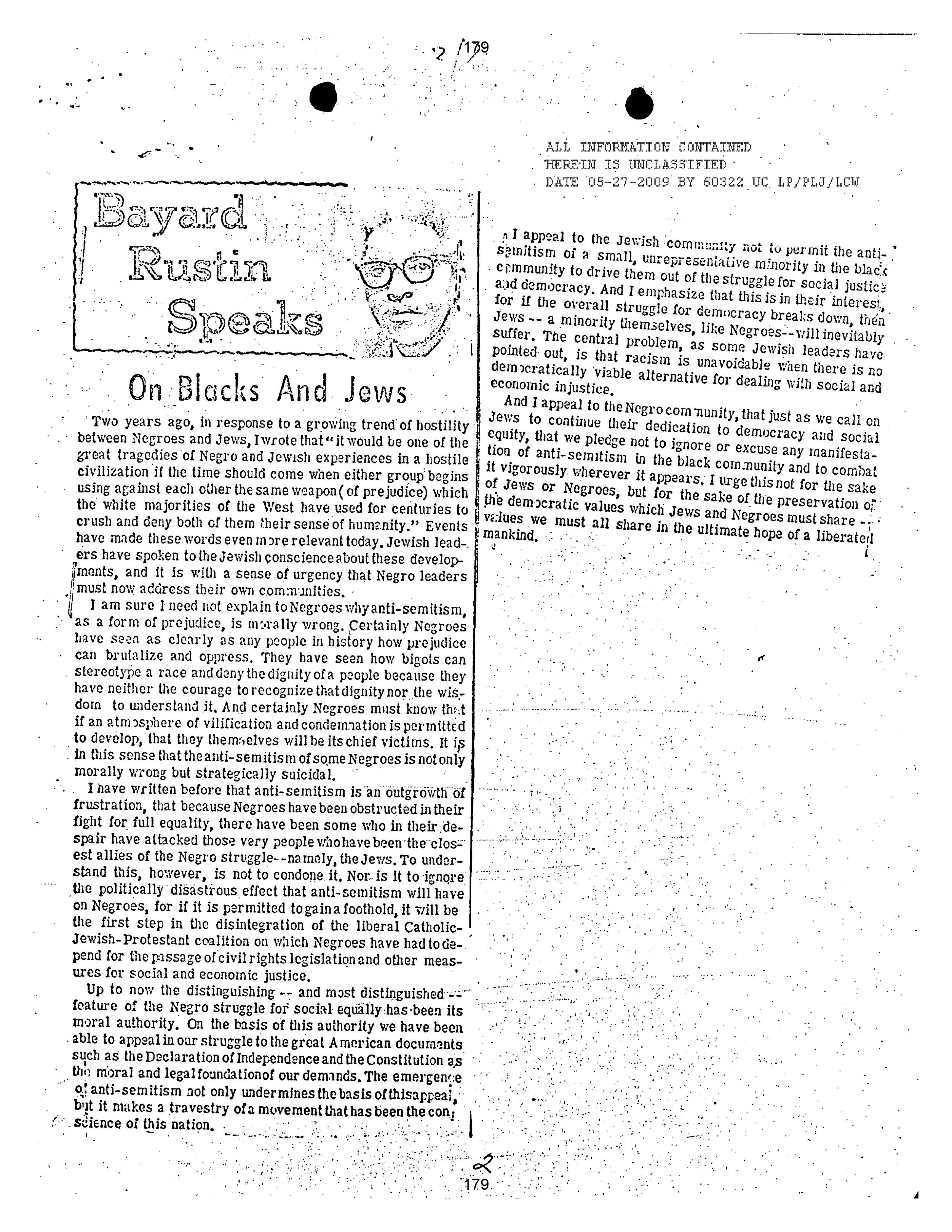
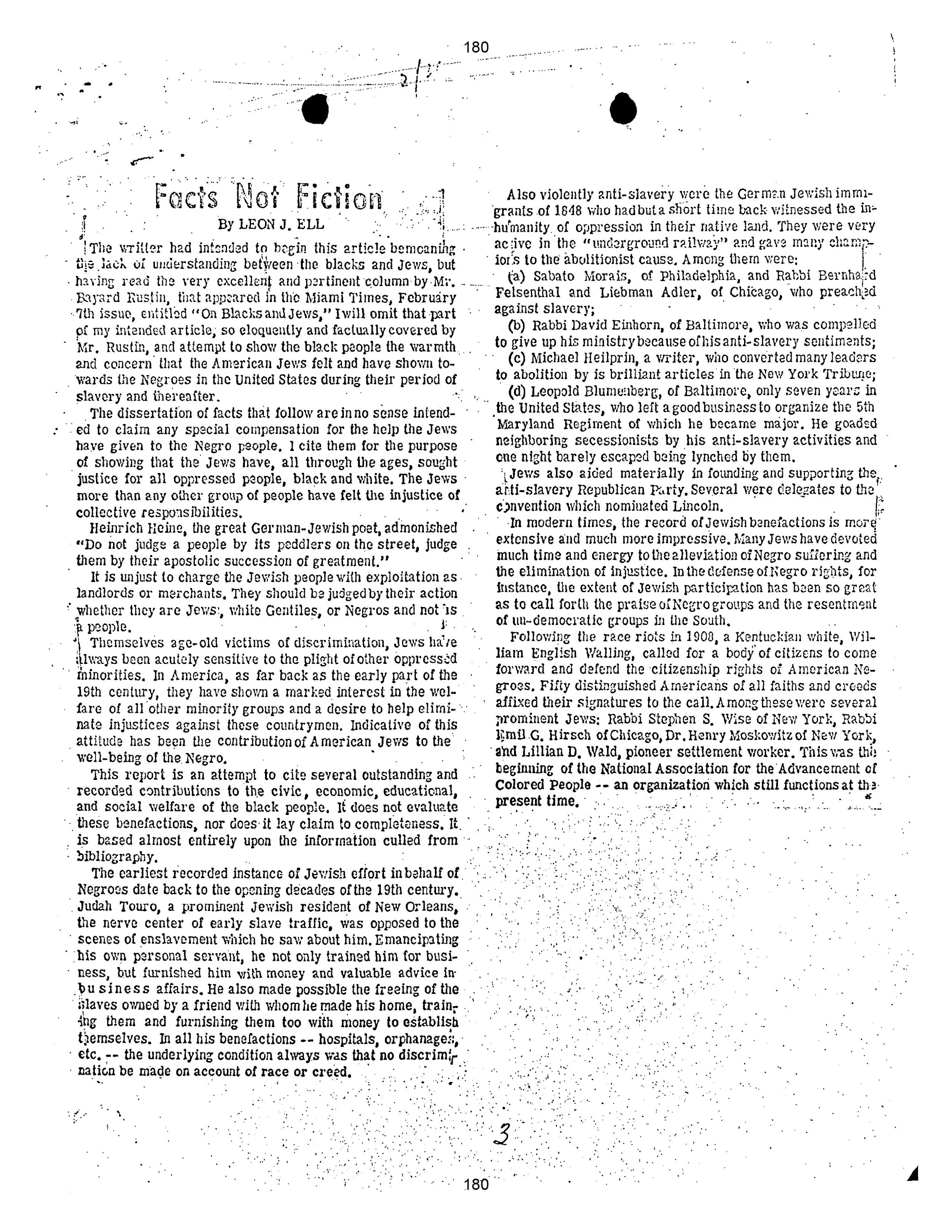
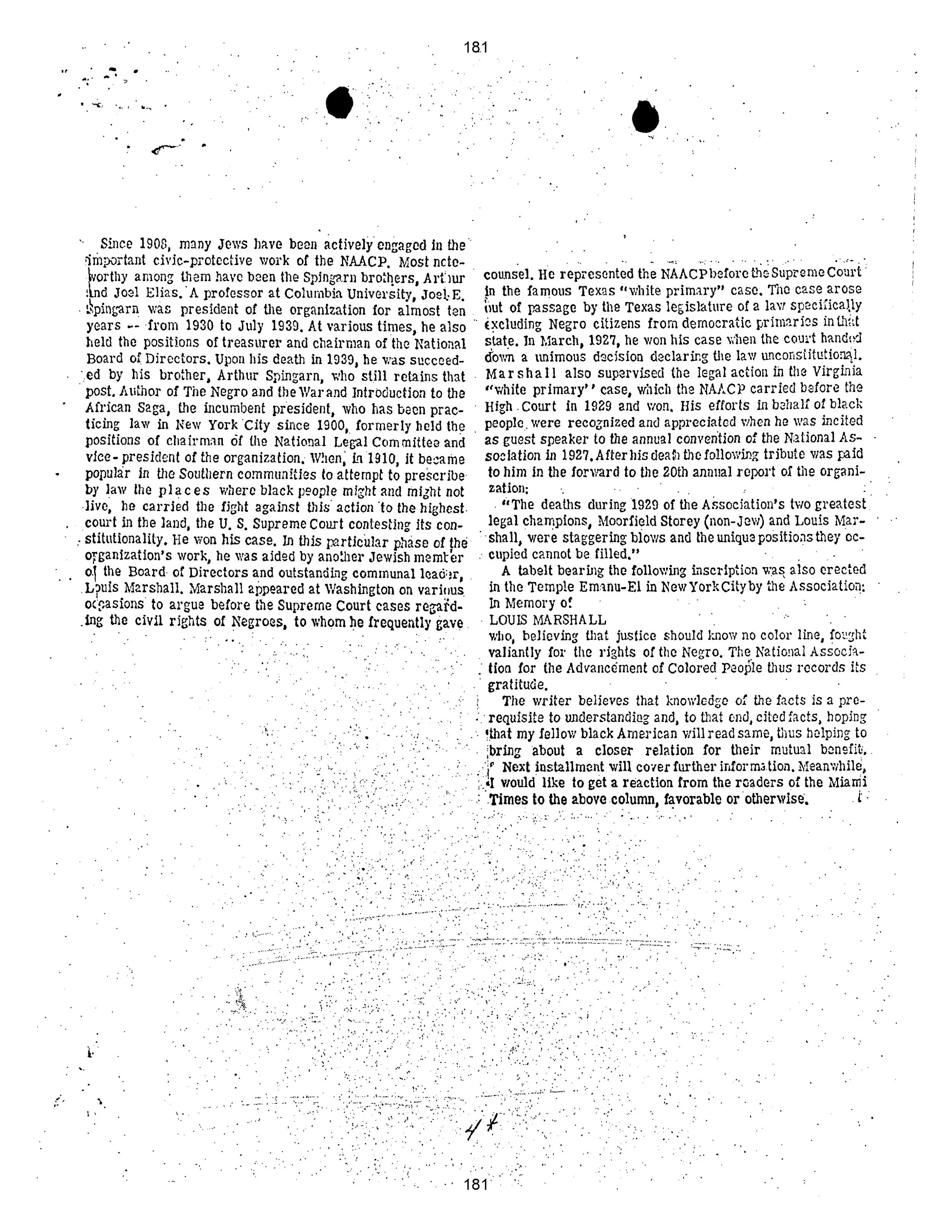
Rustin, Bayard. "On Blacks and Jews." Miami Times, February 7, 1967. Federal Bureau of Investigation File, declassified May 27, 2009.
