
Bayard Rustin formally demanded that the FBI release its extensive files on him under the Freedom of Information and Privacy Acts, acknowledging decades of government surveillance. The FBI responded with procedural delays, claiming his request was “incomplete” and requiring personal details the Bureau already possessed—revealing its continued resistance to accountability.
Description
On November 20, 1975, Bayard Rustin sent a formal demand to the FBI for the release of his personal records. Rustin wrote with the weary clarity of a man who knew he had been watched for decades, noting it had "come to my attention that the Federal Bureau of Investigation has maintained an extensive dossier on my political and private life during the past thirty years". He invoked both the Freedom of Information Act and the newly effective Privacy Act of 1974 to compel the agency to hand over everything they had on him.
The FBI’s response was characteristically bureaucratic. Internal memos show the New York Office immediately identified Rustin as the subject of multiple voluminous files, including one (25-17189) that had already been destroyed in 1961. J. Wallace La Prade, the Assistant Director in Charge, replied to Rustin on November 25, informed him that his request was "incomplete". The Bureau refused to begin processing the request until Rustin provided a notarized signature, his place of birth, and his date of birth to "establish his identity"—a transparently stalling tactic for an agency that had spent thirty years tracking his every move and already possessed those exact details in their indices.
Historical Context
By 1975, the tide was turning against the unchecked power of the American intelligence community. The Church Committee was beginning to expose the illegal surveillance of civil rights leaders, and the Privacy Act of 1974 had just gone into effect in September of that year. Rustin, ever the strategist, moved quickly to use these new legal tools to peel back the curtain on his own surveillance.
Rustin’s life was a masterclass in intersectional activism, and for the FBI, that made him a "perpetual" subject. They didn't just watch him because he was a "radical" or a "socialist"; they watched him because he was a Black man who refused to be silent, a pacifist who organized against war, and a gay man whose private life they hoped to weaponize against the movement. When Rustin mentions "thirty years" of surveillance, he is referencing a span of time that included his work with the Fellowship of Reconciliation, his role in the 1947 Journey of Reconciliation, and his orchestration of the 1963 March on Washington.
These documents highlight the Bureau’s shift from active "intelligence gathering" to a defensive, legalistic posture. Even as they acknowledged his right to see his files, they hid behind "Record Access Procedures" and administrative hurdles. The destruction of his 1961 file, noted in the internal memo, is a reminder of how much of the historical record was purged before the public ever gained the right to see it. This correspondence is not just a legal request; it is Rustin’s attempt to reclaim his own narrative from the state that tried to use his life as a weapon against his work.
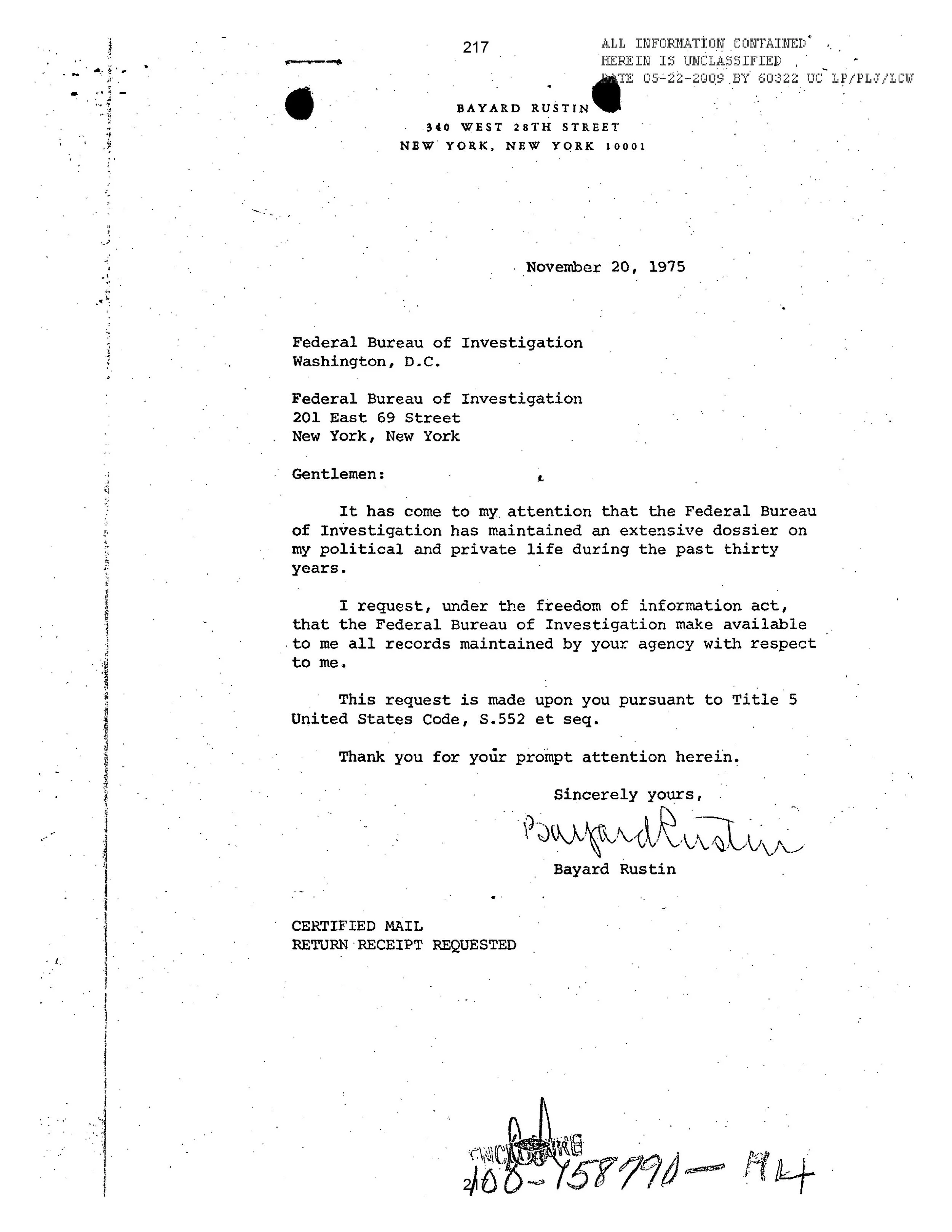
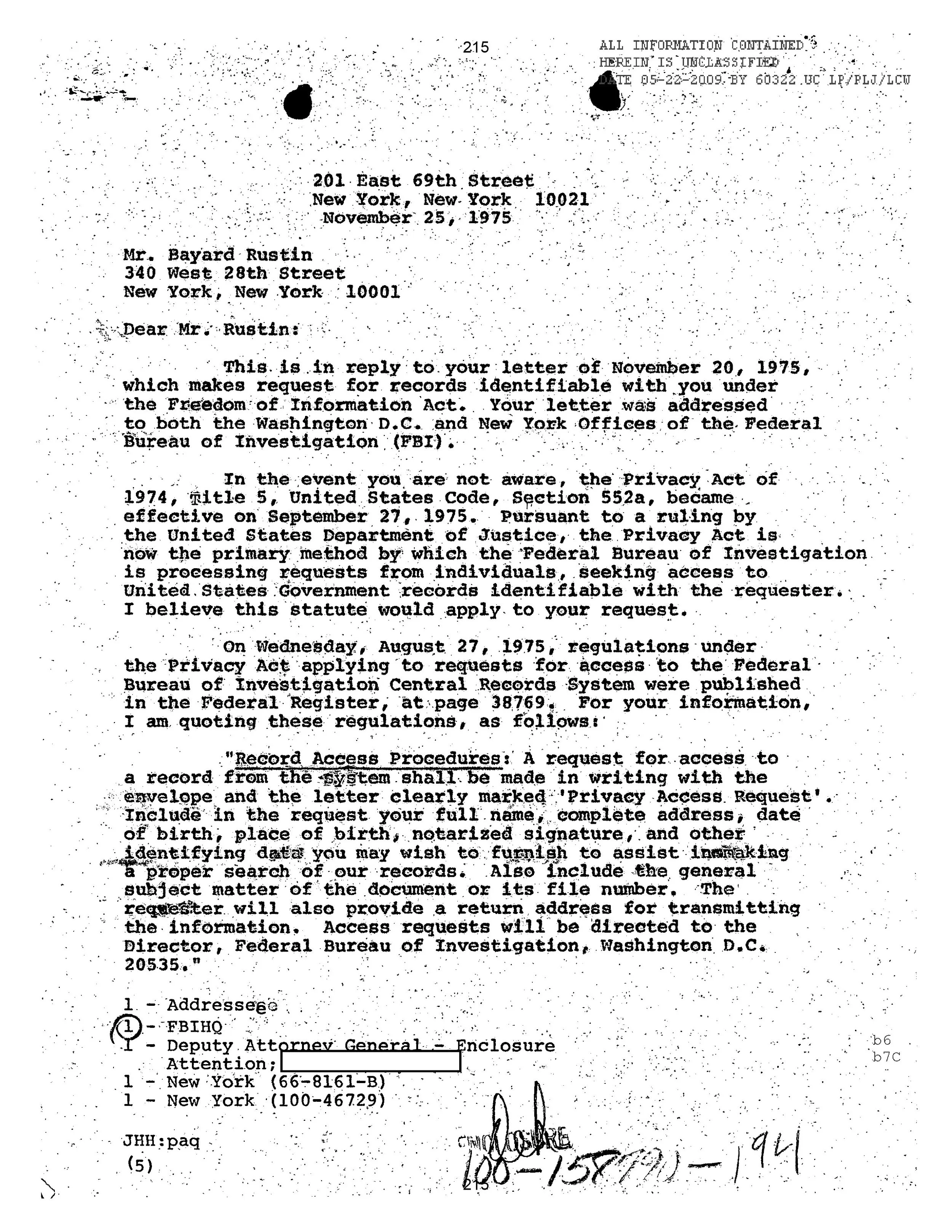
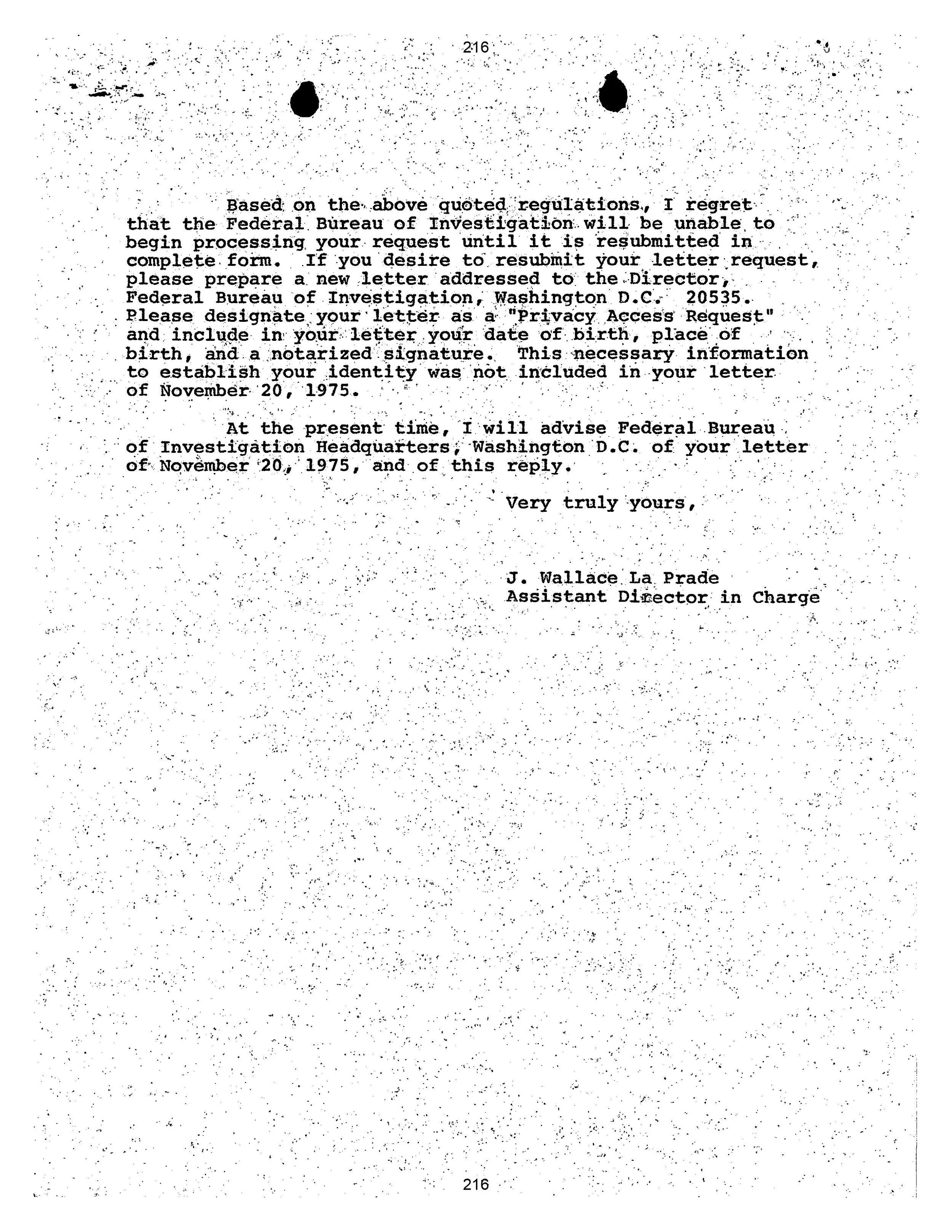
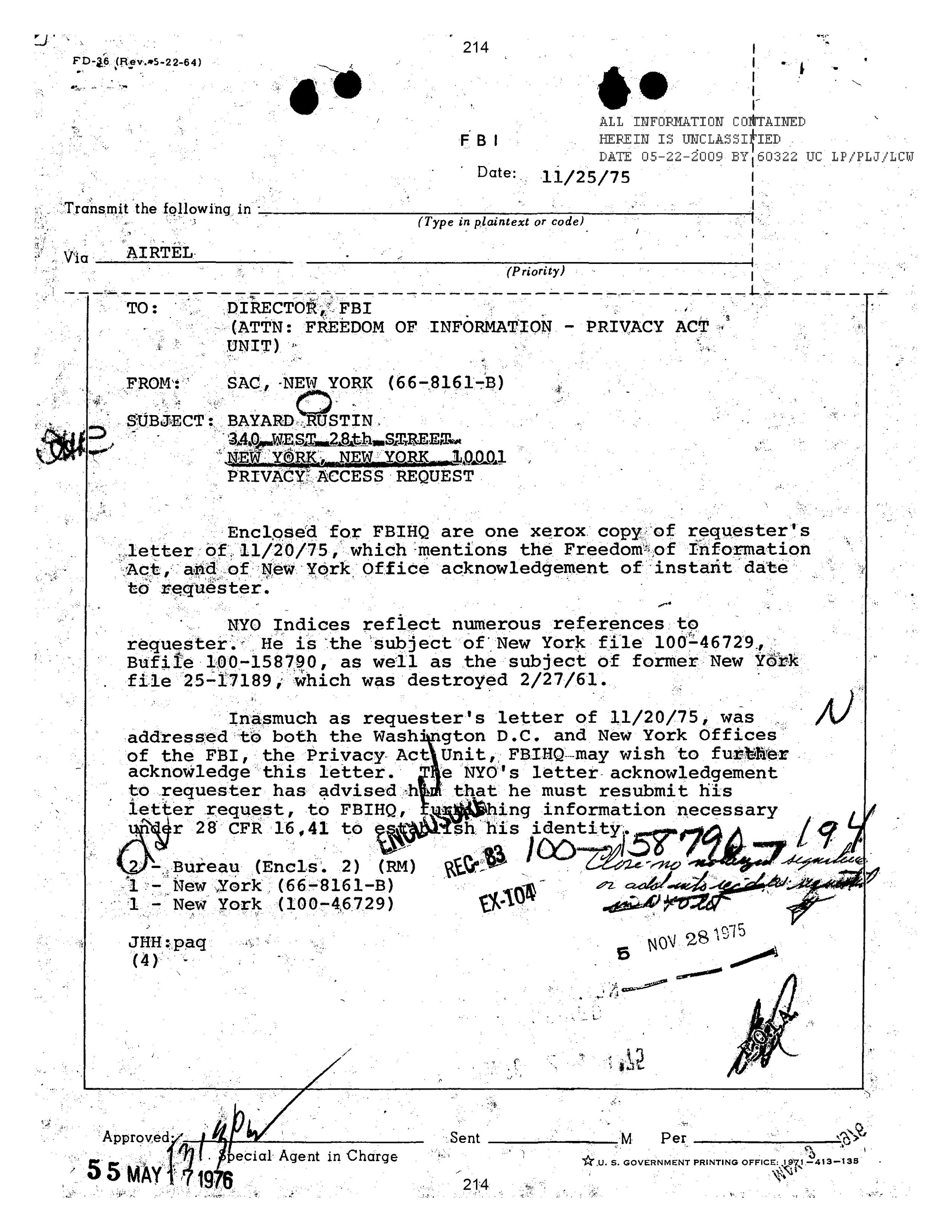
Rustin, Bayard. Letter to the Federal Bureau of Investigation. "Privacy Access Request." November 20, 1975. Federal Bureau of Investigation File 100-158790, declassified May 22, 2009.
