
Description
In this essay, Bayard Rustin explains that the civil rights movement reached a crossroads after the legal victories of 1964. He argues that while the movement successfully destroyed the "legal foundations of racism," these wins mostly affected public places like hotels and lunch counters, which were peripheral to the actual "conditions of life" for most Black Americans. Rustin identifies a transition from de jure segregation (legalized racism) to de facto segregation, a deeper systemic inequality rooted in the economy that cannot be fixed by moral appeals alone.
Rustin’s central theory is the "utility of politics," where the movement must shift its energy from "protest" to "responsibility." He believes that to solve the "enduring disappointment" of ongoing poverty, the movement must become a sophisticated political force capable of winning elections and shaping federal policy. He emphasizes that the "nature of politics" in a democracy requires moving beyond the streets and into the halls of power, where the movement can demand massive public works, national economic planning, and federal aid for education and housing.
To achieve this, Rustin champions coalition politics, insisting that Black Americans cannot achieve economic justice in isolation. He calls for a "triple alliance" between the civil rights movement, labor unions, and white liberals. Rustin argues that because the problems of the "Great Society," such as automation and unemployment, affect all poor and working-class people, the movement must build a broad interracial majority to force the government to move from a state of "competitive scarcity" to one of "abundance" for everyone.
Historical Context
Written just after the March on Washington and the passage of the 1964 Civil Rights Act, this pamphlet captures Rustin's attempt to lead the movement through what he called its "revolutionary" phase. By 1965, he recognized that the old tactics of sit-ins and freedom rides, while heroic, were no longer enough to address the "bedrock" issues of jobs and slums. This essay served as a strategic guide for transitioning from a "narrowly racial" struggle into a broad social-democratic movement for total economic reform.
The document also highlights the friction between coalition and nationalism that was beginning to pull the movement apart. While younger activists were moving toward "Black Power" and separatism, Rustin stood firm in his belief that such isolation was a "no-win" strategy. He insisted that the only way to gain real power was to find allies with shared interests, particularly in the labor movement, to create a political force strong enough to change the fundamental "flavor" of American society.
Ultimately, Rustin’s blueprint was an appeal for the movement to "grow up" and master the unglamorous work of political organizing. He believed that the Civil Rights Movement was the only force in America capable of truly pushing for a "Great Society," but only if it stayed committed to democratic institutions and interracial partnerships. This pamphlet remains a seminal statement on the interdependence of racial justice and economic planning, warning that without a seat at the political table, "dignity" remains a hollow victory for those still living in poverty.
Downloadable PDF.

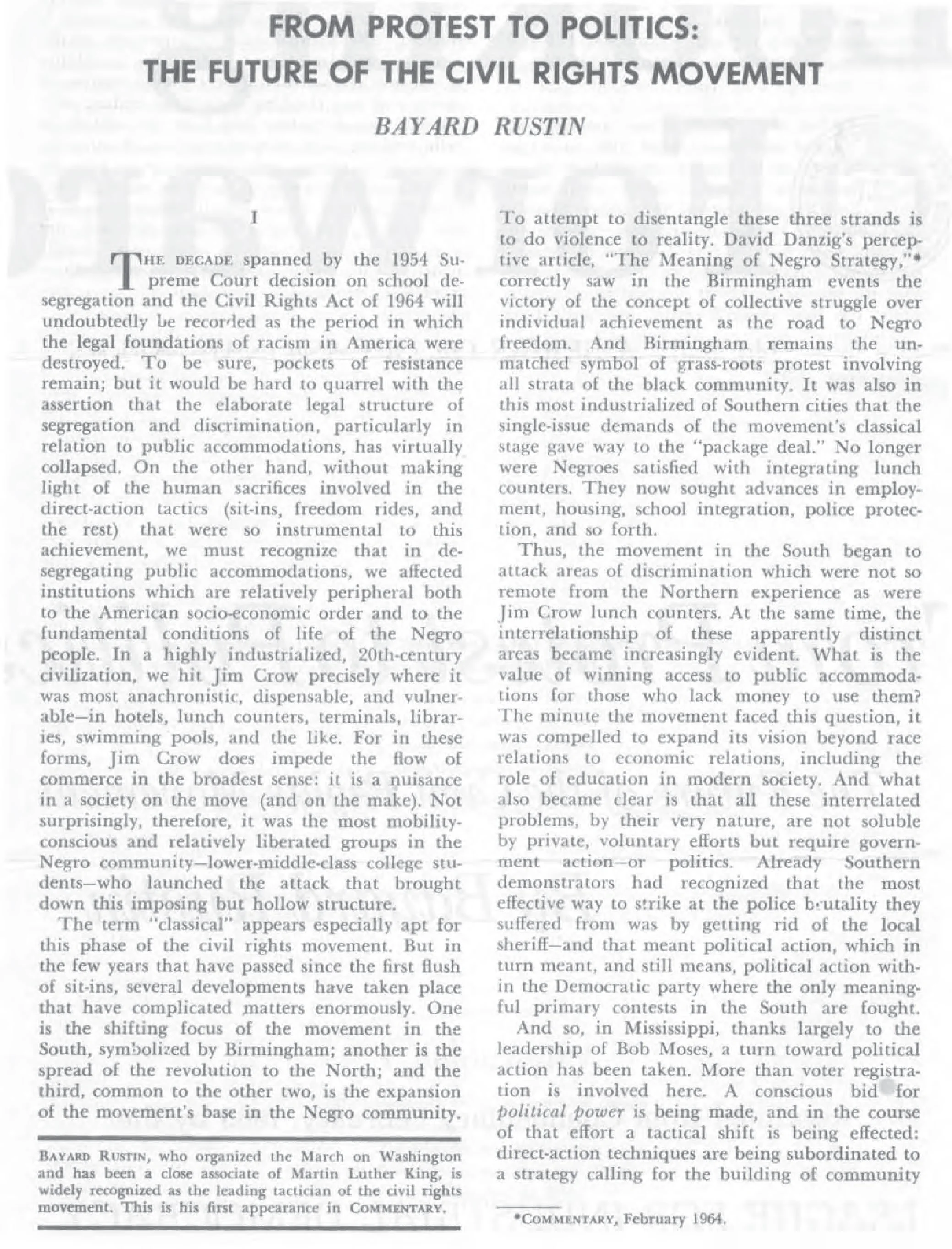
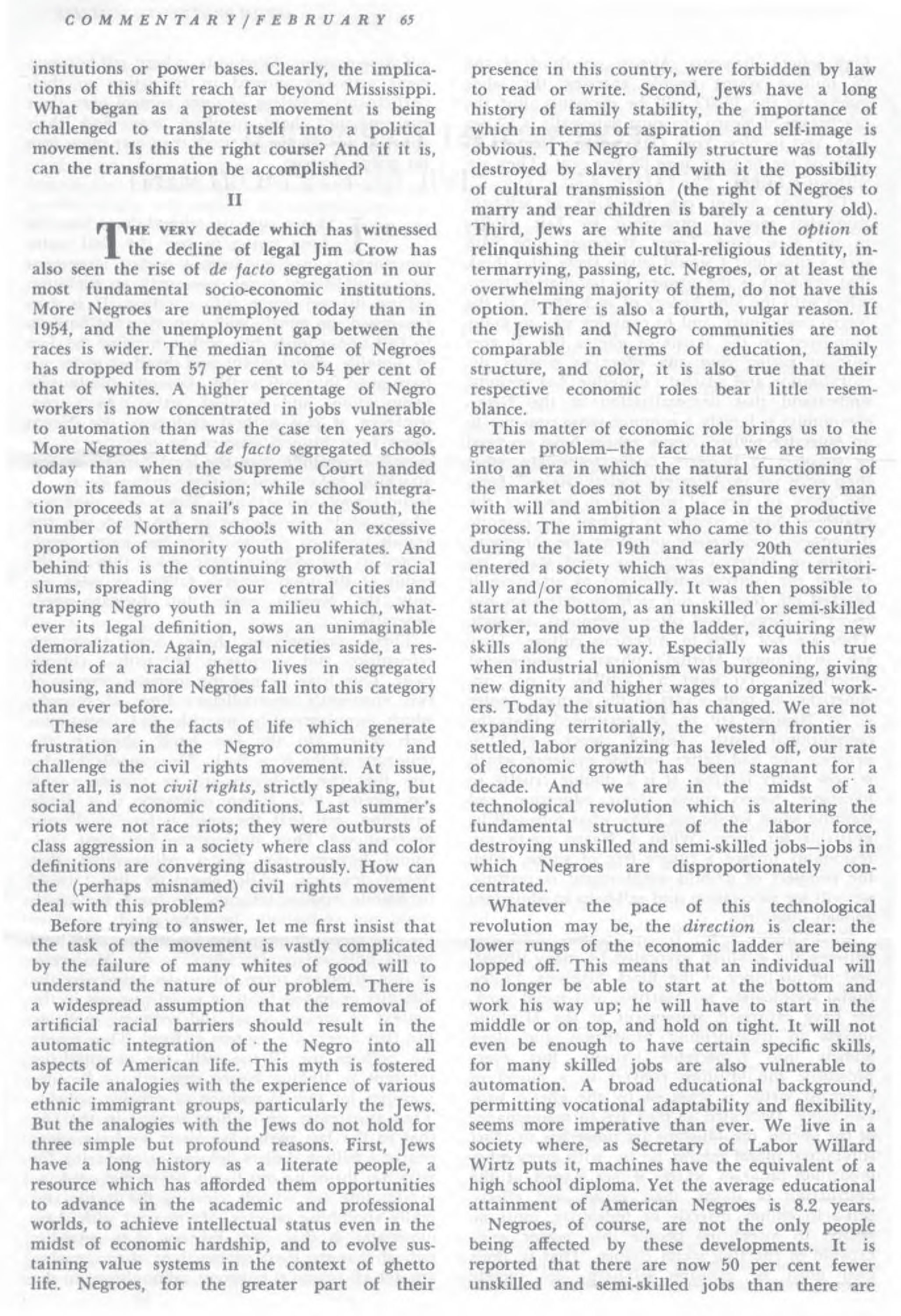

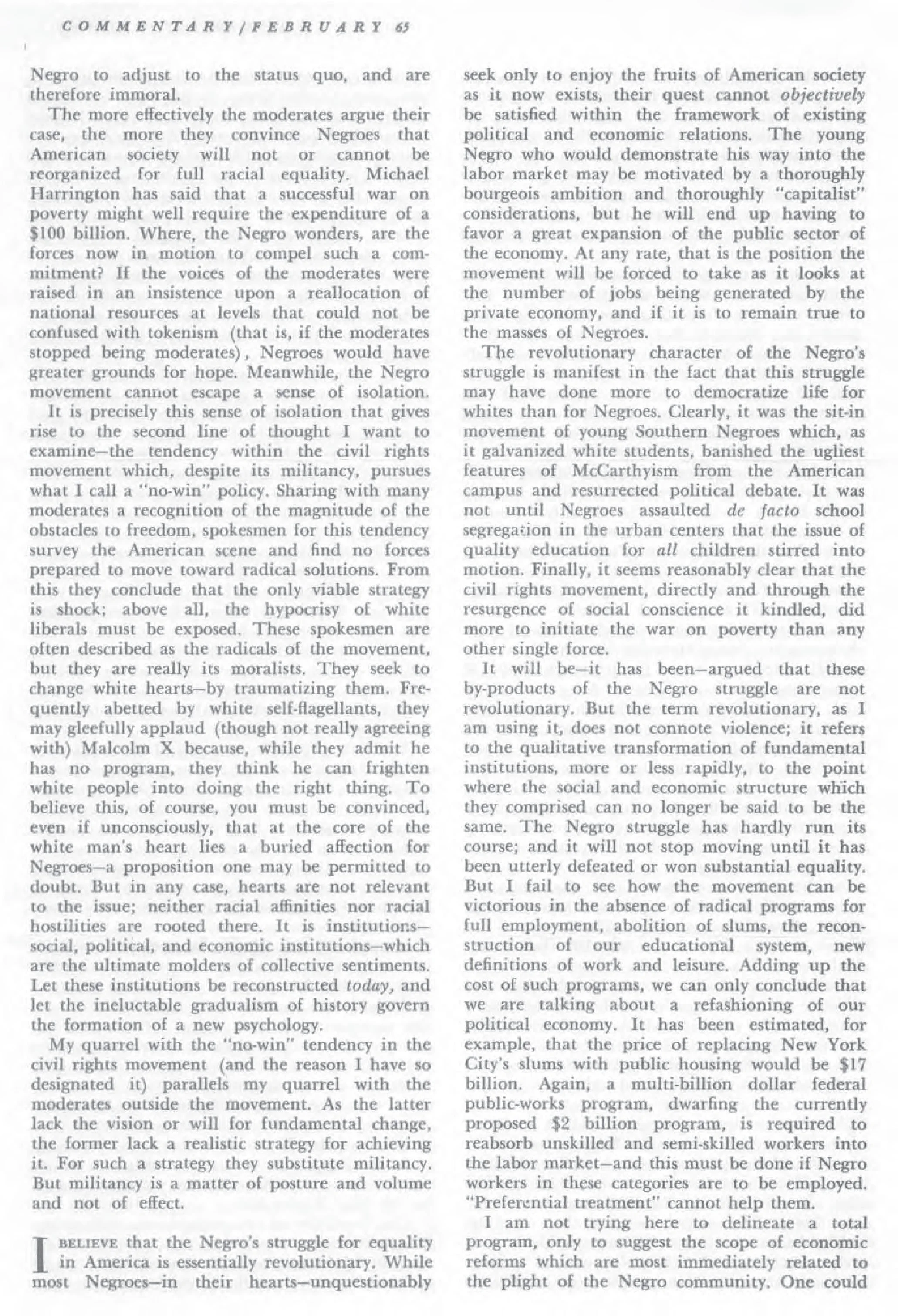


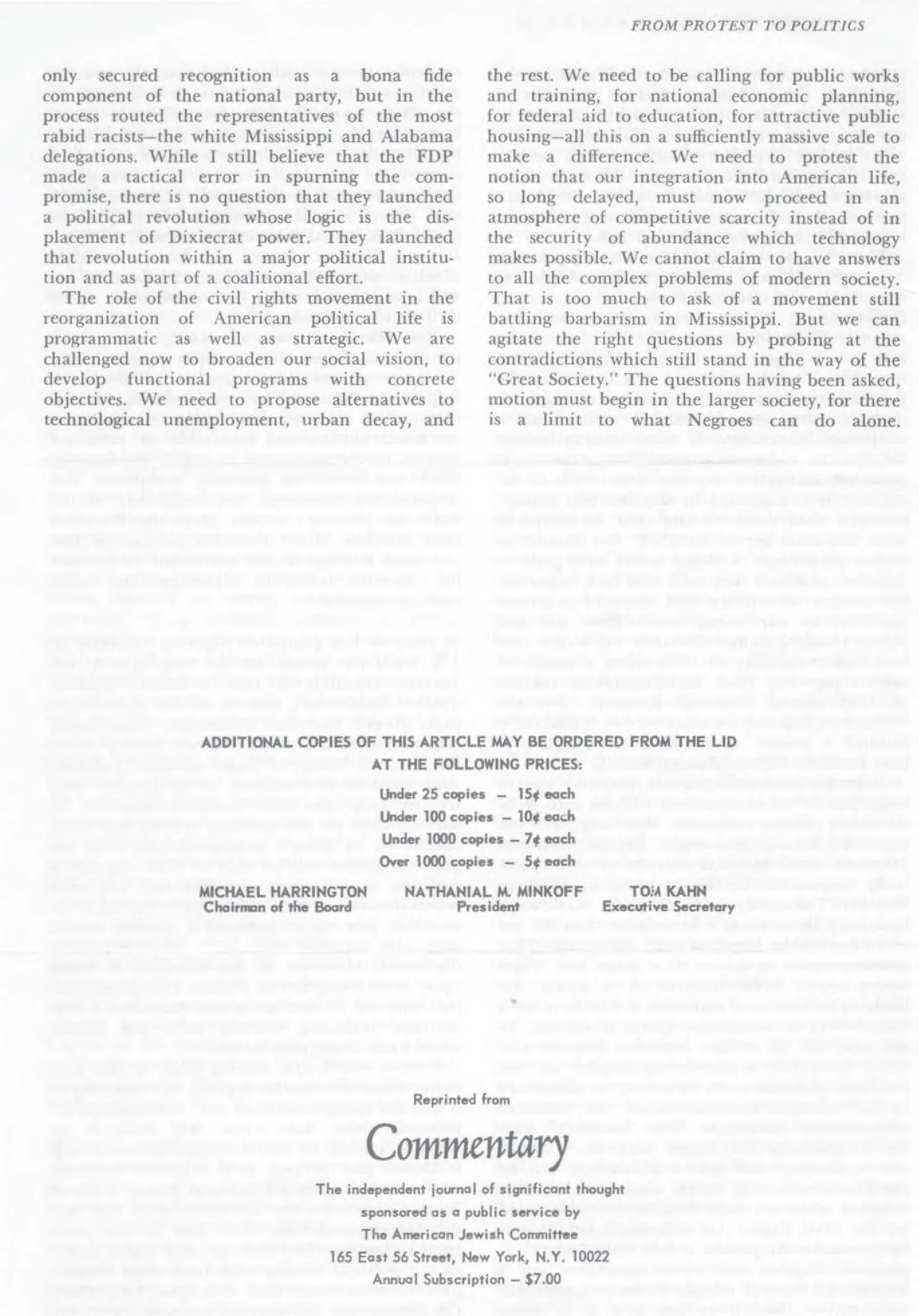
Rustin, Bayard. "From Protest to Politics: The Future of the Civil Rights Movement." Commentary, February 1965. Reprinted by League for Industrial Democracy. New York: League for Industrial Democracy, 1965.
