Please note: The exact date of this article is unknown.
Description
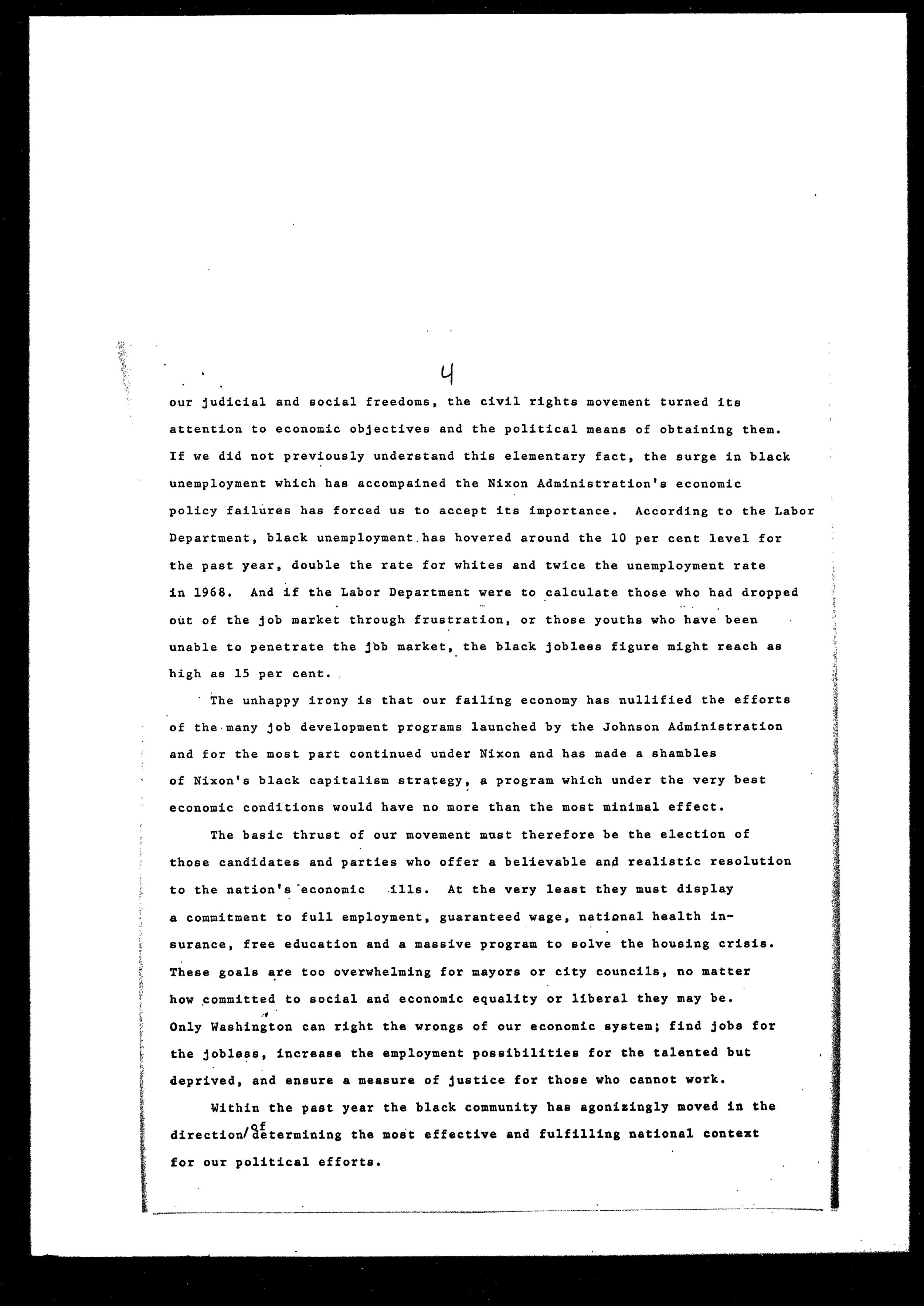
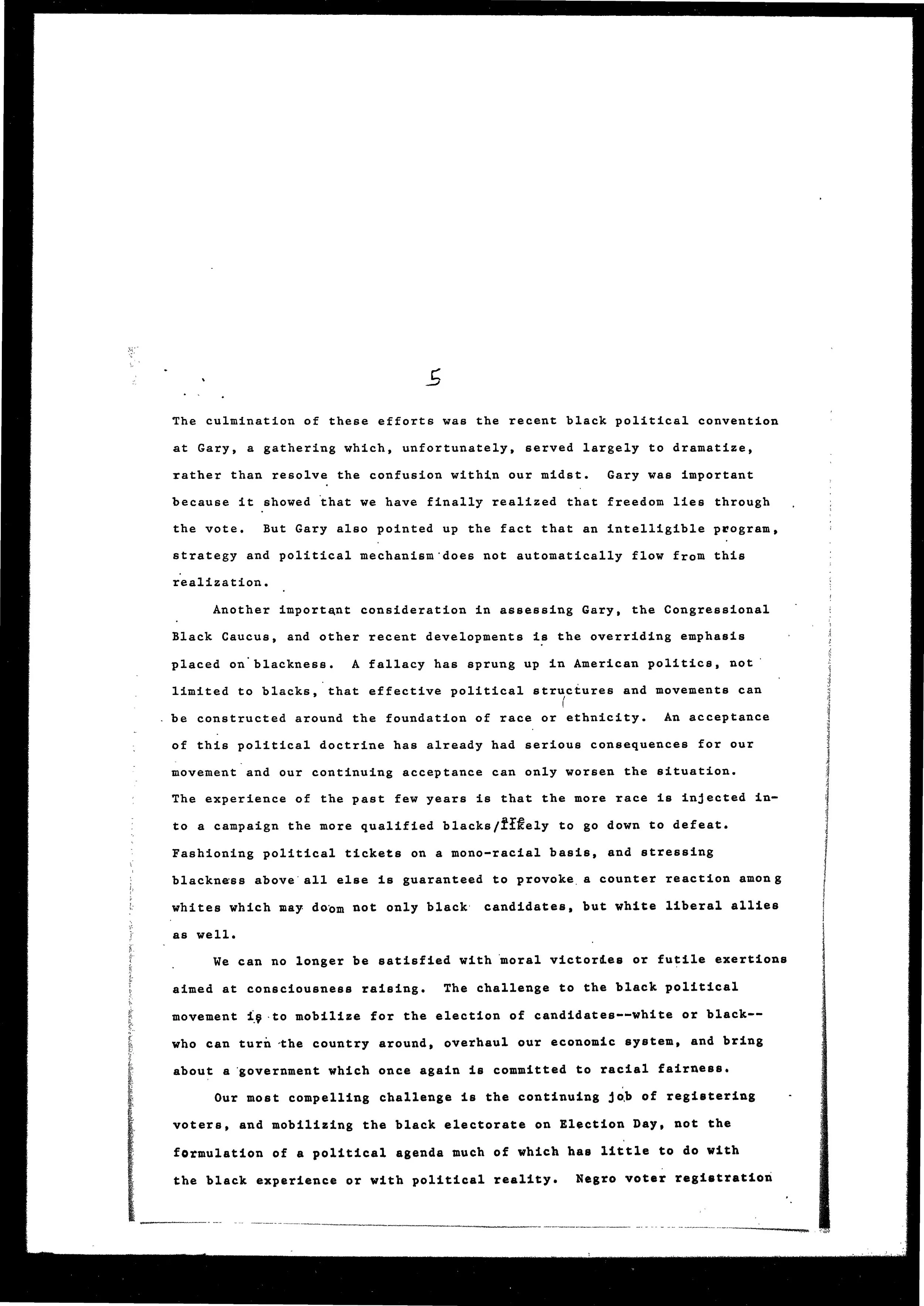
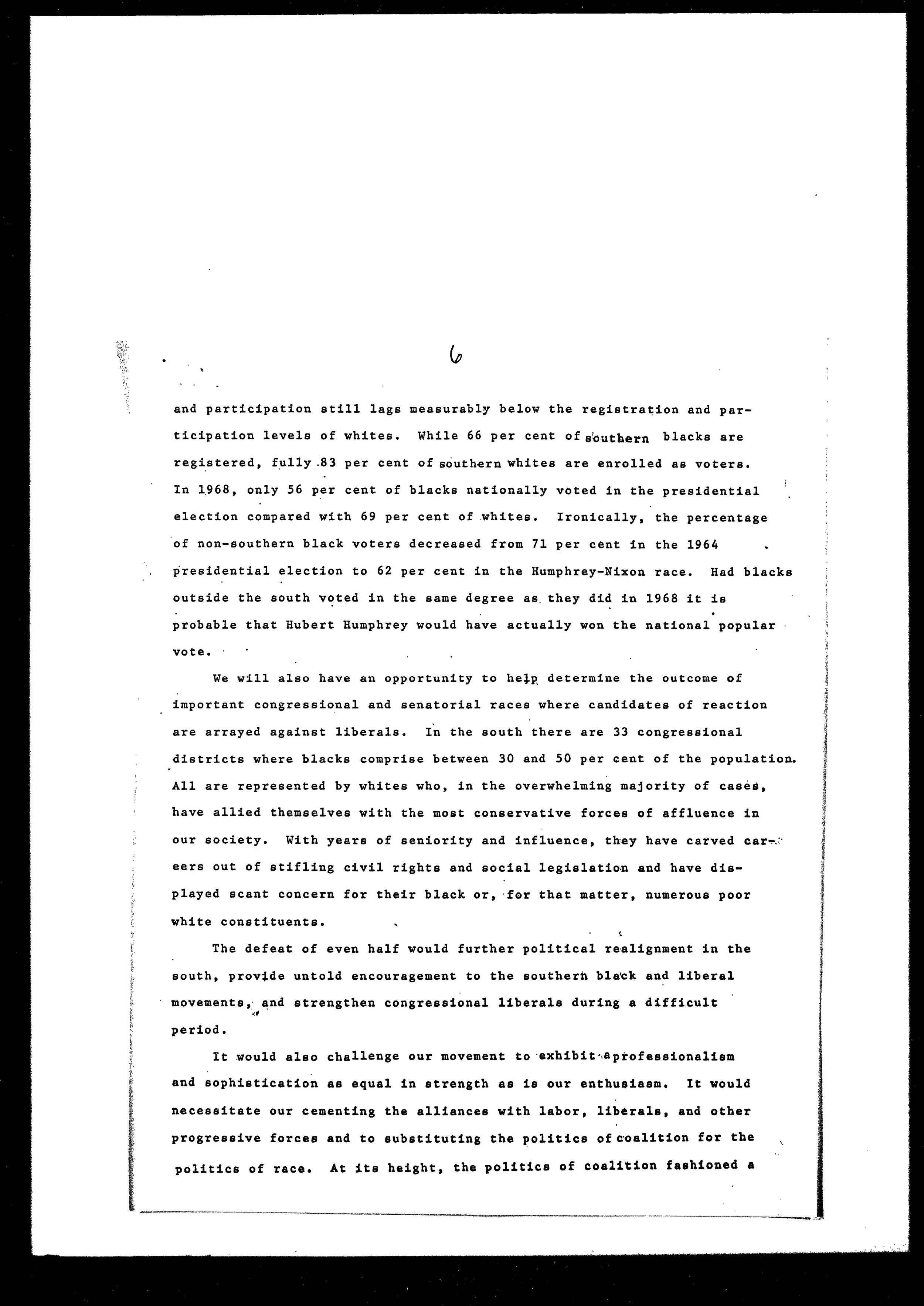
Written in the heat of the 1972 election cycle, this article serves as a strategic blueprint for the "second phase" of the Civil Rights Movement. Rustin observes that since the passage of the 1965 Voting Rights Act, the movement has undergone a fundamental evolution, moving away from high-visibility protest toward the "groping for political self-expression." He supports this claim with data, noting the meteoric rise of Black voter registration in the South—from 28% in 1960 to 66% by 1970—and the election of Black mayors in major Northern hubs like Gary, Cleveland, and Newark.
Rustin’s primary objective in this text is to urge a move toward "professionalism and sophistication" in Black politics. He argues that the era of symbolic victories is over; the new challenge lies in mastering the "dull" but essential work of precinct organizing, legislative lobbying, and coalition building. He specifically targets 33 congressional districts in the South where Black populations range between 30 and 50 percent but are still represented by conservative white "reactionaries." For Rustin, the path forward is clear: these incumbents must be unseated through a disciplined alliance between Black voters and the labor movement.
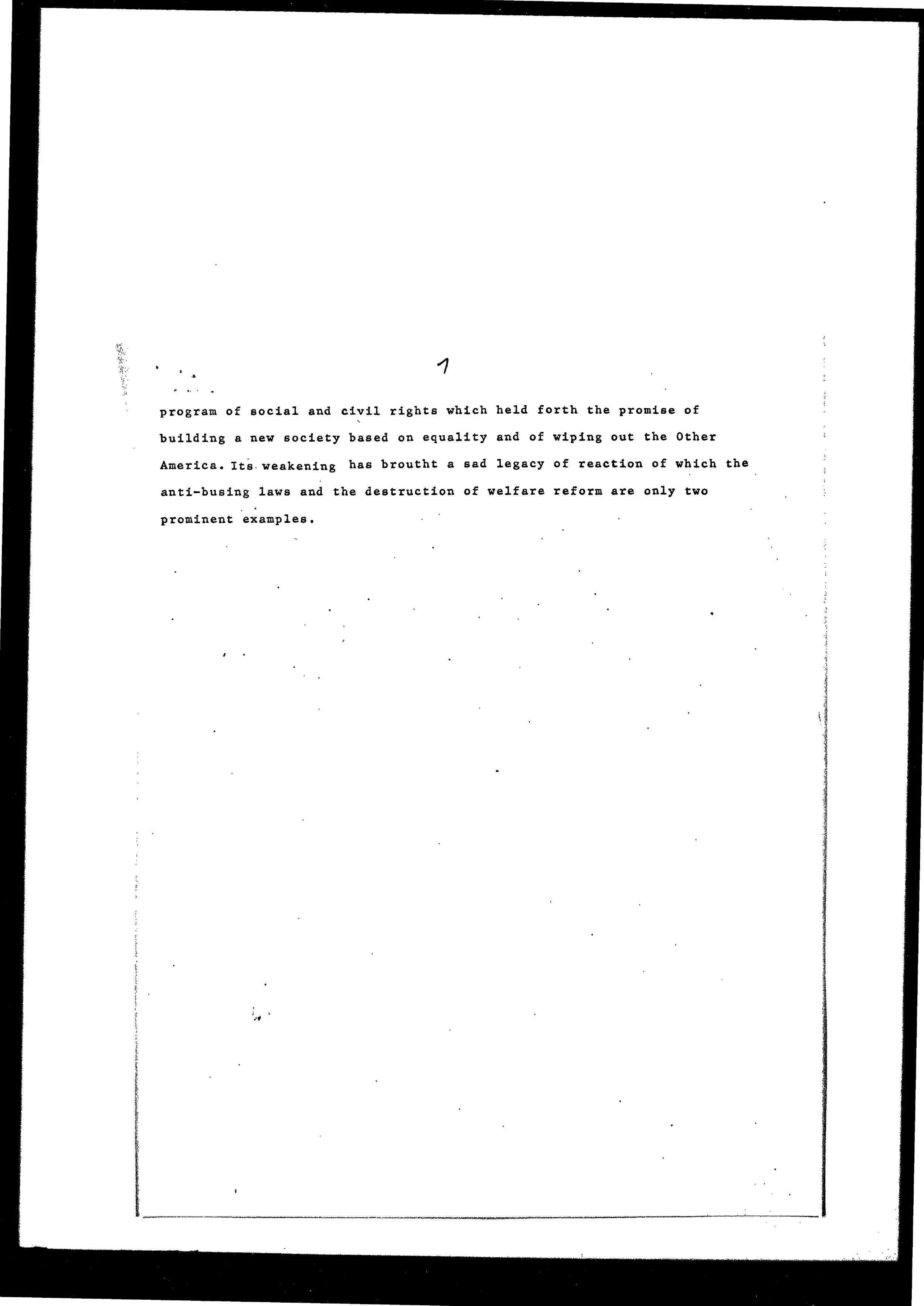
The article serves as a stern critique of "racial isolationism." Rustin warns that if the movement retreats into the "politics of race" rather than the "politics of coalition," it will lose the leverage needed to enact broad social programs like welfare reform and universal healthcare. He concludes by emphasizing that the power of the Black vote is not merely in electing Black faces, but in shifting the entire American political spectrum toward a more progressive, labor-aligned "New Society."
Historical Context
The year 1972 was a watershed moment for Black political identity, marked most famously by the National Black Political Convention in Gary, Indiana. While that convention saw a rise in Black Nationalist sentiment and calls for independent political parties, Rustin remained a staunch defender of working within the Democratic Party. This article reflects his attempt to counter the "separatist" tide of the early 70s by doubling down on the "Coalition Politics" strategy he famously proposed in his 1965 essay, From Protest to Politics.
This period also saw the first serious Black presidential campaign by Shirley Chisholm, which created internal debate among civil rights leaders about whether to support a symbolic Black candidate or a viable white liberal who could defeat Richard Nixon. Rustin’s writing here mirrors the anxiety felt by the "Old Guard" regarding the potential fragmentation of the New Deal Coalition. He viewed the Nixon administration as a "legacy of reaction" that thrived on the division between Black activists and white blue-collar workers, and he saw 1972 as the final opportunity to repair that rift before the conservative "Southern Strategy" became fully entrenched.
Furthermore, the context of 1972 involves the aftermath of the 1960s' "War on Poverty," which many activists felt was being dismantled by the Nixon administration. Rustin uses this article to remind his readers that the legislative gains of the previous decade—such as the abolition of the poll tax—were only tools, not the end goal. He emphasizes that without a "professional" approach to electoral politics, the movement would remain stuck in a cycle of "emotionalism" while their opponents used the legal and political machinery of the state to roll back civil rights progress.
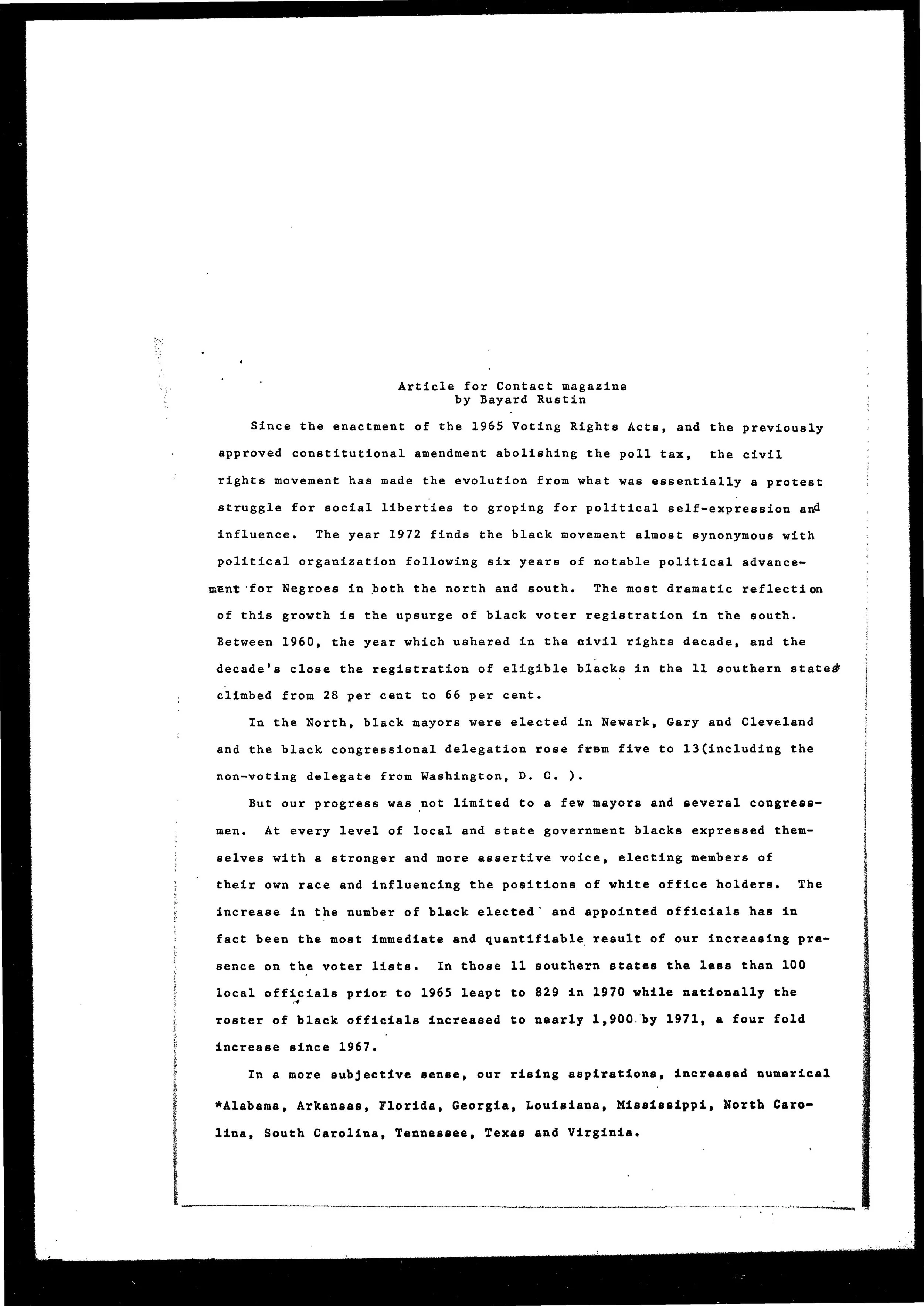
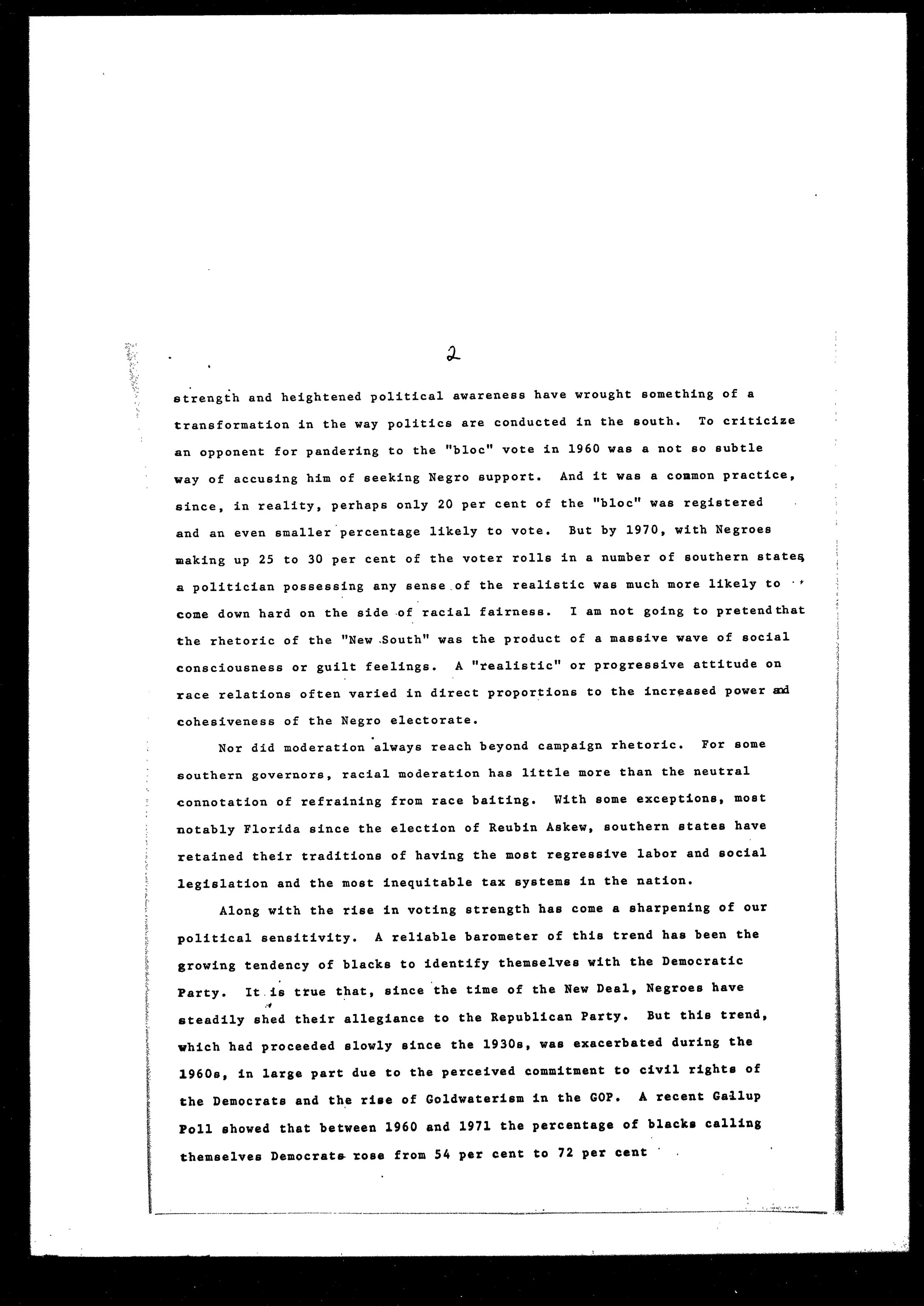
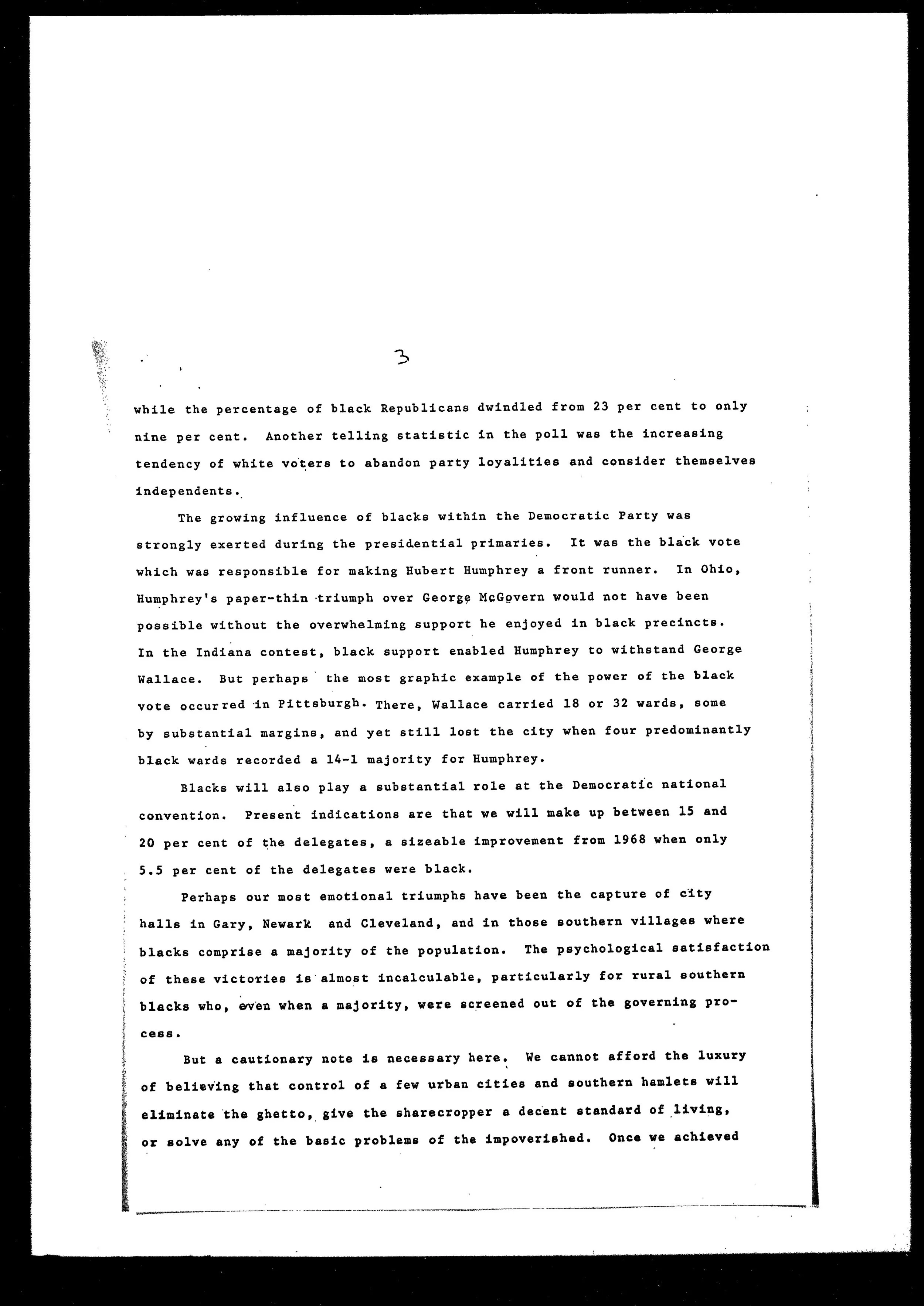
Bayard Rustin. Bayard Rustin Papers, Articles, Essays, Symposia Remarks, and Speeches, 1942-1987. ProQuest Archival Materials. Accessed via Princeton University Ezproxy. URL: https://login.ezproxy.princeton.edu/login?url=https://www.proquest.com/archival-materials/bayard-rustin-articles-on-african-americans/docview/2595042694/se-2
