Description
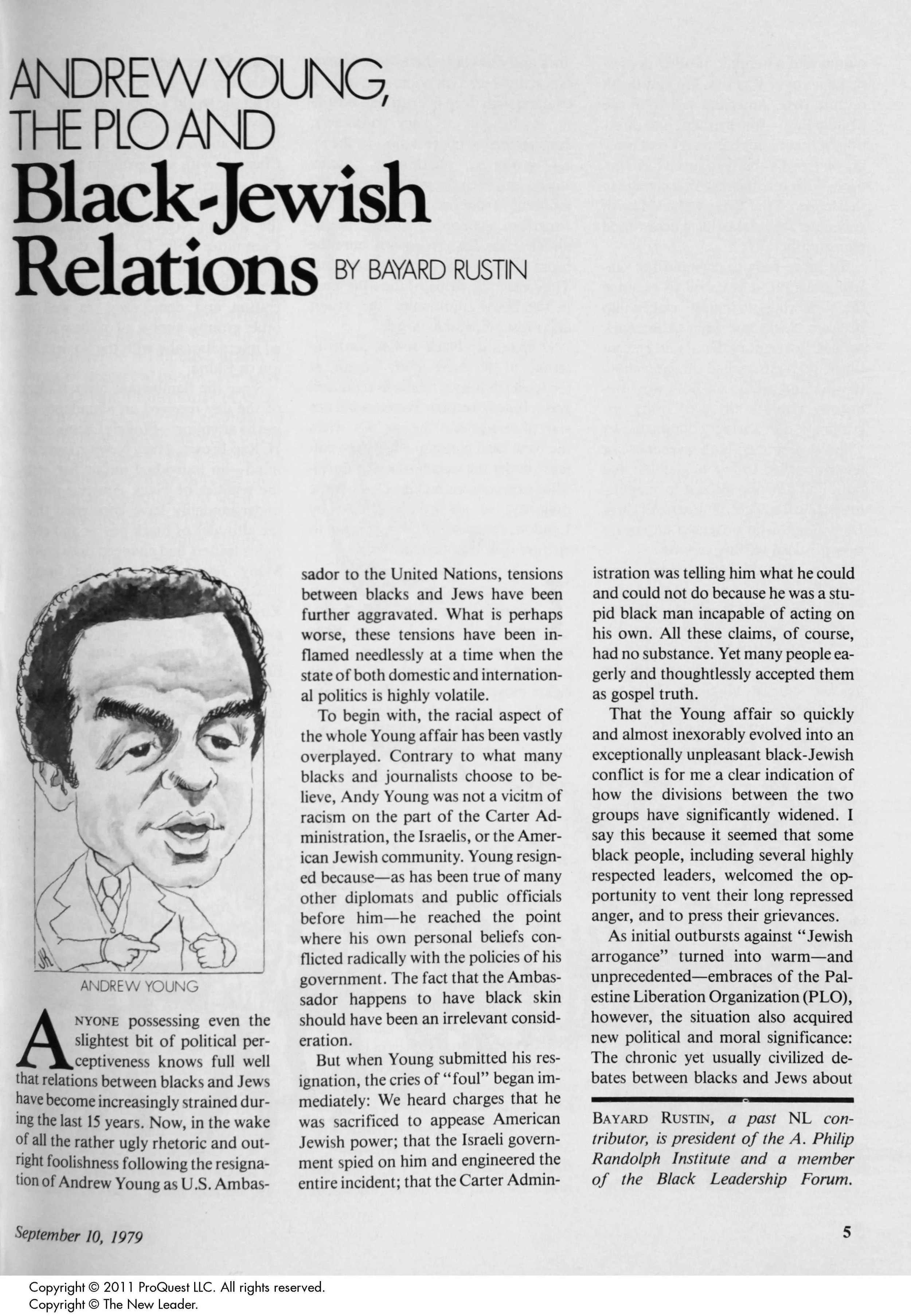
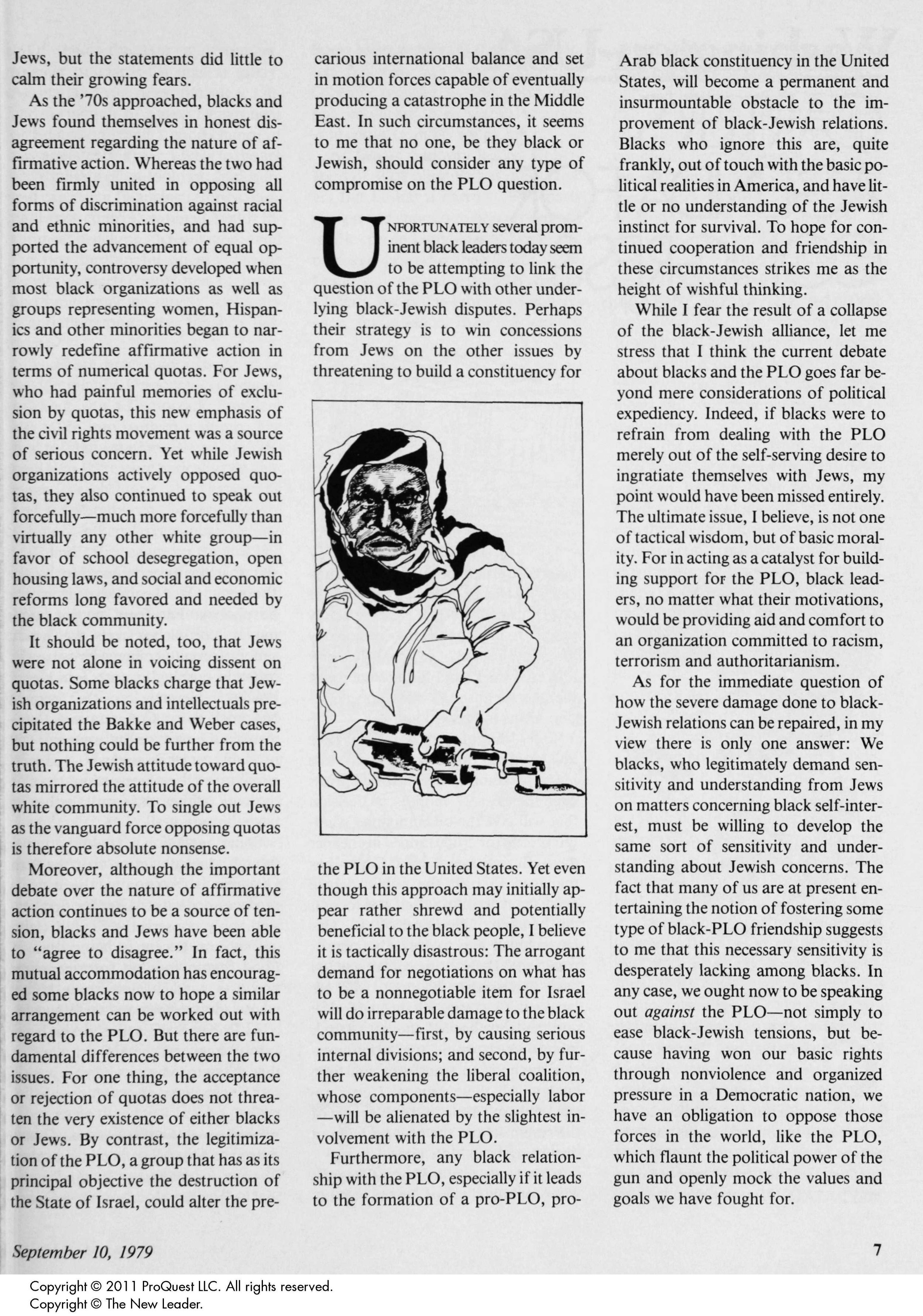
This 1979 essay by Bayard Rustin in The New Leader addresses the inflammatory tensions between the Black and Jewish communities following the resignation of U.S. Ambassador Andrew Young. Rustin argues that the "nature of politics" in this affair was misconstrued as racism, asserting that Young’s departure was actually a conflict between personal beliefs and government policy. He warns that the move by certain black leaders to "embrace the PLO" is a "tactically disastrous" shift that threatens the survival of the "liberal-labor-civil rights" coalition.
Rustin characterizes the current rift as a move from "civilized debates" about domestic quotas toward a "life-and-death" dispute over international policy and Israel’s right to exist. He maintains that the "utility of politics" for the black community requires a continued alliance with Jewish organizations that remain the most forceful advocates for social and economic reform. Rustin concludes that true "dignity" for the movement depends on a "mutual sensitivity" where black leaders develop the same understanding of Jewish survival that they demand from Jews regarding black self-interest.
Historical Context
Published in the wake of the 1960s "New Deal consensus" collapse, this article captures Rustin’s attempt to salvage the "interracial majority" from the rising tide of "black nationalism" and "reverse racism". The 1970s was a period of "enduring disappointment" as affirmative action debates over numerical quotas began to splinter the traditional civil rights alliances. Rustin views the legitimization of groups that use the "political power of the gun" as a betrayal of the nonviolent "blueprint" that had won basic rights in a democratic nation.
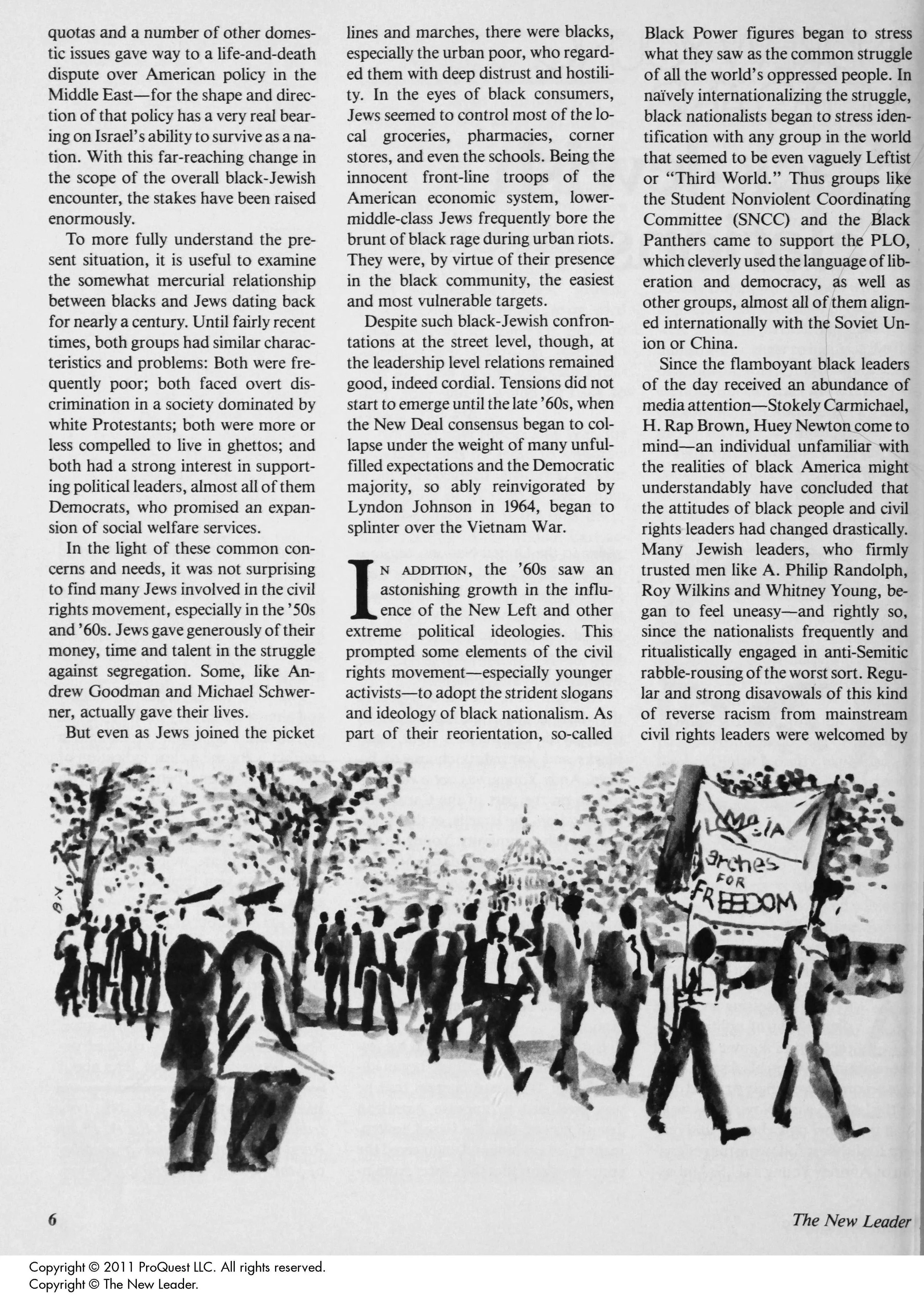
This document serves as a record of Rustin’s role as an "architect" of reconciliation, attempting to bridge the gap between the "urban poor" who viewed Jewish merchants with hostility and the "leadership level" that had historically worked in cordial partnership. His commitment to "coalition politics" is presented as a moral obligation to oppose forces committed to racism and authoritarianism, regardless of the perceived "shrewd" gains of internationalizing the struggle.
Ultimately, Rustin’s defense of the Black-Jewish alliance reflects his "long game" strategy of ensuring that the movement did not retreat into "sterile" or isolated political paths.
Rustin, Bayard. "Andrew Young, the PLO and Black-Jewish Relations." The New Leader, September 10, 1979.
