
Please note: The dates of these publications span from December 1956 to February 1957.
Description
In this pair of eyewitness field reports published in Liberation, Bayard Rustin documents the physical and economic violence used to enforce white supremacy in Mississippi, alongside the coordinated nonviolent response organized by Southern Black leaders. In "Terror in the Delta" (December 1956), Rustin investigates how the White Citizens Councils operated across the Mississippi Delta following the 1954 Supreme Court school desegregation decision and the lynching of Emmett Till. He reports that the Councils built a network of 80,000 members across 65 counties, using paid Black informants to compile membership lists of local NAACP chapters. Rustin details the resulting reprisals against local residents: a schoolteacher in Cleveland who could only speak to him in secret after dark for fear of losing her job; a Charleston businessman subjected to late-night phone threats, social ostracism, and bank credit bans; and John Wesley Logan, a laborer found dead in Tilletopa Creek after physically defending himself against a white man. Rustin also reports that white authorities used financial incentives and gifts—such as a new Cadillac for a local pastor—to secure ministers who would preach submission from the pulpit, while driving militant leaders like Robert Smith and Reverend L. Terry out of the state so their land and property could be purchased below market value.
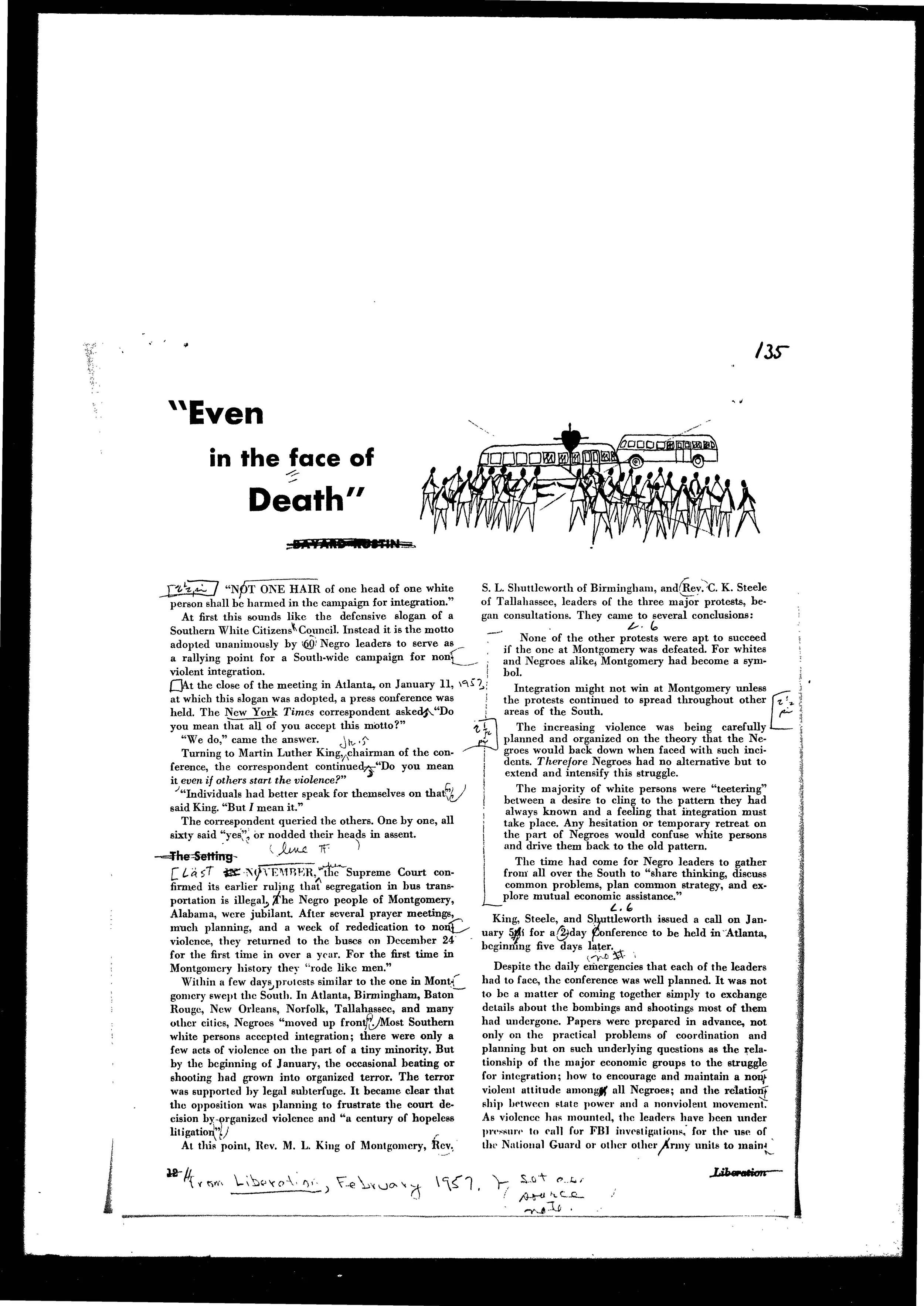
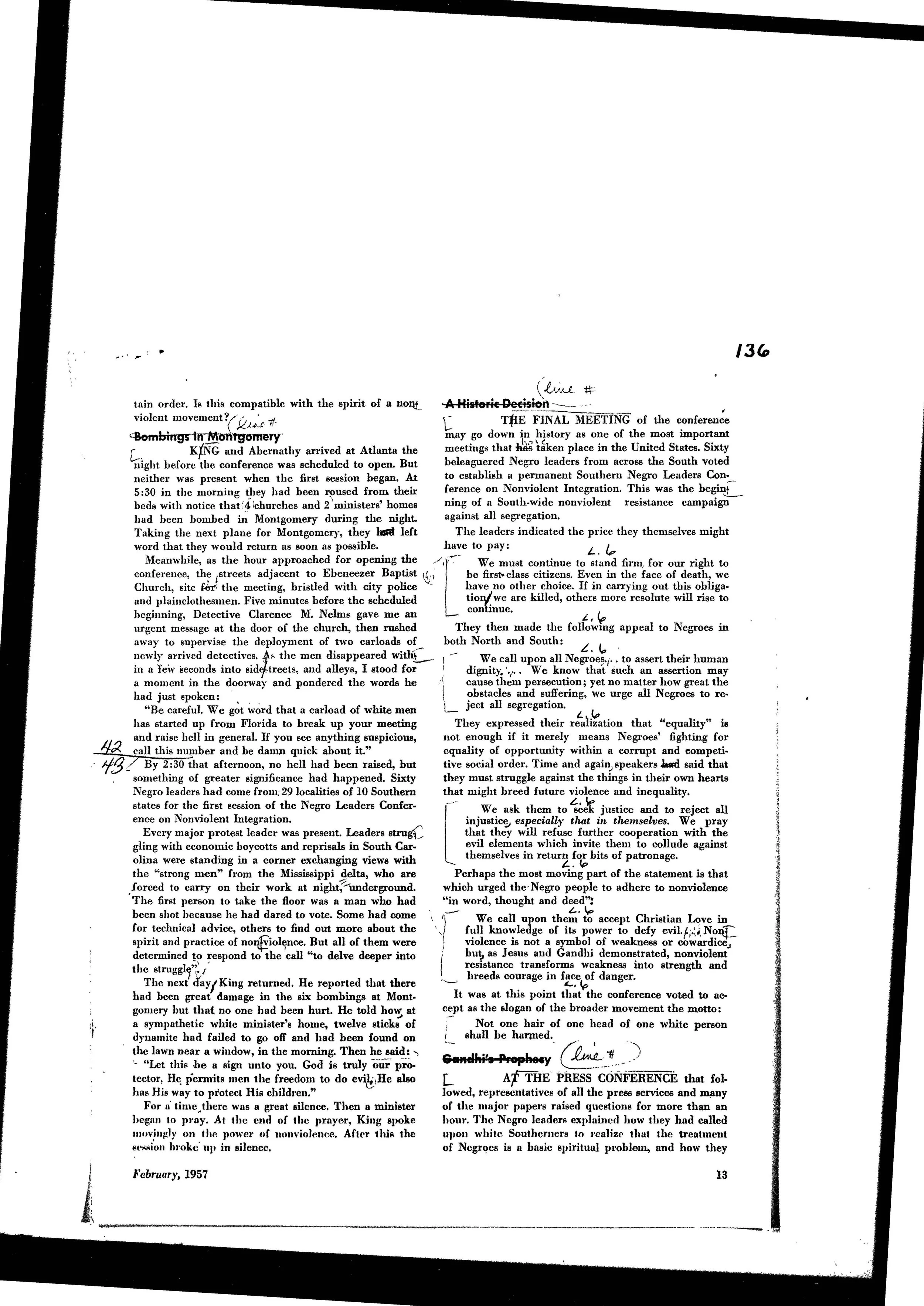
In the February 1957 report, "'Even in the Face of Death,'" Rustin covers the gathering of sixty Southern Black leaders at Ebenezer Baptist Church in Atlanta, Georgia, following the end of the Montgomery Bus Boycott. The conference took place amid immediate physical danger. Dr. Martin Luther King Jr. and Reverend Ralph Abernathy missed the opening session because they were called back to Montgomery at 5:30 in the morning after four churches and two ministers' homes were bombed overnight. In Atlanta, local police warned Rustin and conference organizers that carloads of armed white men were traveling from Florida to attack the meeting, prompting armed police and plainclothes detectives to patrol outside the church.
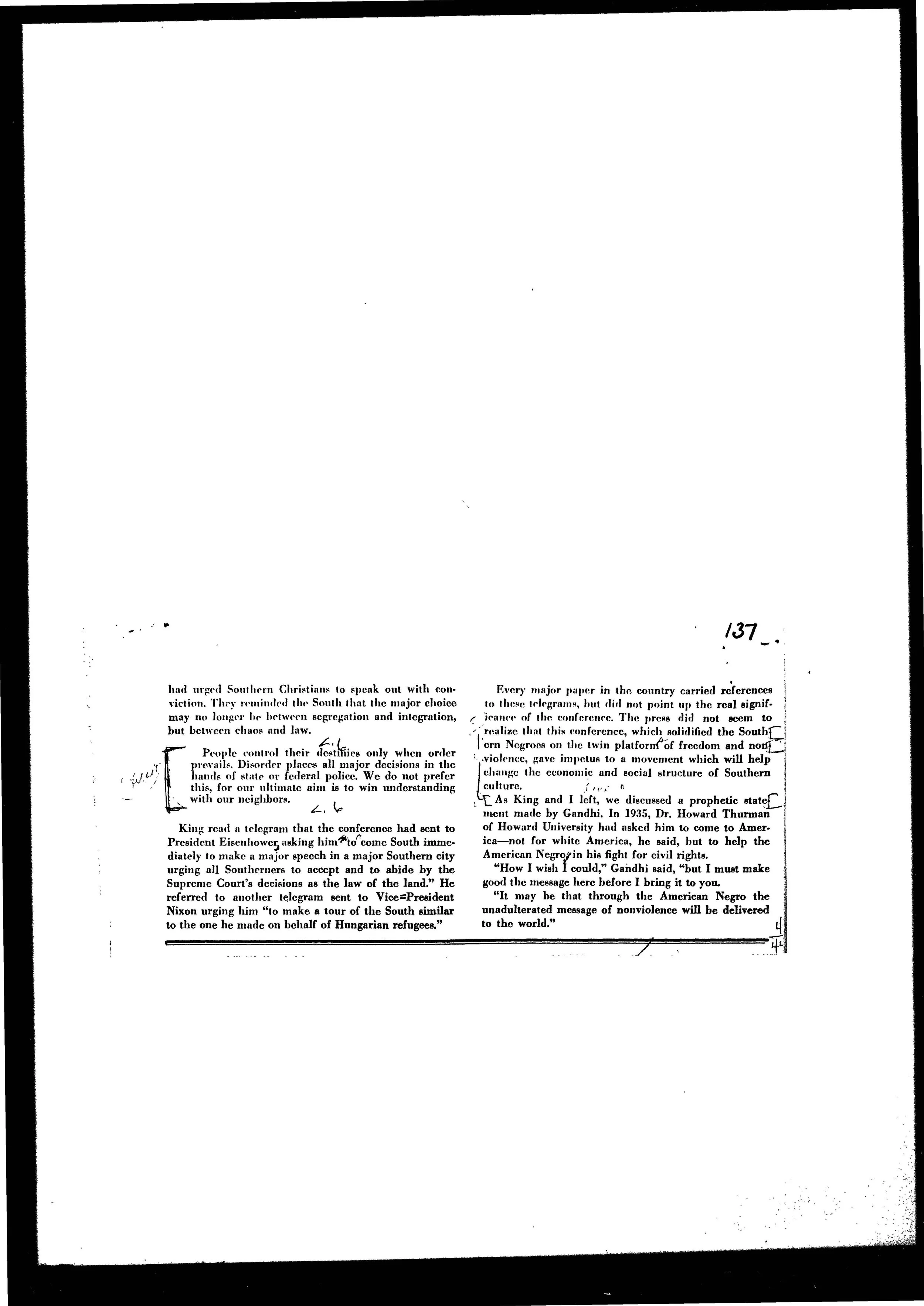
Despite the threat of violence, the delegates established a permanent regional organization—the Southern Leaders Conference on Nonviolent Integration (later renamed the Southern Christian Leadership Conference). King returned from inspecting the Montgomery bombings, reported that twelve unexploded sticks of dynamite had been found on the lawn of a white minister's home, and urged the leaders to maintain strict nonviolent discipline. The conference voted unanimously to adopt the operational pledge: "Not one hair of one head of one white person shall be harmed in the campaign for integration". The delegates sent telegrams to President Eisenhower and Vice President Nixon demanding federal enforcement of court rulings, declared that they were prepared to risk death rather than accept segregation, and committed to expanding nonviolent direct action across the South.
Historical Context
These reports document the intense backlash across the Deep South between late 1956 and early 1957, following the Supreme Court's decisions in Brown v. Board of Education (1954) and Gayle v. Browder (1956), which declared segregated public transit unconstitutional. White political leaders throughout the region organized massive resistance, while the White Citizens Councils and vigilante groups launched systematic economic retaliation, job firings, and bombings against Black citizens who attempted to vote, join the NAACP, or exercise federal transit rights.
The Atlanta meeting of January 1957 marked the official creation of the Southern Christian Leadership Conference (SCLC), designed to link local bus boycotts in Montgomery, Birmingham, and Tallahassee into a unified Southern movement. Rustin served as a primary strategist behind this effort, helping draft working papers and telegrams that established nonviolent direct action and Black church networks as the central political force of the civil rights era.
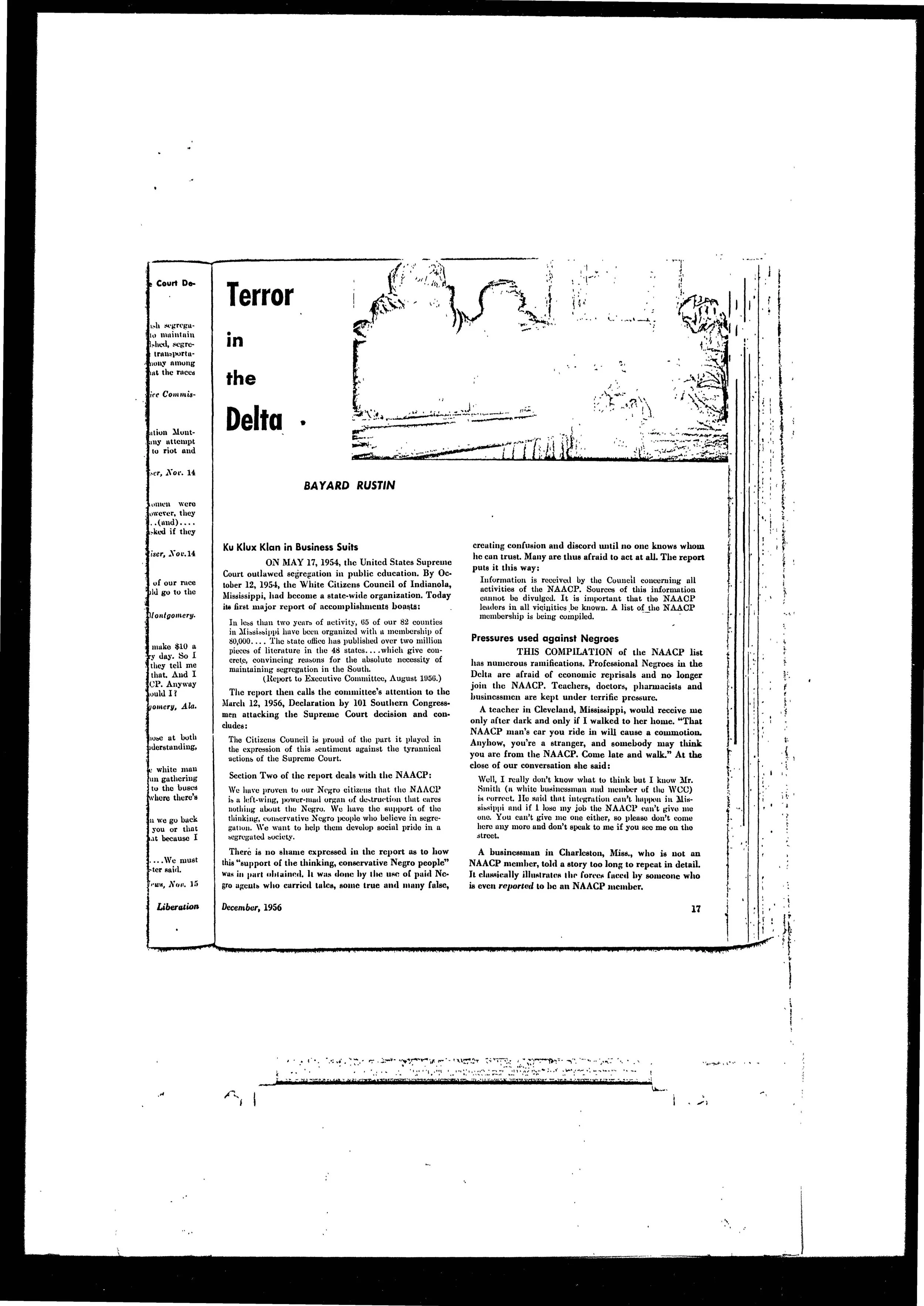
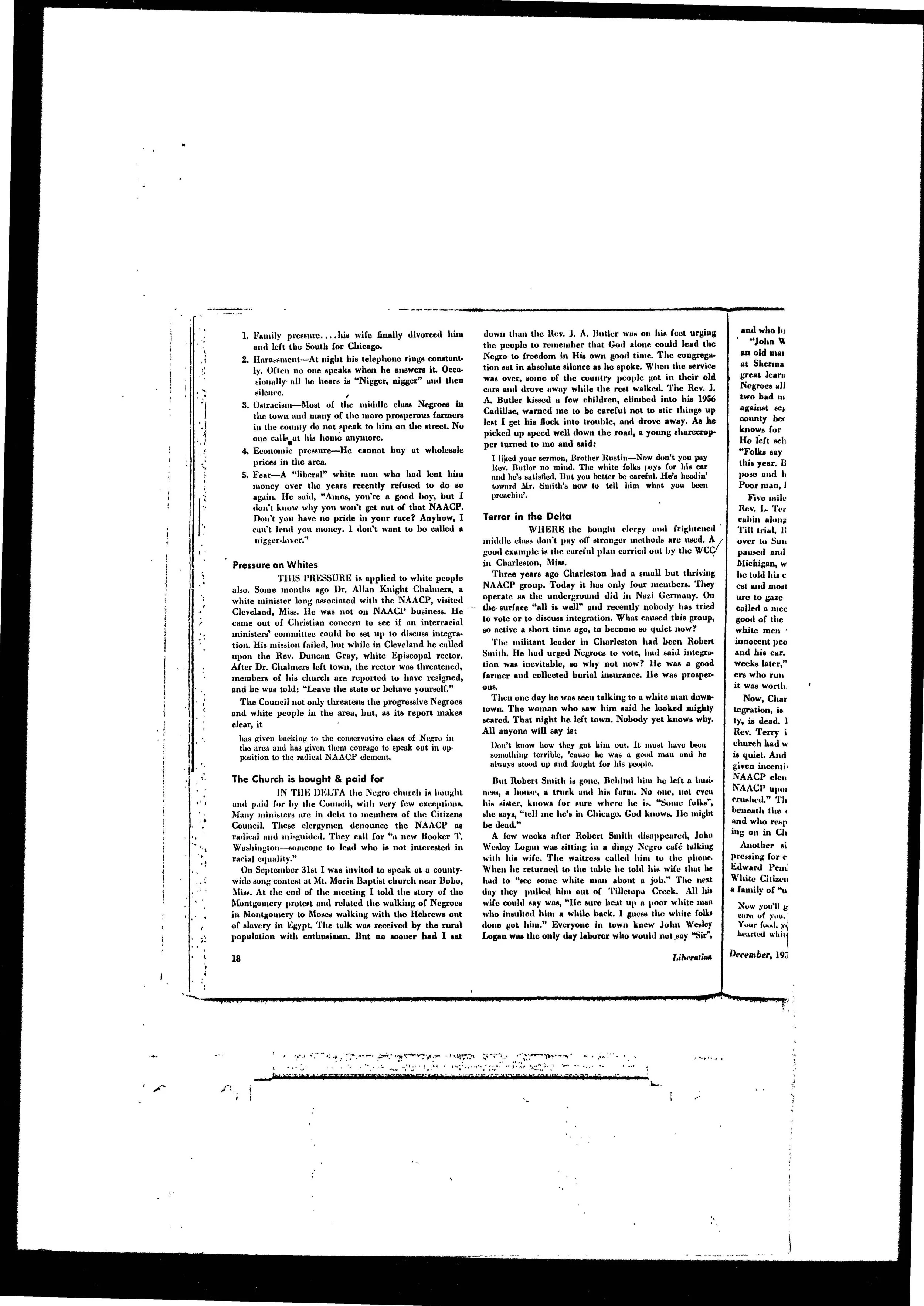
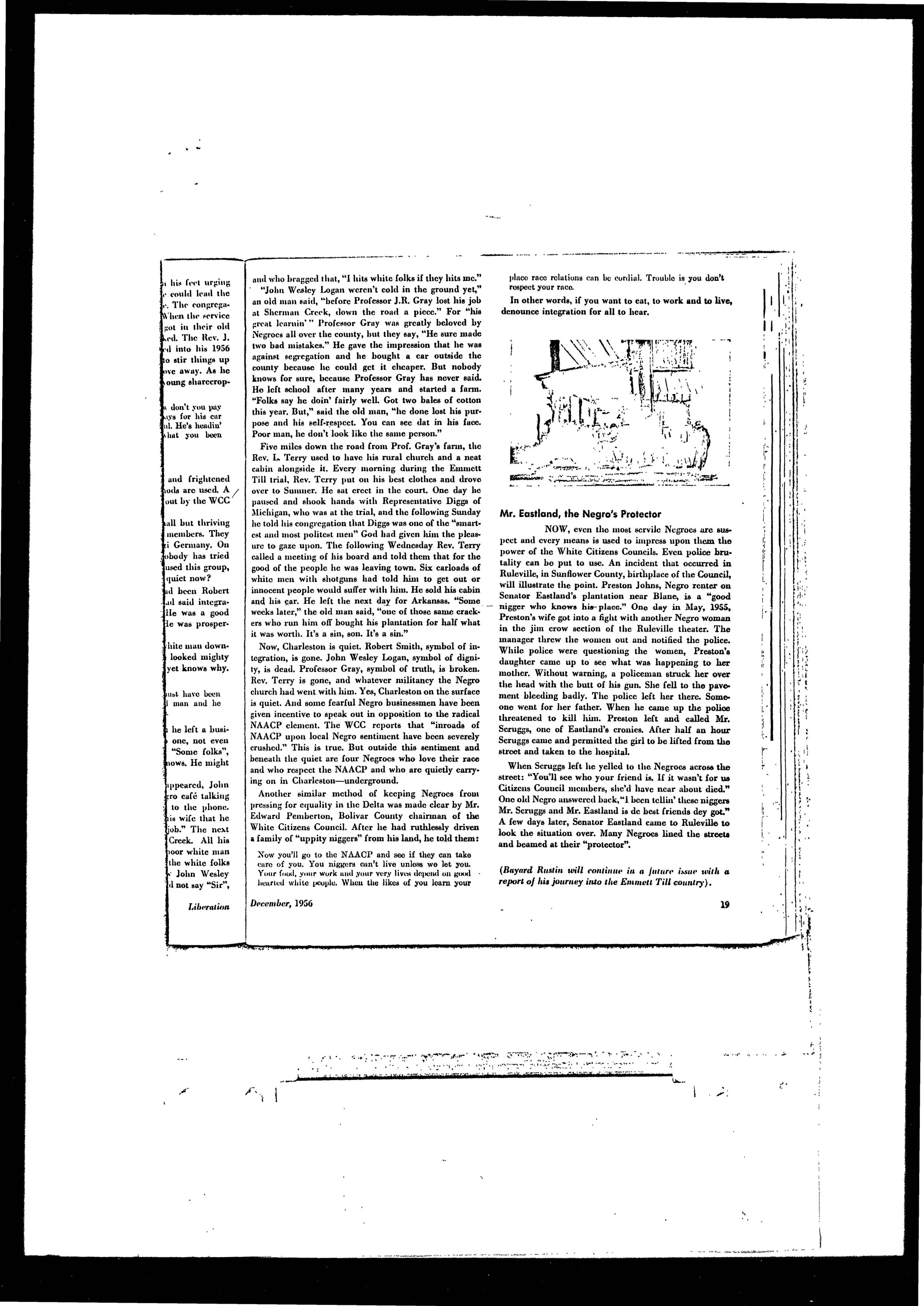
Rustin, Bayard. "Terror in the Delta." Liberation 1, no. 10 (December 1956): 17–19; Rustin, Bayard. "'Even in the Face of Death.'" Liberation 1, no. 12 (February 1957): 12–14.
