Description
This 1969 pamphlet, published by the A. Philip Randolph Institute, contains the full text of an address Bayard Rustin delivered before the eighth national convention of the AFL-CIO. Rustin opens his speech by praising a vital joint effort between labor leader George Meany and civil rights leader Roy Wilkins to block the Supreme Court nomination of conservative Judge Clement Haynsworth. He labels Haynsworth as an explicitly anti-labor and anti-civil rights figure who represented a severe threat to the progress made by minorities and unions over the previous ten years. Rustin exposes a major political double standard by quoting conservative politicians like Senator Strom Thurmond, who had previously demanded strict ethical standards for liberal judges but completely ignored those same rules to support Haynsworth. For Rustin, the fight against this nomination proved that the labor and civil rights movements shared common enemies and had to stand together.
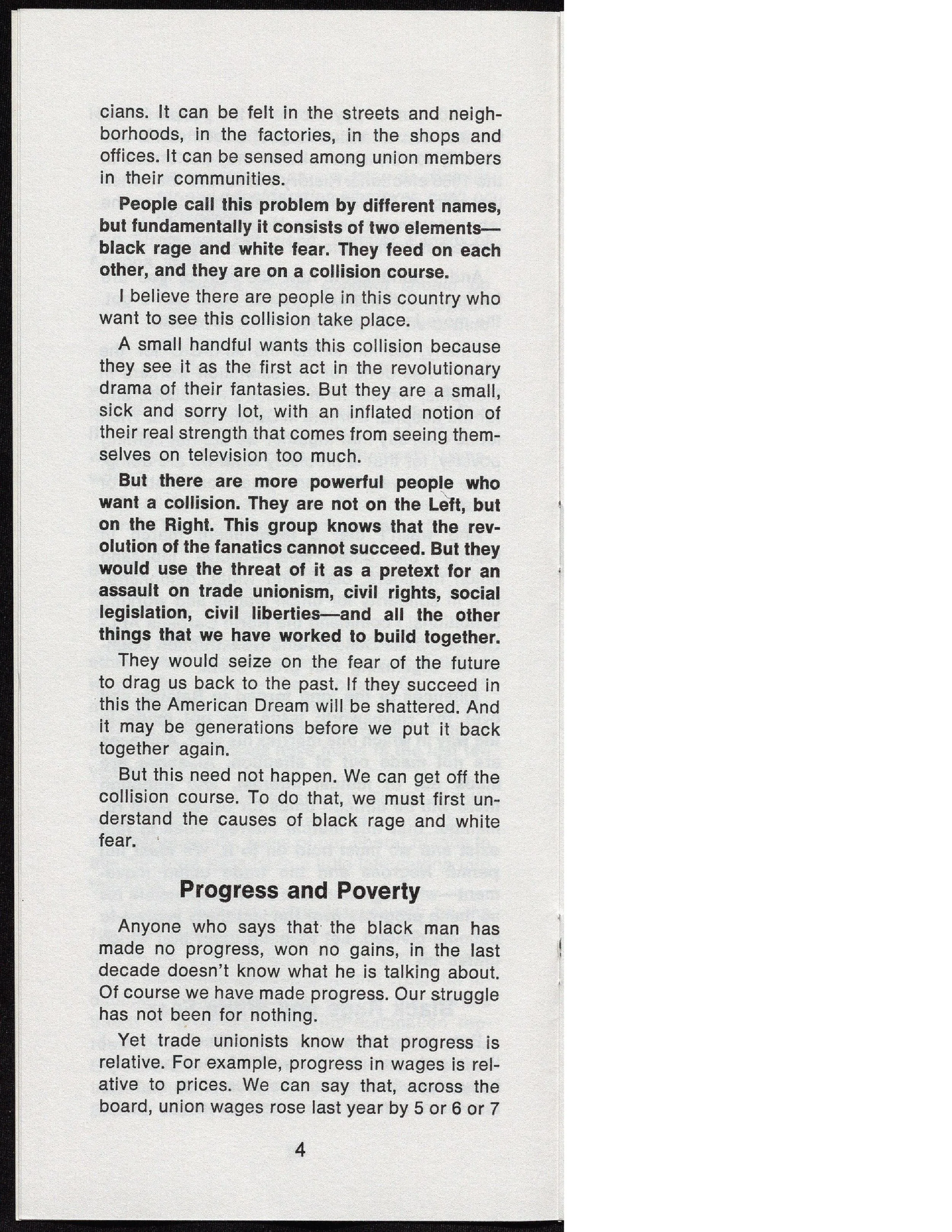
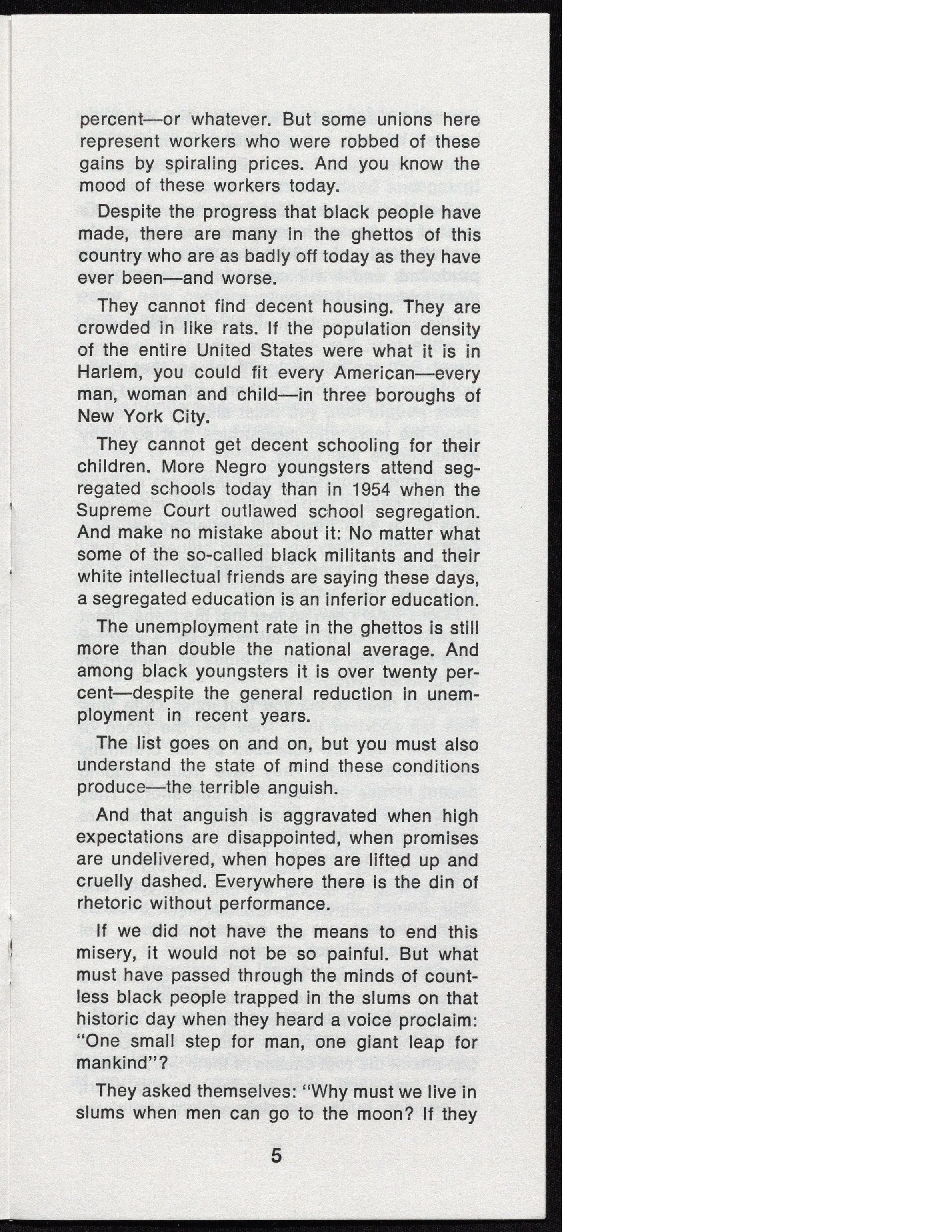
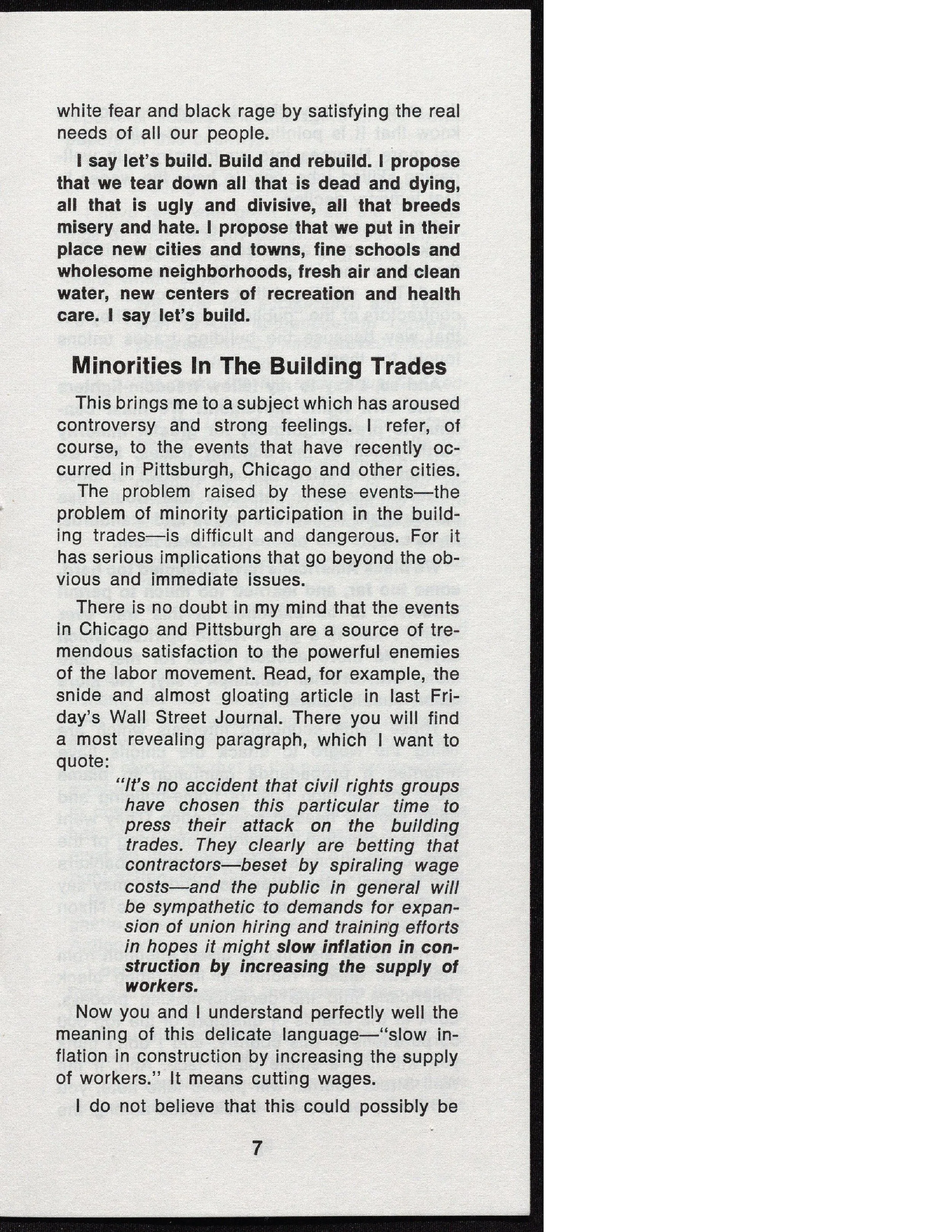
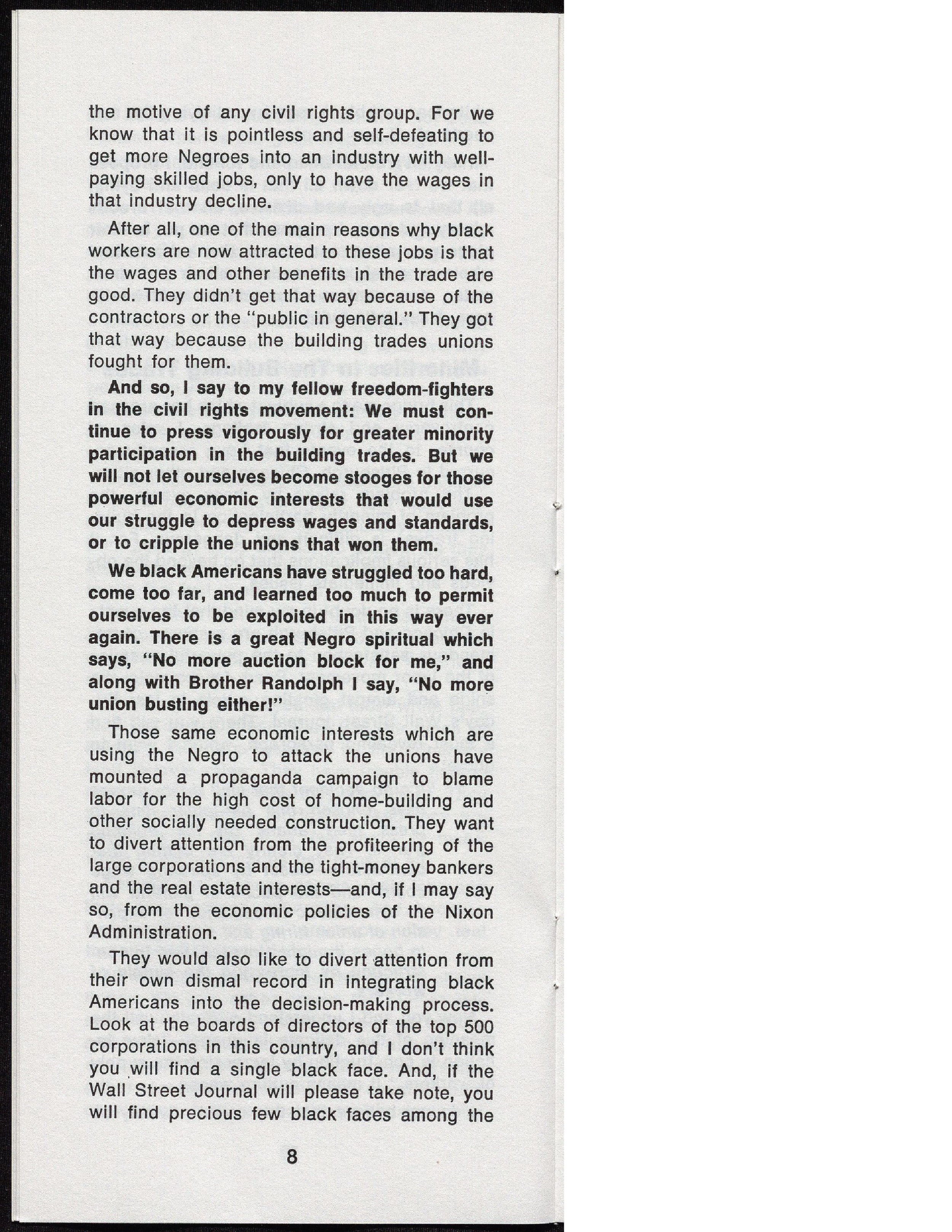
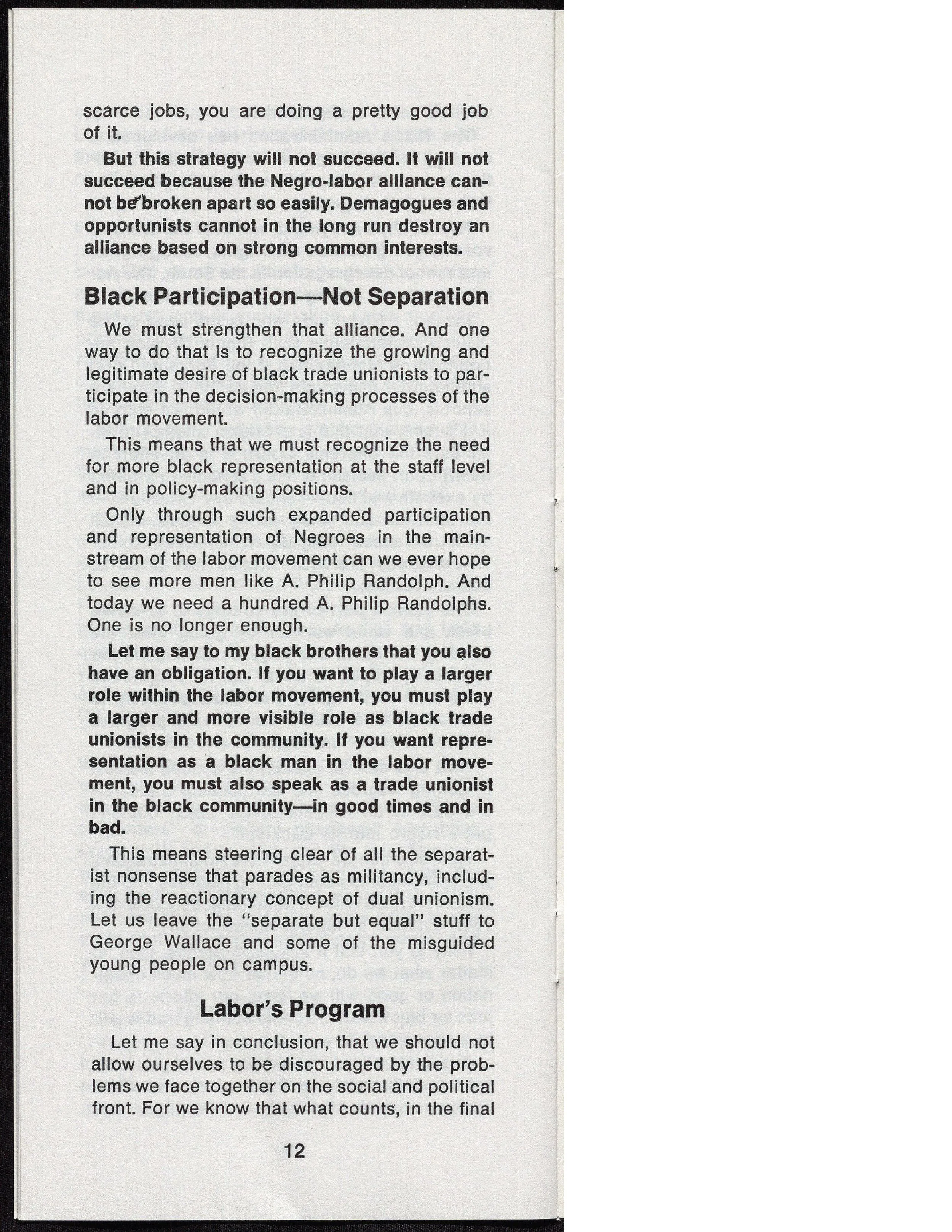
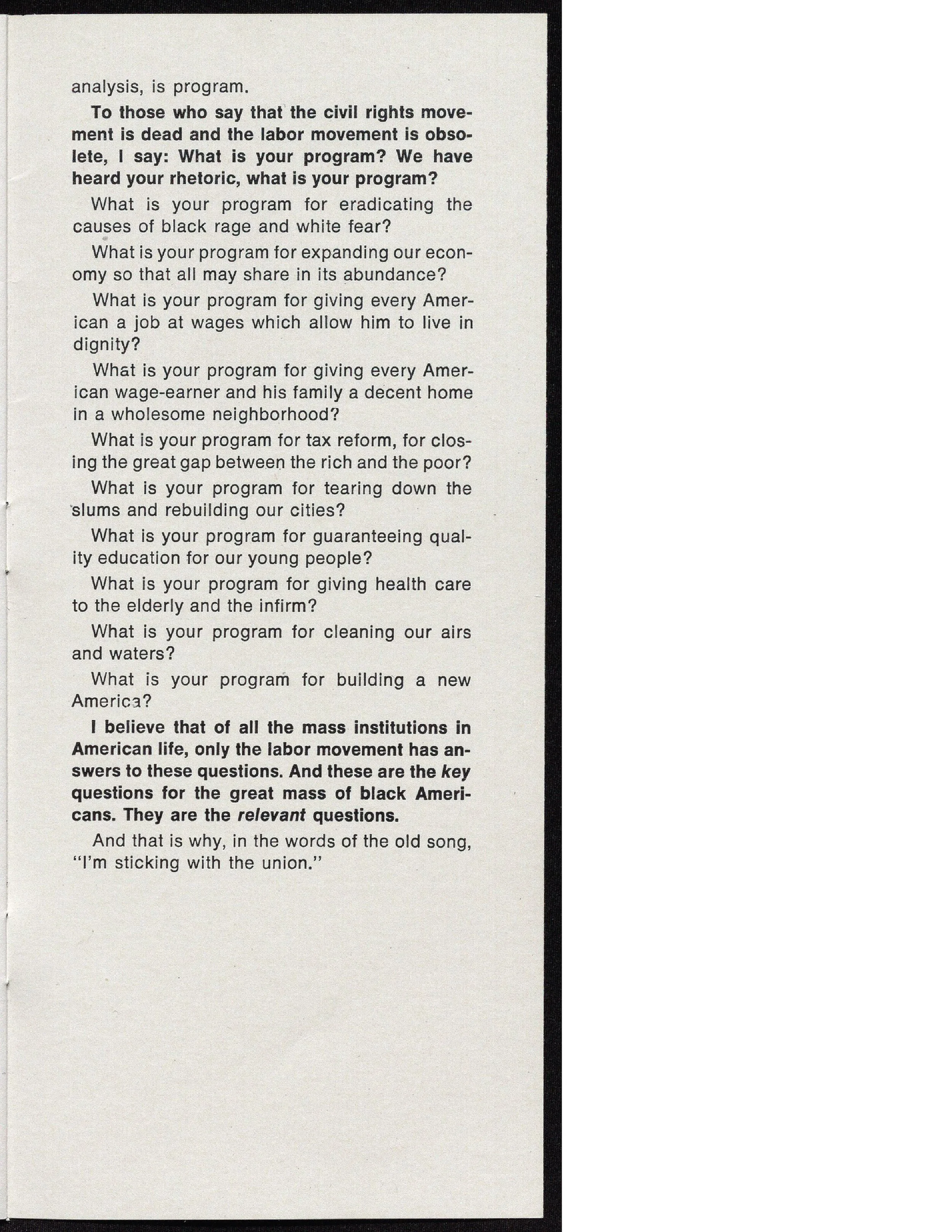
The pamphlet provides a detailed breakdown of what Rustin calls the two core problems facing America: "black rage" and "white fear." He explains that black rage is caused by the terrible, slow reality of ghetto life, where minority youth face a twenty percent unemployment rate and children are trapped in underfunded, segregated schools. At the same time, white fear is driven by working-class families who are squeezed by inflation, high taxes, and rising mortgage costs, making them feel threatened by minority demands. Rustin tackles the contemporary controversy over minority hiring in the building trades, warning civil rights groups not to let themselves be used by big business interests who want to flood the job market simply to lower union wages. Instead of retreating into separate black studies programs or anti-union setups on college campuses, Rustin outlines a clear blueprint for an interracial coalition that demands full employment, federal housing programs, and equal union standards to solve the real needs of all poor people.
Historical Context
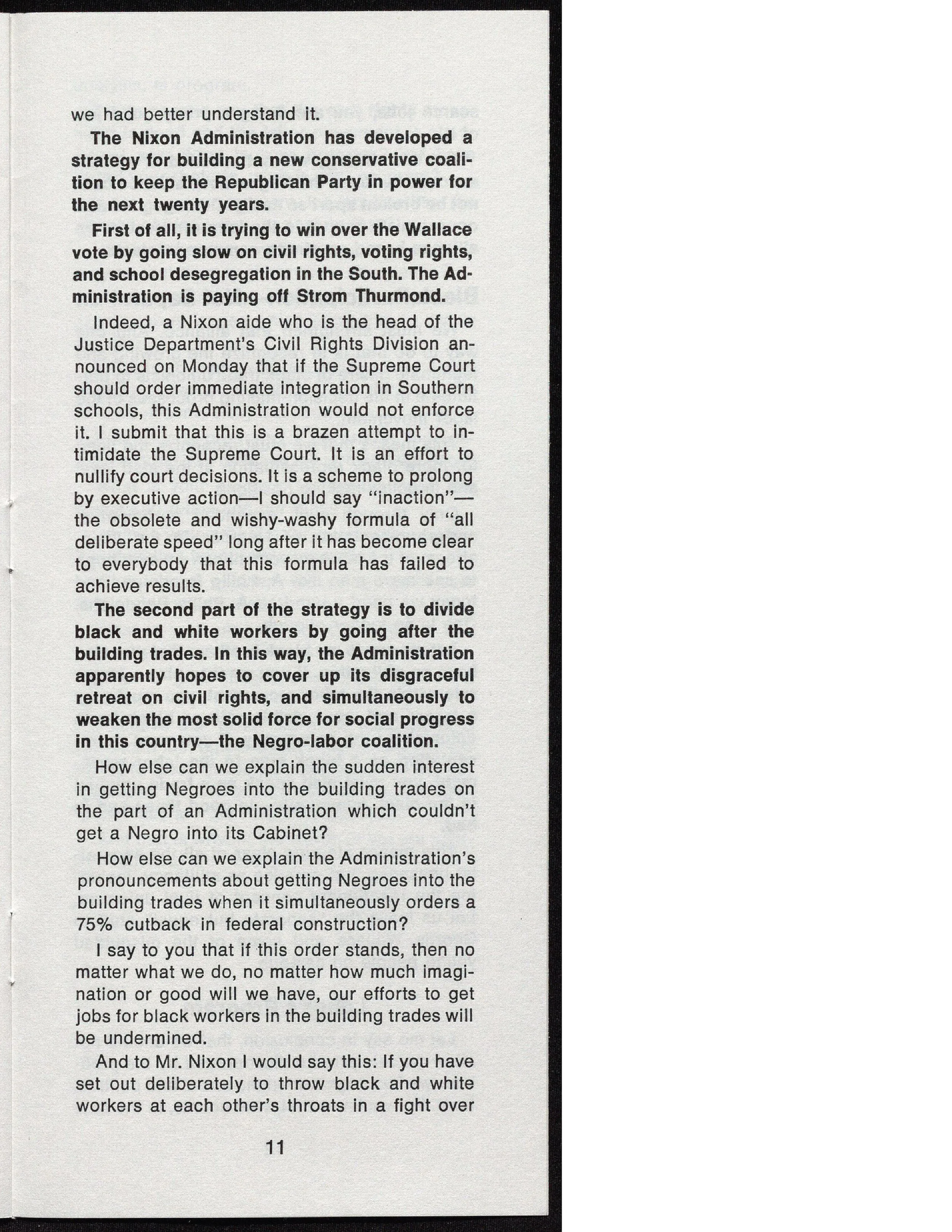
In the autumn of 1969, the United States entered a volatile political era under the newly elected Nixon administration. President Nixon actively pursued a conservative plan to build a lasting political majority by slowing down federal civil rights enforcement, aiming to win over white Southern voters and working-class Northerners who were anxious about the rapid social changes of the 1960s. The nomination of Clement Haynsworth to the Supreme Court served as a direct political payment to segregationist allies like Senator Strom Thurmond, signaling a deliberate effort by the White House to pack the courts and roll back progressive legislation. This hostile political environment created an acute crisis for civil rights organizations, who realized they could no longer rely on executive support to protect their hard-won legal protections.
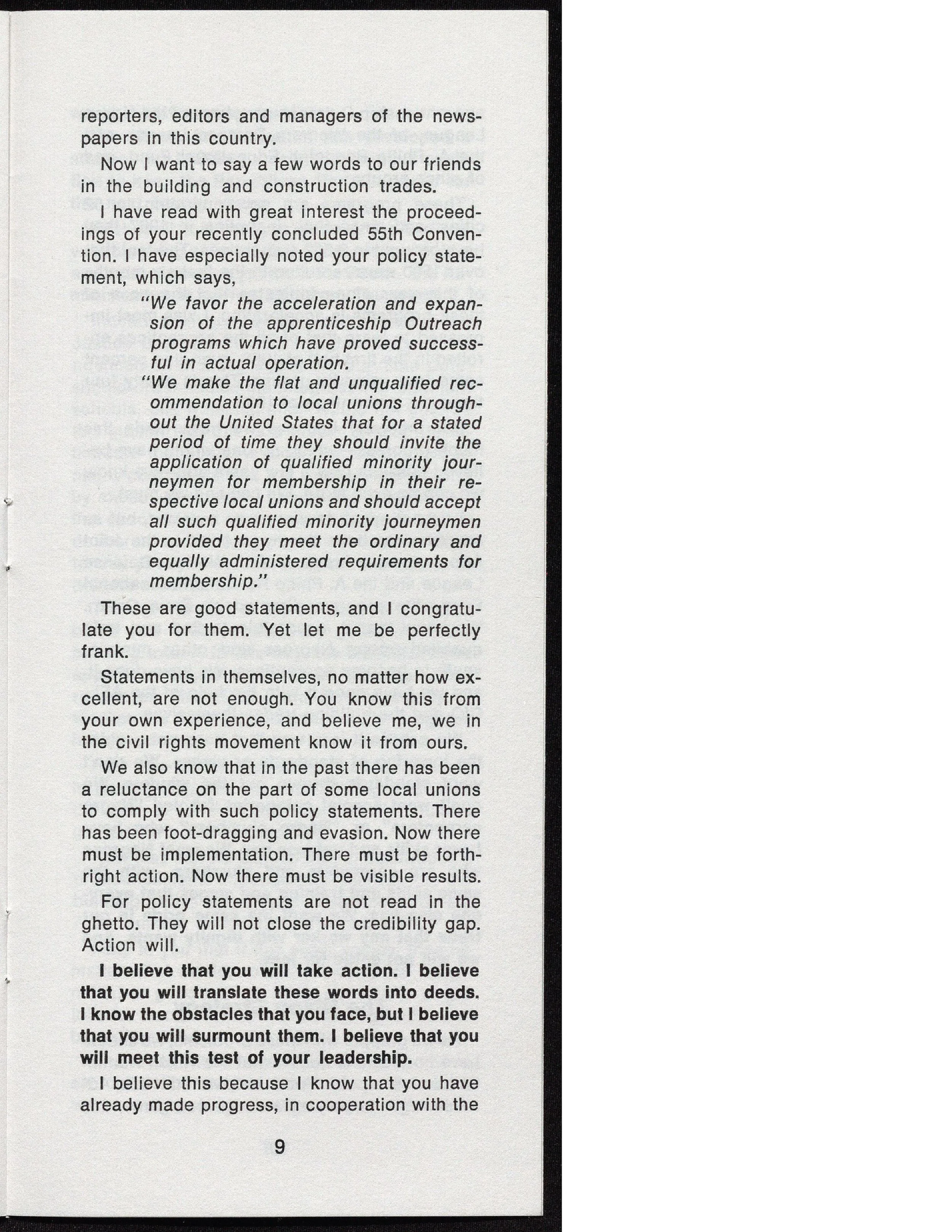
This shift in Washington forced a major strategic pivot where civil rights architects had to aggressively defend their alliances with organized labor to survive. As the leader of the A. Philip Randolph Institute, Rustin used this specific convention to expose a calculated government scheme to throw black and white workers at each other's throats by attacking building trades unions while simultaneously cutting federal construction budgets by 75 percent. Rustin countered this division by pointing to the real-world success of the Apprenticeship Outreach programs, which had successfully brought thousands of minority youth into skilled union jobs without lowering wages or training standards. By preserving this real-time speech, the entry demonstrates how veteran organizers sought to defeat the rise of racial nationalism and conservative rollbacks by anchoring the freedom struggle within a broad, class-based movement for total economic security.

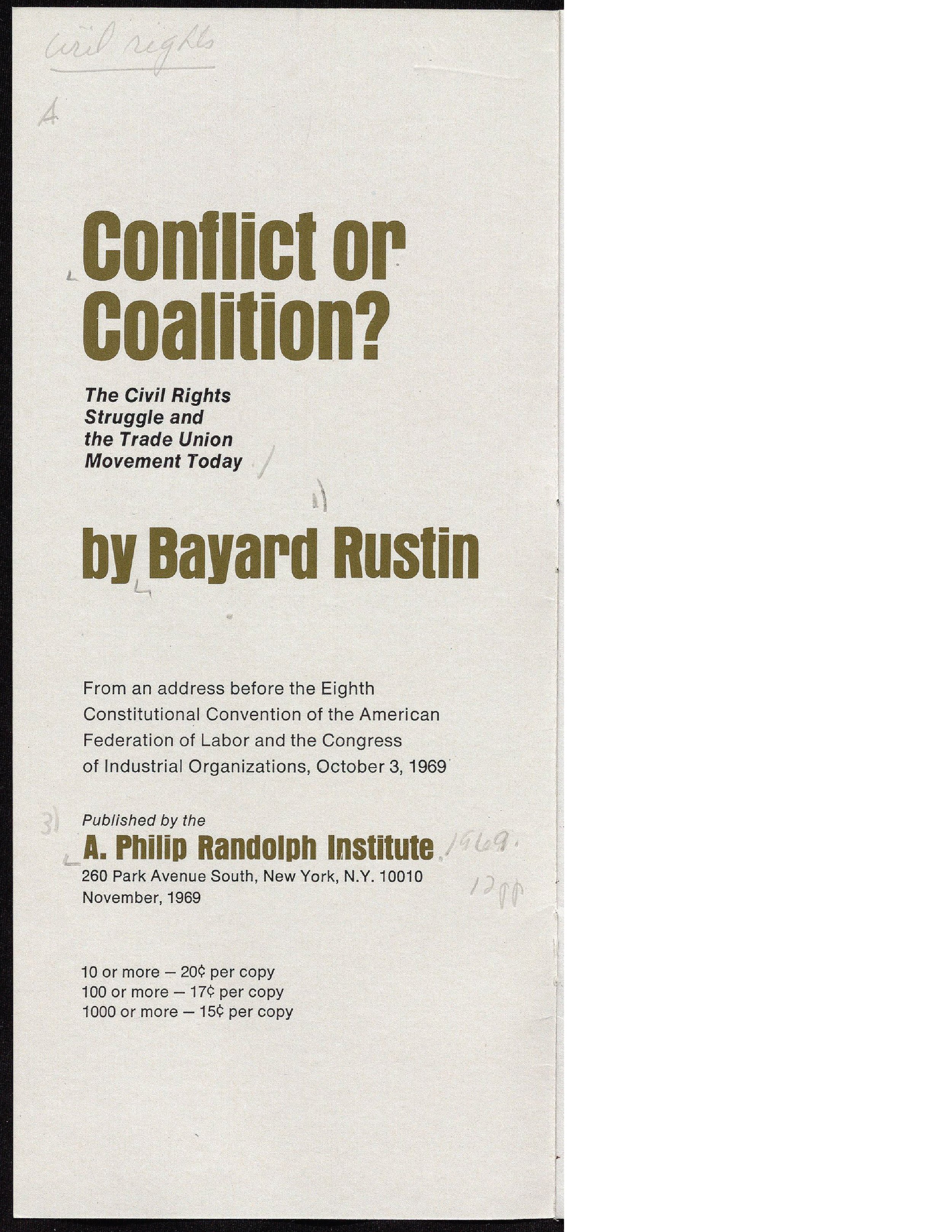

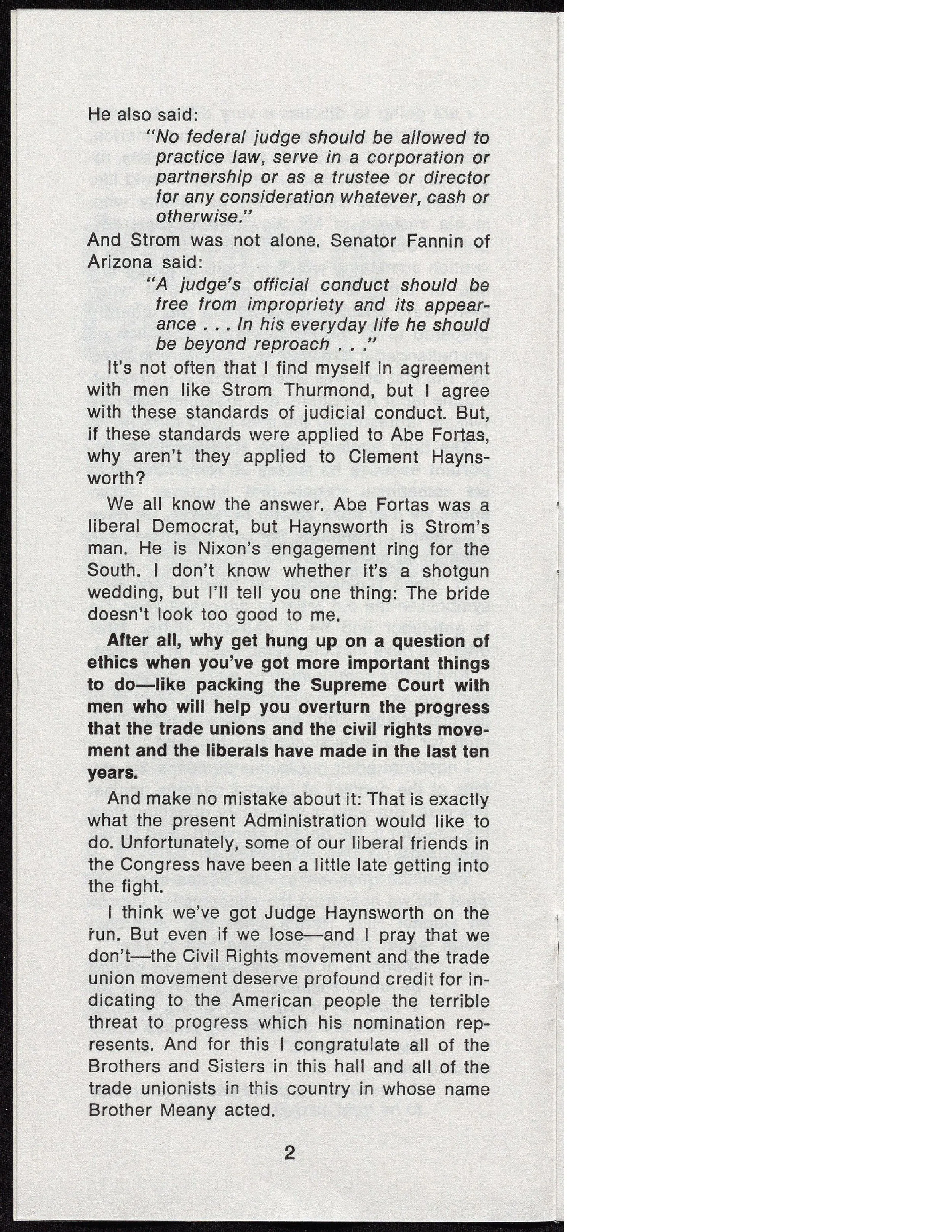
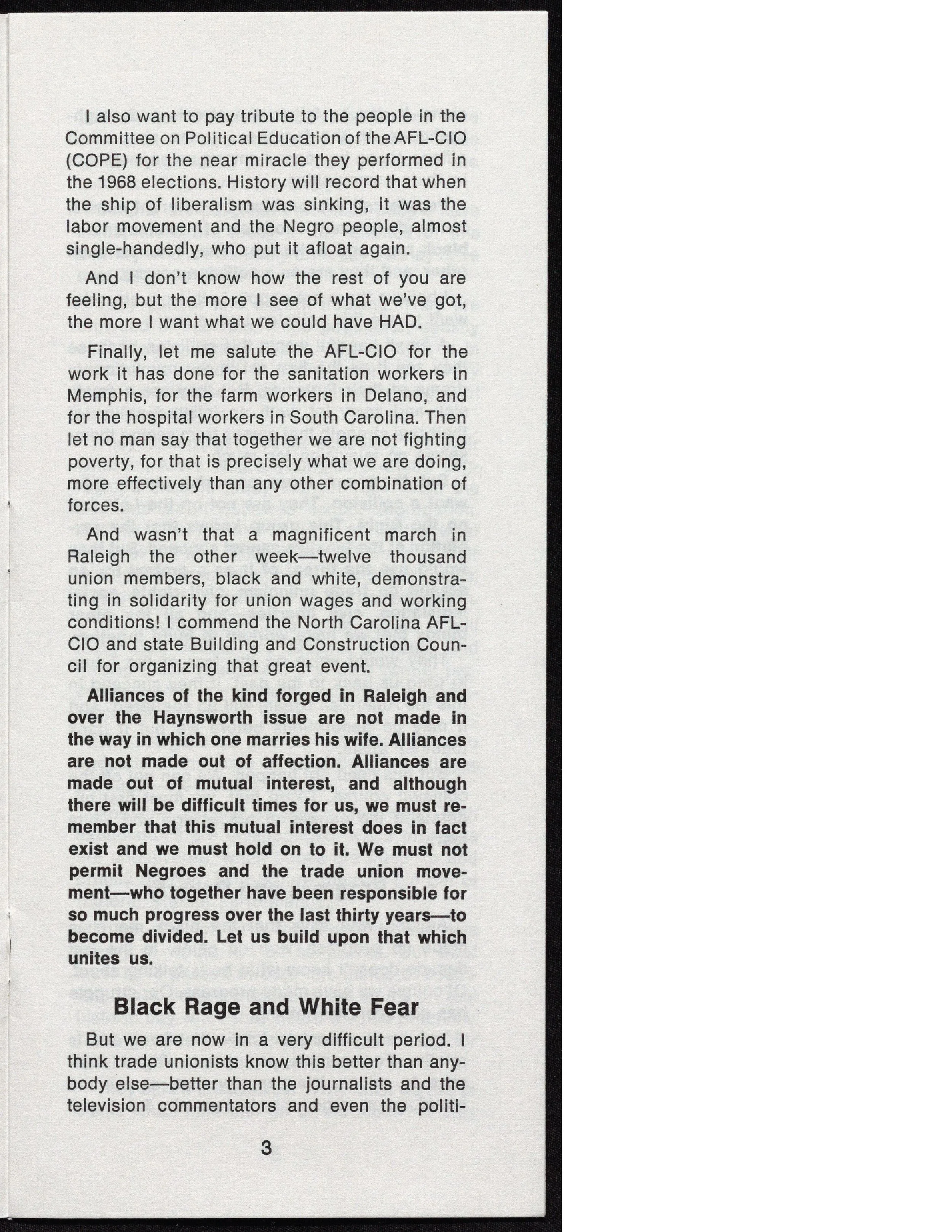



Rustin, Bayard. Conflict or coalition?: the civil rights struggle and the trade union movement today. Pamphlet, October 3, 1969. Industrial Relations Ephemera, Folder 2. Princeton University Digital Library. https://dpul.princeton.edu/catalog/f3d22755-628e-4953-9234-6c3bc9b21a07.
