
Please note: The exact date of this draft is unknown.
Description
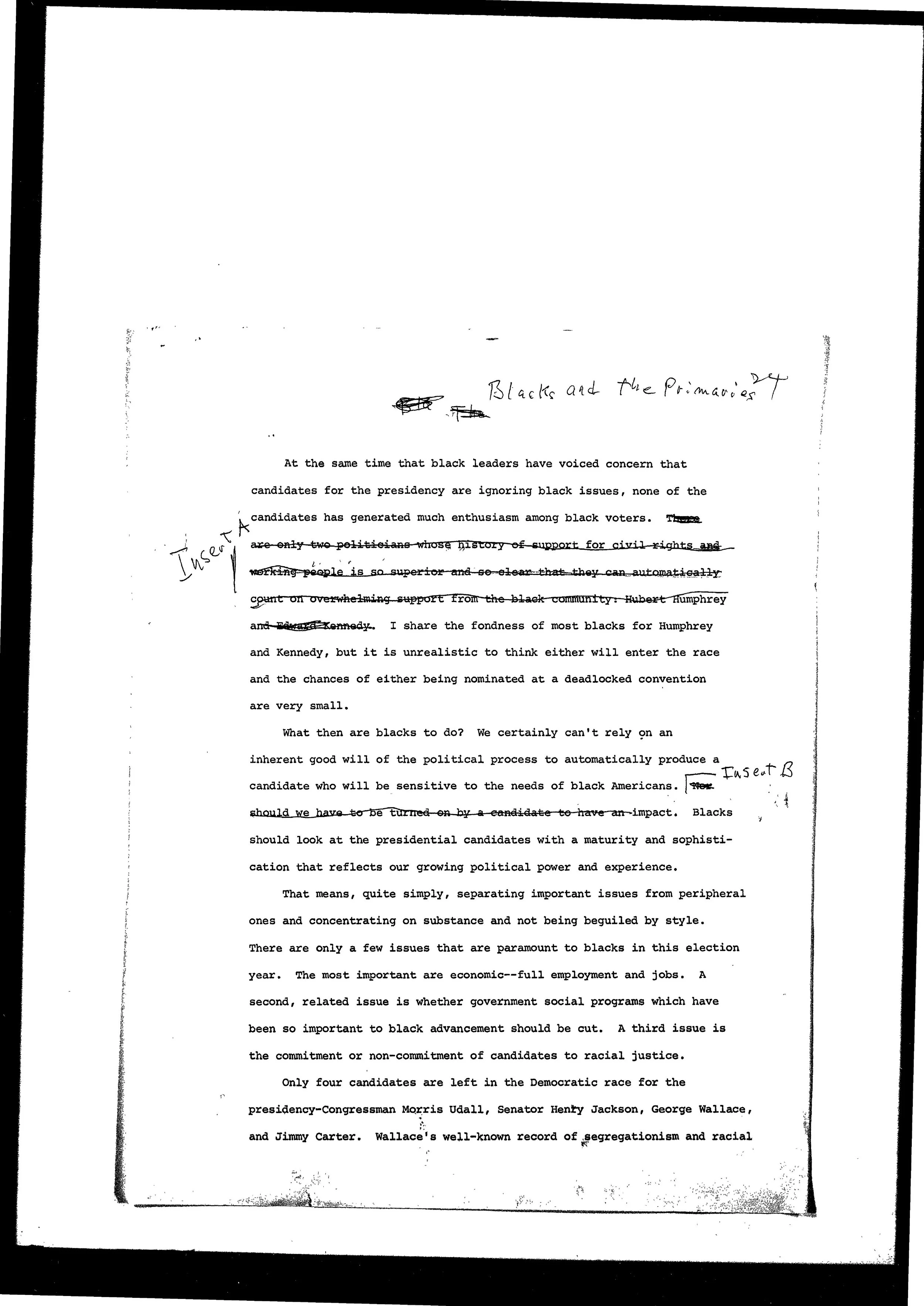
In this 1976 draft, Bayard Rustin offers a clear-eyed analysis of the Democratic presidential candidates: Morris Udall, Henry "Scoop" Jackson, George Wallace, and Jimmy Carter. Rustin argues that Black voters should move beyond waiting for a candidate who inspires them emotionally and instead focus on who offers the strongest plan for jobs, social programs, and racial progress. He urges a more mature kind of politics-one based on concrete results, not just personality.
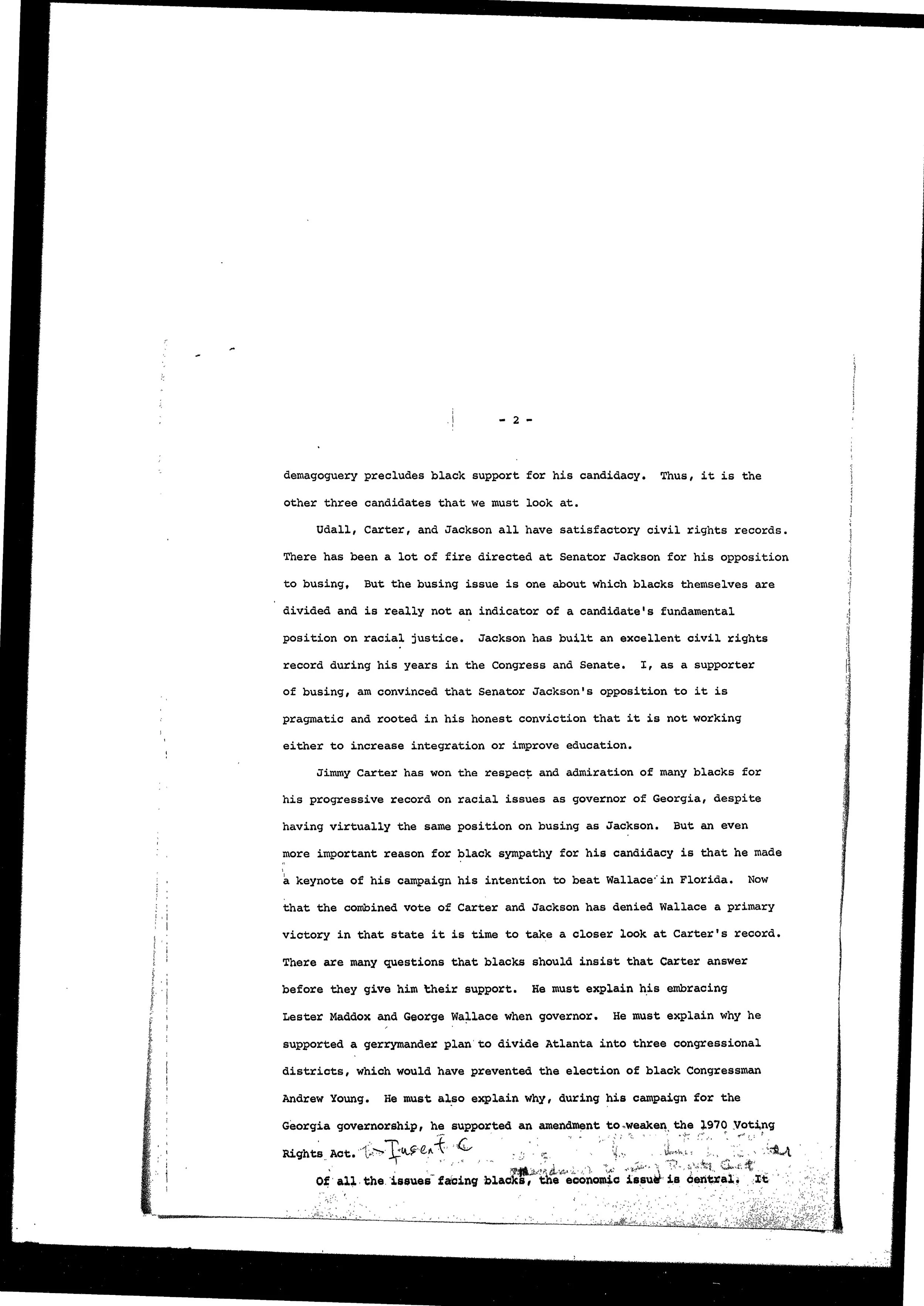
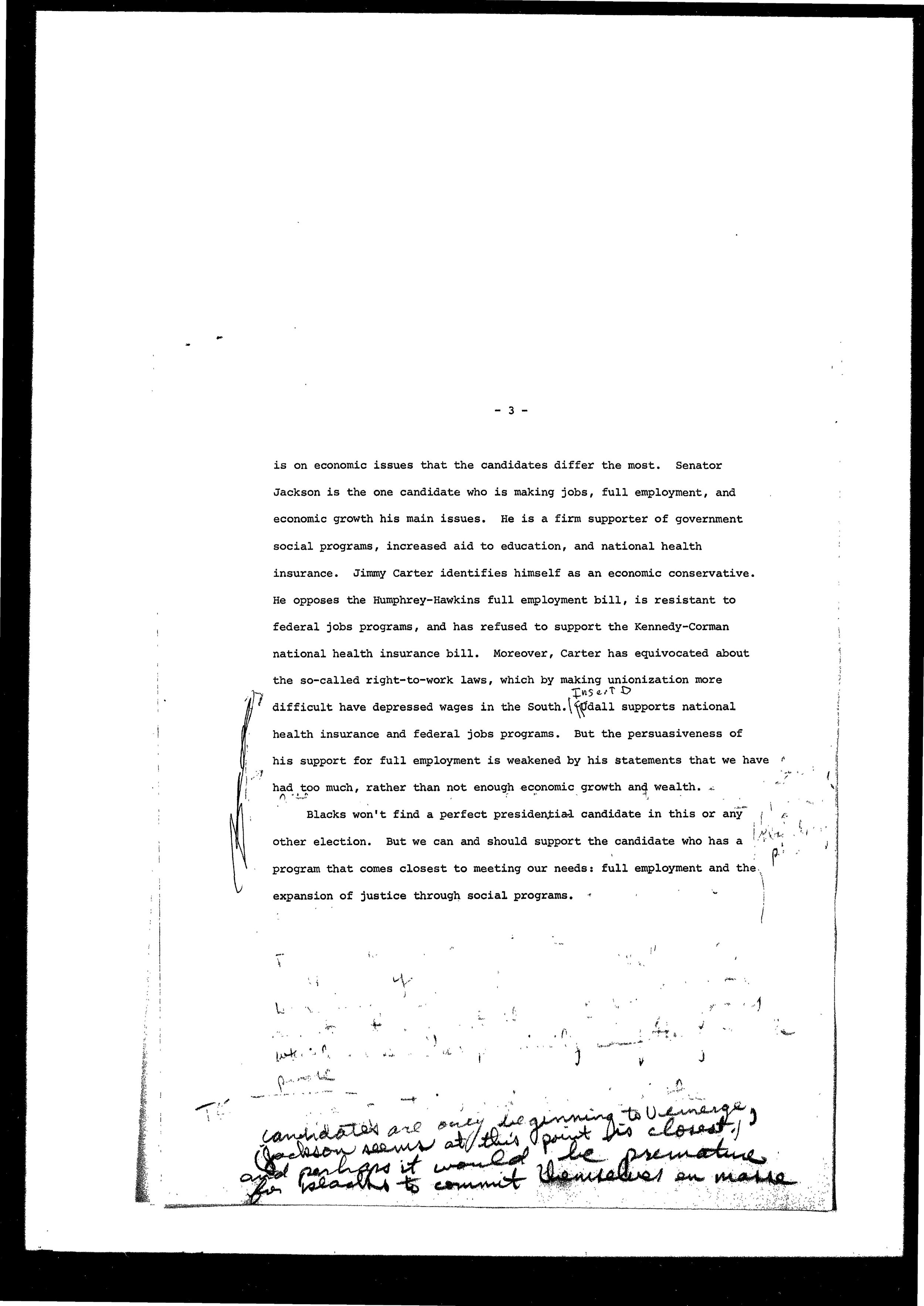
Rustin pays particular attention to Jimmy Carter, recognizing his progressive record in Georgia but demanding accountability for his past alliances with segregationist figures like Lester Maddox and George Wallace. He also criticizes Carter's support for an Atlanta gerrymandering plan that blocked Andrew Young's election and his backing of an amendment that weakened the 1970 Voting Rights Act. Rustin calls Carter an "economic conservative" because of his opposition to the Humphrey-Hawkins full employment bill and his hesitation on national health insurance.
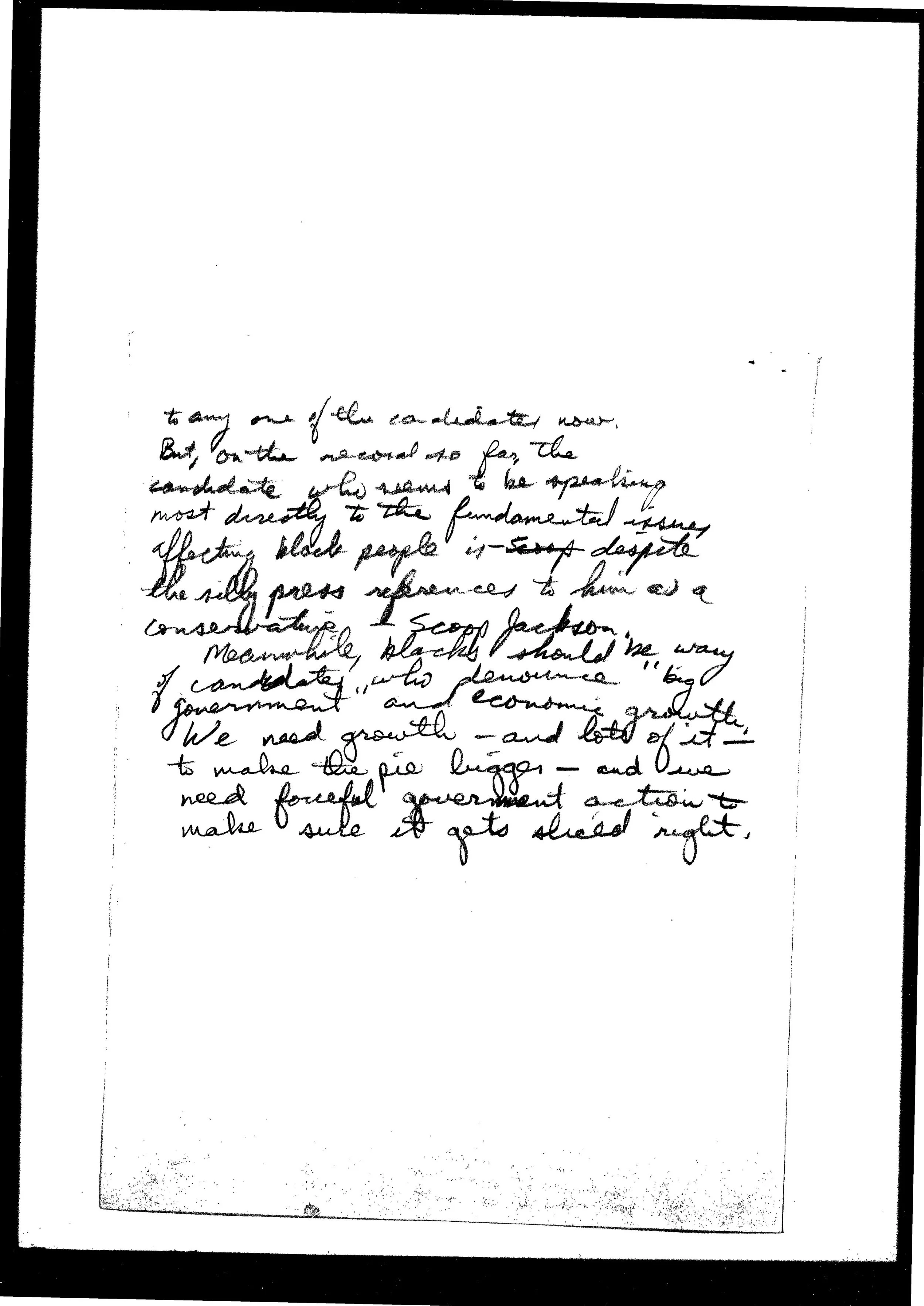
Although Carter was attracting growing national attention, Rustin found more substance in Henry Jackson's campaign. Despite Jackson's controversial stance against busing, Rustin saw him as the only major candidate committed to full employment and robust federal action to grow the economy. The draft ends with a call for Black voters to avoid "racial isolation" and to support whichever candidate's program most directly aims to expand jobs and social protections for working people.
Historical Context
The 1976 Democratic primaries came at a moment of major change in both national politics and Black political strategy. After the disarray of the 1972 campaign, Democrats were searching for a unifying figure who could appeal to both Black voters and white moderates. Jimmy Carter’s campaign succeeded in part because he won over Black voters in Florida and North Carolina, lessening George Wallace’s lingering segregationist pull. Still, many civil rights veterans like Rustin remained wary of Carter’s conservative economic views and his earlier ties to Georgia’s segregationist politics.
At the time, the national debate over busing for school integration was reaching its peak. Rustin urged the movement to keep its focus on economic reform rather than get trapped in what he called “peripheral” battles. He argued that job creation and the protection of social programs would do more to secure freedom and equality than school busing disputes could.
Rustin’s support for Henry “Scoop” Jackson also reflected his lifelong loyalty to the labor-liberal coalition that had powered much of mid-century Democratic politics. Jackson’s mix of strong pro-labor economics and hawkish foreign policy fit Rustin’s belief in a disciplined, pragmatic liberalism. This stance also highlighted a growing divide within the Democratic Party—between traditional New Deal progressives like Rustin and a newer generation of “outsider” politicians such as Carter, who favored smaller government and more individualistic appeals.
Rustin, Bayard. "Blacks and the Primaries (Draft)." 1976. Bayard Rustin Papers, Articles on African Americans in Politics, 1942-1987. ProQuest Archival Materials. Accessed via Princeton University Ezproxy. https://login.ezproxy.princeton.edu/login?url=https://www.proquest.com/archival-materials/bayard-rustin-articles-on-african-americans/docview/2595042694/se-2.
