Please note: The exact date of this pamphlet is unknown.
Description
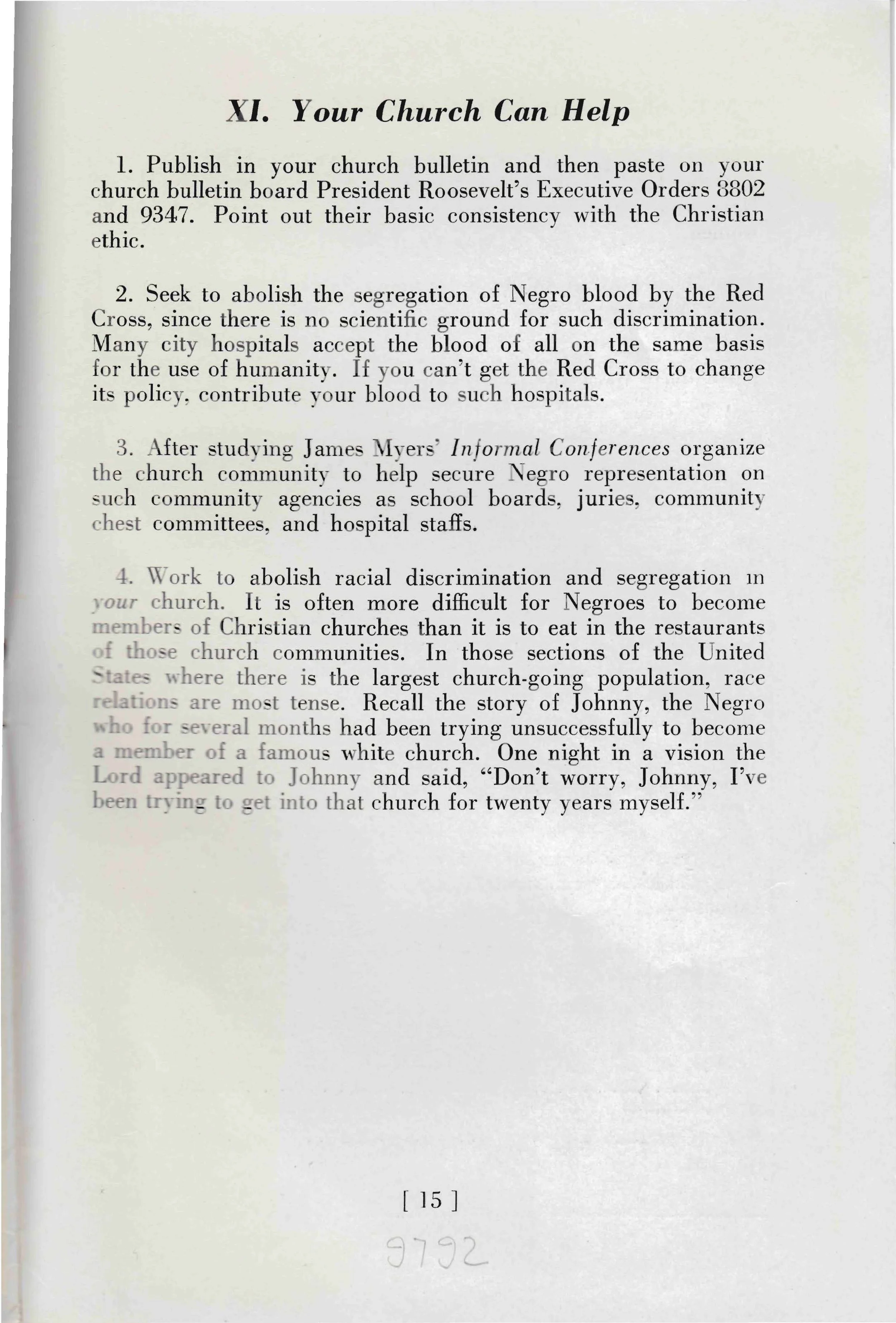
In this early instructional guide, Bayard Rustin provides a practical framework for individuals to confront the "hate and fear" generated by wartime social shifts. He argues that the "nature of politics" and social change begins at the personal level, offering a set of techniques for nonviolent intervention in everyday situations, such as on buses or in restaurants. Rustin emphasizes that the "utility of politics" is found in the disciplined refusal to cooperate with injustice, using a "spirit of self-giving love" to transform the wrong-doer rather than seeking retributive punishment.
The primer highlights the importance of coalition politics even in small-scale interactions, suggesting that "interracial" cooperation is the most effective way to break down the "legal foundations of racism" in the North. Rustin uses humorous anecdotes and illustrations to show that direct action is not just a protest but an educational tool designed to reveal the "inner light" of both the oppressed and the oppressor. By providing a "blueprint" for individual responsibility, he seeks to move the movement from a state of "competitive scarcity" toward a shared sense of abundance and human dignity.
Historical Context
Written during the height of World War II, this document reflects the early work of the Fellowship of Reconciliation (FOR) and the newly formed Congress of Racial Equality (CORE). This was a period marked by increasing de facto segregation in Northern cities as Black workers migrated for war industry jobs, leading to heightened racial friction. Rustin’s primer was a direct response to this "enduring disappointment" of wartime democracy, where the fight against fascism abroad had not yet translated into freedom at home.
The document captures the "revolutionary" phase of nonviolence before it became a mass movement in the 1950s and 60s. It emphasizes the "professionalization" of activism, where participants were expected to be trained, disciplined, and committed to a long-term strategy of integration. By rooting his tactics in the "one blood" theology of the Bible and the pacifist principles of the FOR, Rustin sought to build a moral foundation for the political battles that would eventually lead to the "Great Society".
See PDF.
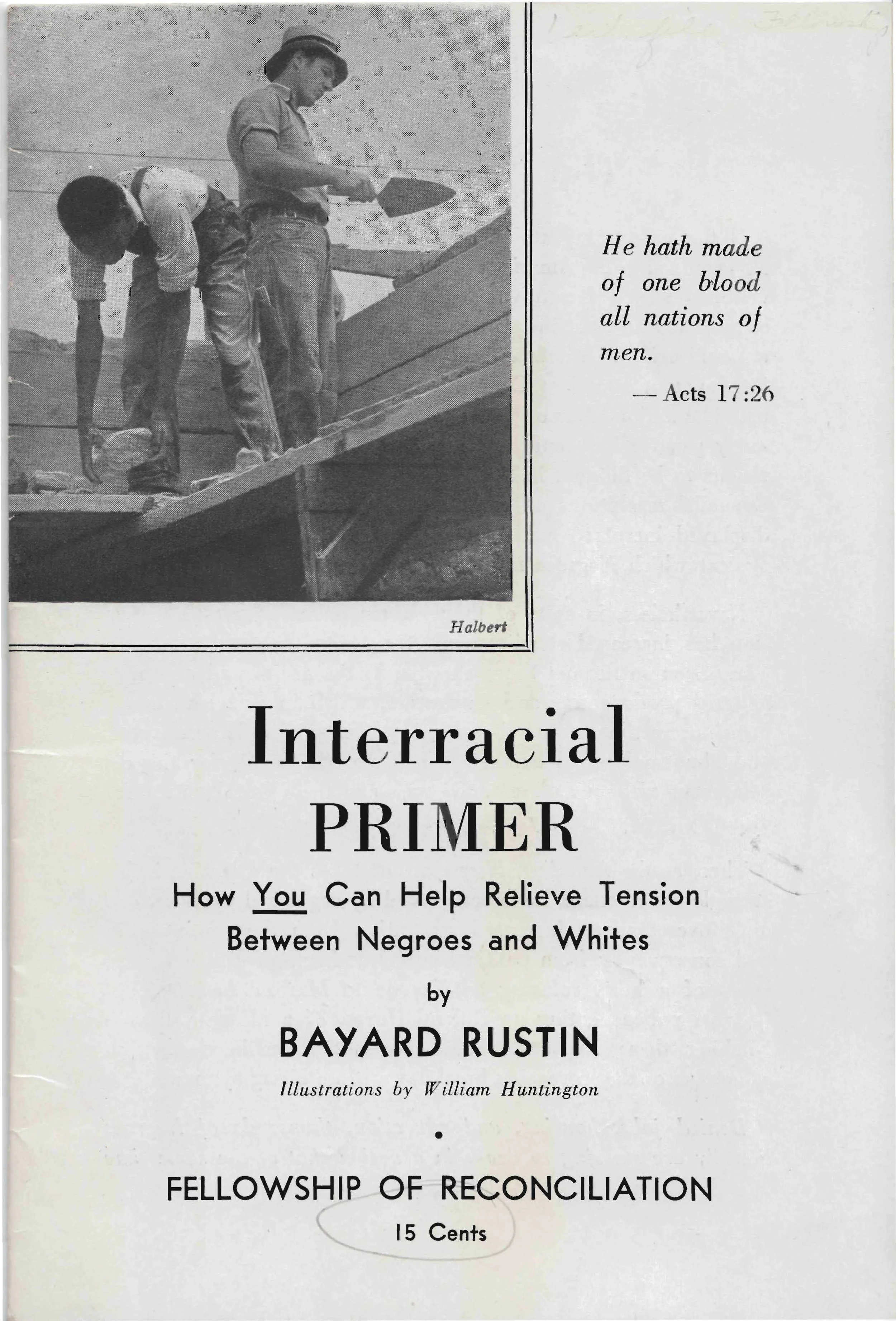
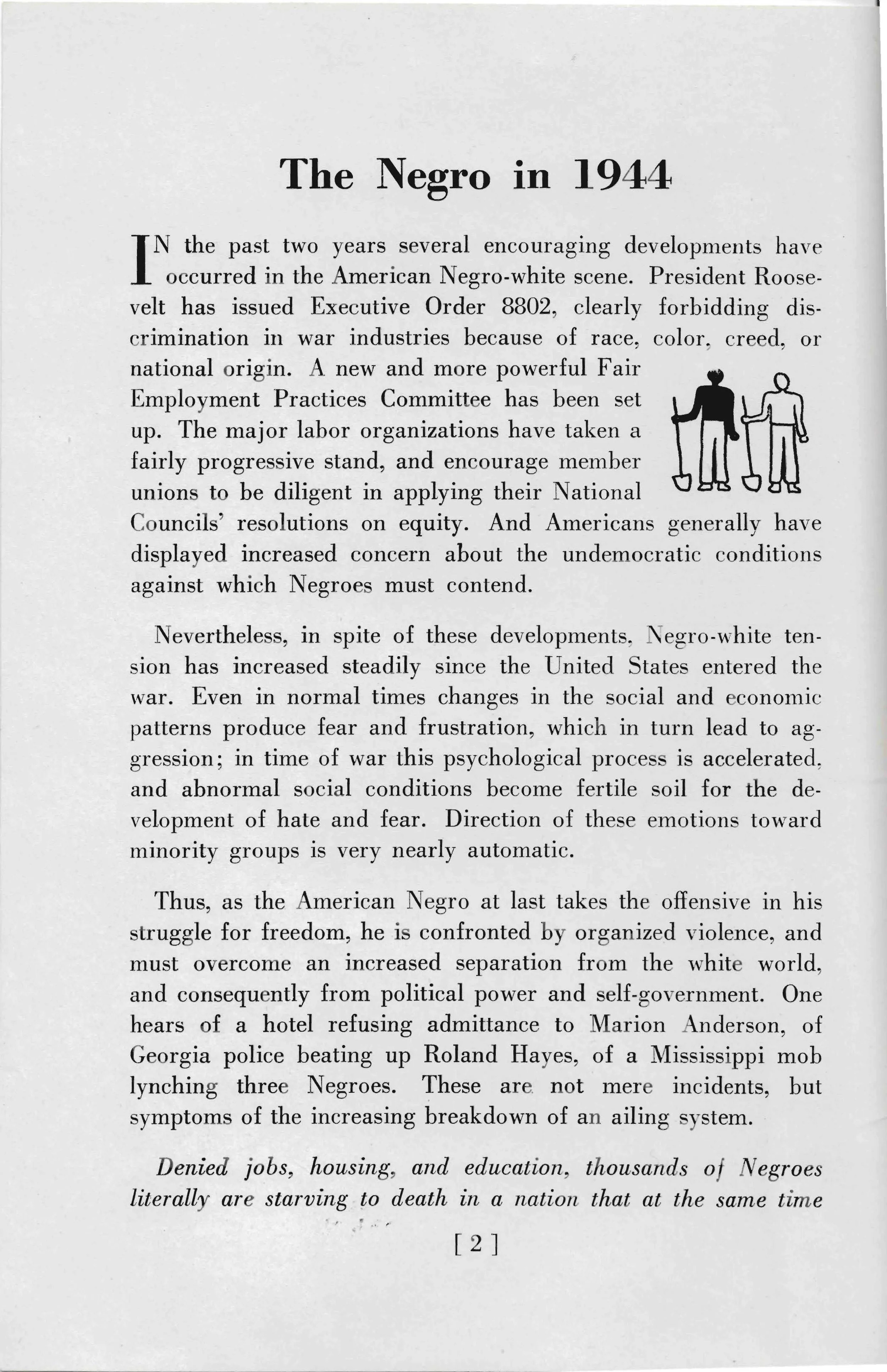
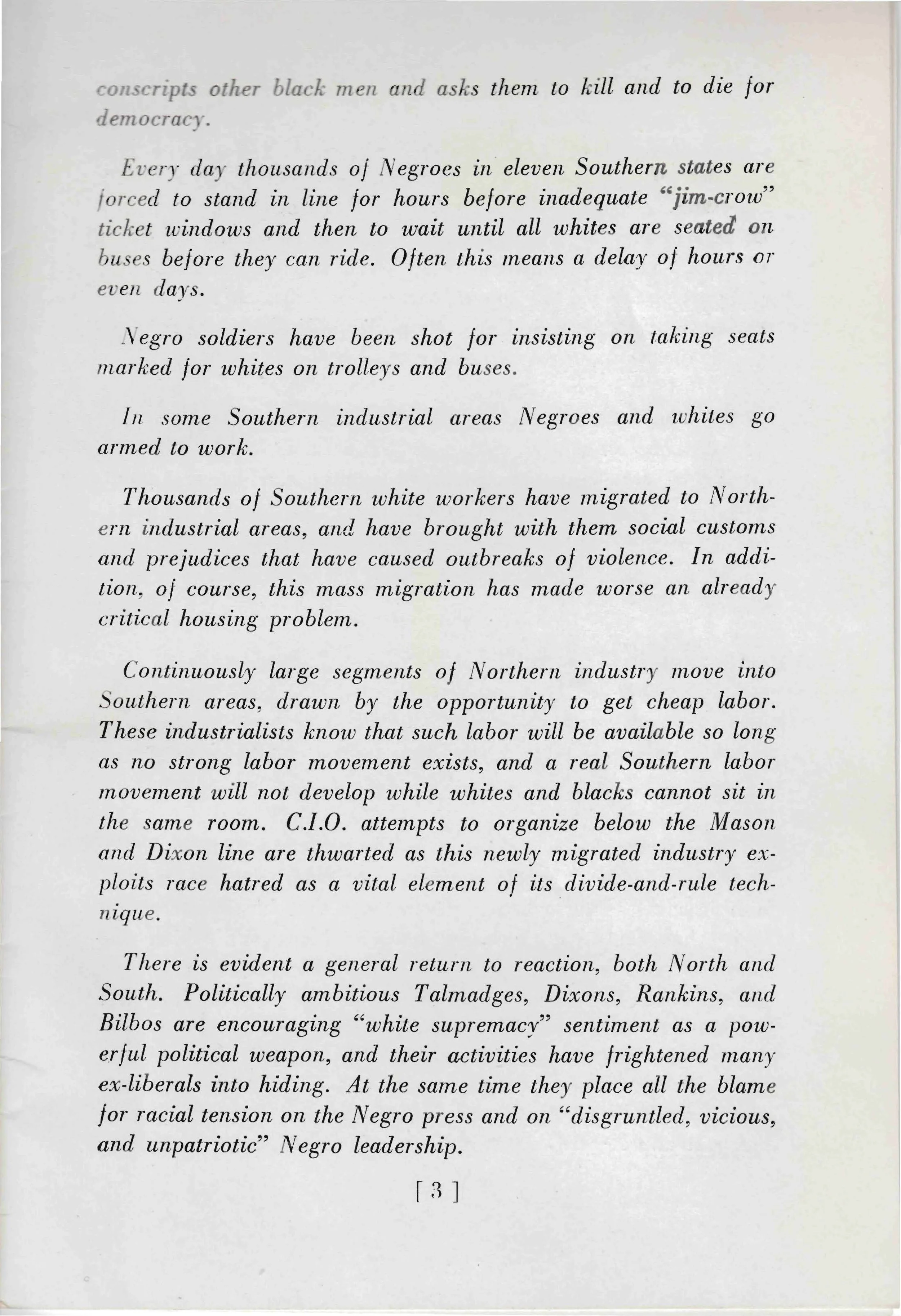
Rustin, Bayard. Interracial Primer: How You Can Help Relieve Tension Between Negroes and Whites. New York: Fellowship of Reconciliation, 1943.
