Please note: The exact date of this memorandum is unknown.
Description
In this 1944 memorandum for the Fellowship of Reconciliation, Bayard Rustin provides a naked assessment of economic discrimination, moving beyond theoretical protest to offer a technical "lesson plan" for securing employment. Rustin maintains that activists must utilize the "strategic moment" of the Christmas rush to force employers to hire minority workers as sales clerks. He outlines a precise administrative process that begins with a "discovery" phase to identify stores where labor shortages are likely. For Rustin, the utility of politics lies in the ability to convert a minority group's purchasing power into a "wedge" that can break open closed employment markets.
Rustin emphasizes a disciplined escalation of tactics, starting with informal conferences and moving toward "Direct Action" only if negotiations fail. He provides specific examples of methods, such as picketing school officials who provide "segregated lists" to employers and organizing "poster walks" in downtown areas. Rustin even includes a template for a boycott note, where customers inform store owners that they will trade elsewhere unless "brotherhood" is reflected in hiring practices. By documenting these "logistics of resistance," Rustin sought to professionalize the struggle, ensuring that local committees had a blueprint for removing the "economic pinch" felt by Negroes, Jews, and other marginalized groups.
Historical Context
The mid-1940s represent a period of revolutionary transition where the non-violent techniques used in theaters and restaurants were first systematically applied to the field of economics. This era was unique for the way activists sought to exploit the labor shortages created by World War II to challenge the legal and social foundations of employment discrimination. Intellectual life within the movement was focused on creating an "alternative to violence" that was both workable and consistent with Christian ethics. There was a growing conviction that the nature of politics required a full extension of civil rights advocacy into the daily lives of the working class.
This period was specifically shaped by the federal government's struggle to enforce Executive Order 8802, which established the Fair Employment Practice Committee (FEPC), the wartime agency charged with investigating and preventing racial discrimination in defense‑industry employment. A defining moment of this friction occurred in 1944 during the Philadelphia Transit Strike, where white workers walked off the job to protest the promotion of eight Black employees to motormen positions. The strike paralyzed the city’s war production, forcing the Army to intervene. Troops were deployed to seize and operate the transit system under federal wartime authority, restoring service so that defense‑plant workers could reach their jobs. This event underscored the fragility of the interracial majority and highlighted the exact "economic pinch" Rustin addresses. By suggesting that church groups apply the same boycott techniques they used against "intoxicants" to discriminatory stores, thinkers of this period sought to bypass such industrial sabotage by building consumer-based economic pressure that prioritized the socialization of fair hiring practices.
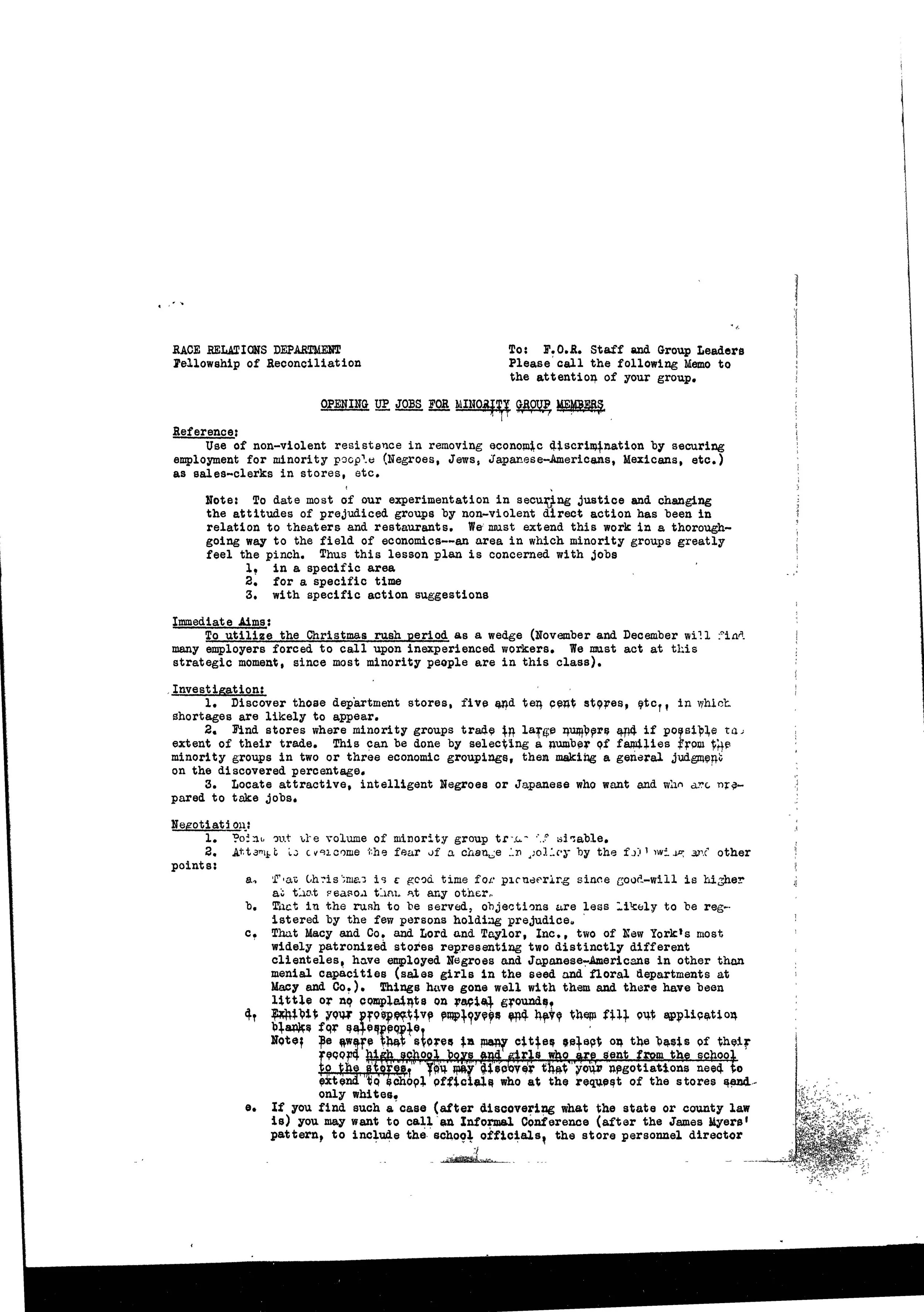
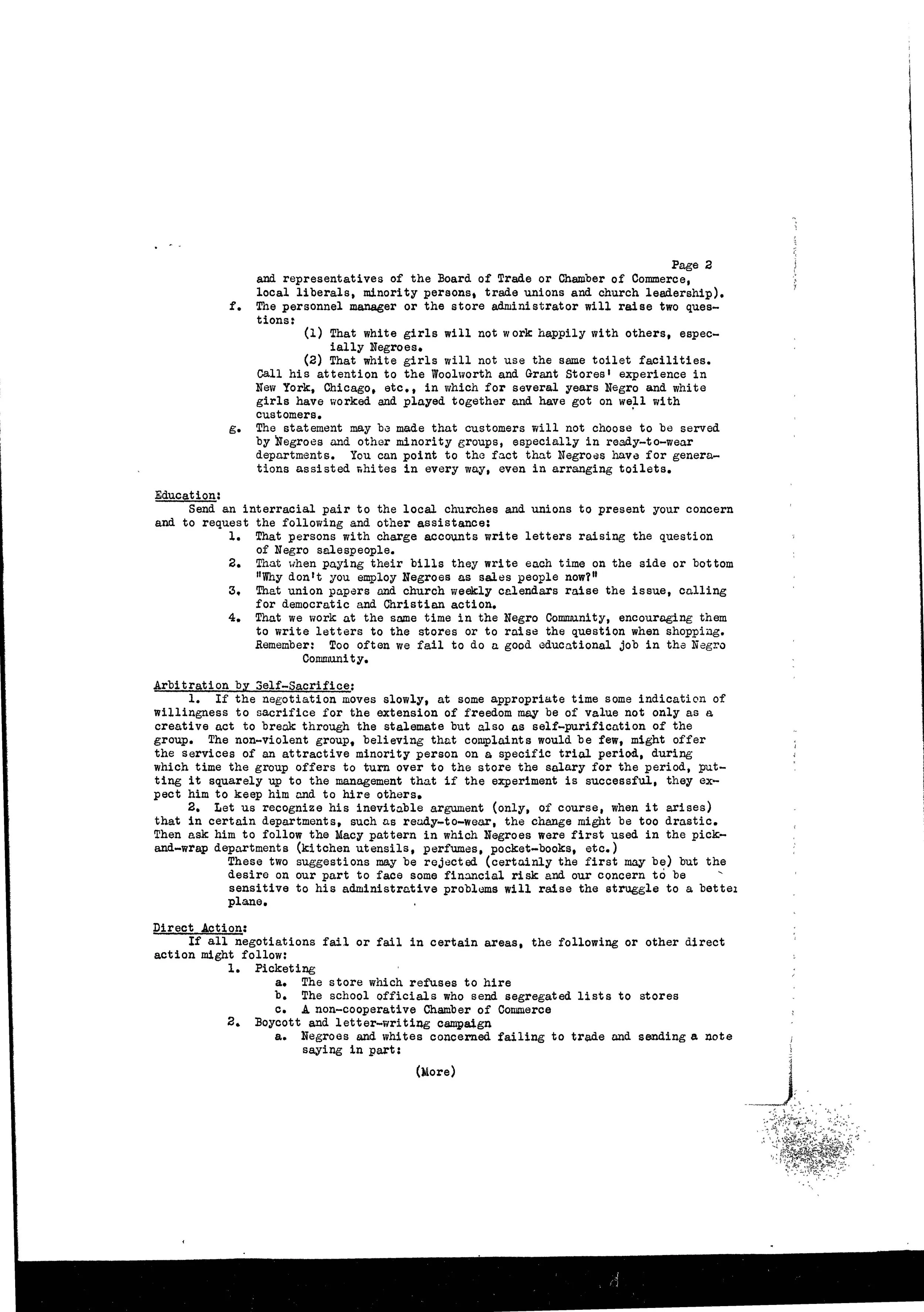
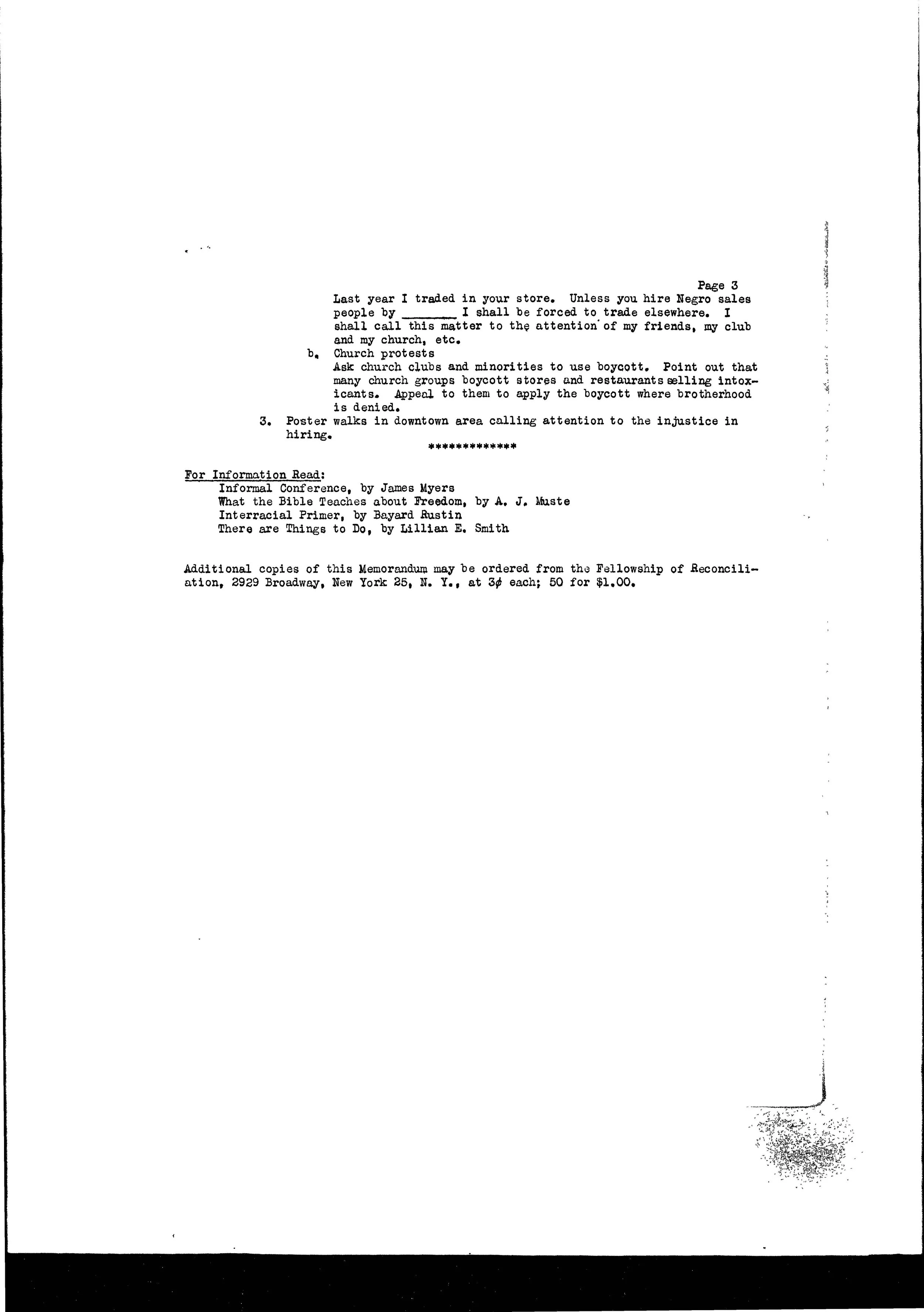
Rustin, Bayard. "Opening Up Jobs for Minority Group Members." Racial-Industrial Department, Fellowship of Reconciliation, 1944.
