Please note: The exact publication date of this guide is unknown.
Description
In this instructional guide compiled with Davis Platt, Bayard Rustin offers a naked assessment of individual responsibility, asserting that "injustice must be recognized wherever it is" to be overcome. Rustin maintains that the first step toward social change is the "rigorous education of the self," providing a specific list of periodicals—such as The Crisis and the Pittsburgh Courier—that activists should subscribe to. He argues that the utility of politics begins with "knowing your facts" and avoiding the fallacy that racism is exclusively a Southern problem. For Rustin, the "blueprint" for justice requires a consistent effort to "continually educate state legislators" through visitation and group pressure.
Rustin emphasizes the role of the church and local institutions in dismantling the "legal foundations" of segregation. He provides specific examples of action, such as seeking to abolish the "segregation of Negro blood" in hospitals and working for the "exchange of pulpits" by white and Negro ministers. He characterizes these suggestions as "first steps" intended to lead to "deeper thought and still more effective action" regarding the spiritual and political causes of racism. By encouraging individuals to "educate your friends" and work against discriminatory state legislation, Rustin sought to professionalize the role of the "ordinary citizen" as an active agent of institutional reconstruction.
Historical Context
The post-war years of the 1940s were defined by an atmosphere of "hopeful tension" as returning veterans and activists challenged the internal contradictions of American democracy. This era was specifically marked by the advocacy for the Costigan-Wagner Act, a federal anti-lynching bill that sought to make lynching a federal crime and hold local officials accountable for failing to protect victims. While the bill was ultimately blocked by Southern filibusters, it served as a primary catalyst for the "educational pressure" and legislative visitation strategies that Rustin advocates for in this guide. There was a concerted effort during this period to move beyond "spectacular" events toward a disciplined, day-to-day engagement with political and religious structures.
There was also a growing recognition that "interracial education" would likely begin at the graduate and seminary levels before filtering down to the rest of society. A key example of this shift was the 1946 Georgia Baptist Convention, where white and Black ministers broke precedent by holding a joint session to discuss racial reconciliation. This event directly mirrors Rustin’s call for an "exchange of pulpits" and reflects a period where activists began targeting the "legal foundations" of the state as the primary battlegrounds for equality. By providing a list of "things to do," leadership sought to prevent the movement from lapsing into sterile protest, focusing instead on achieving consistent and visible results through individual action.
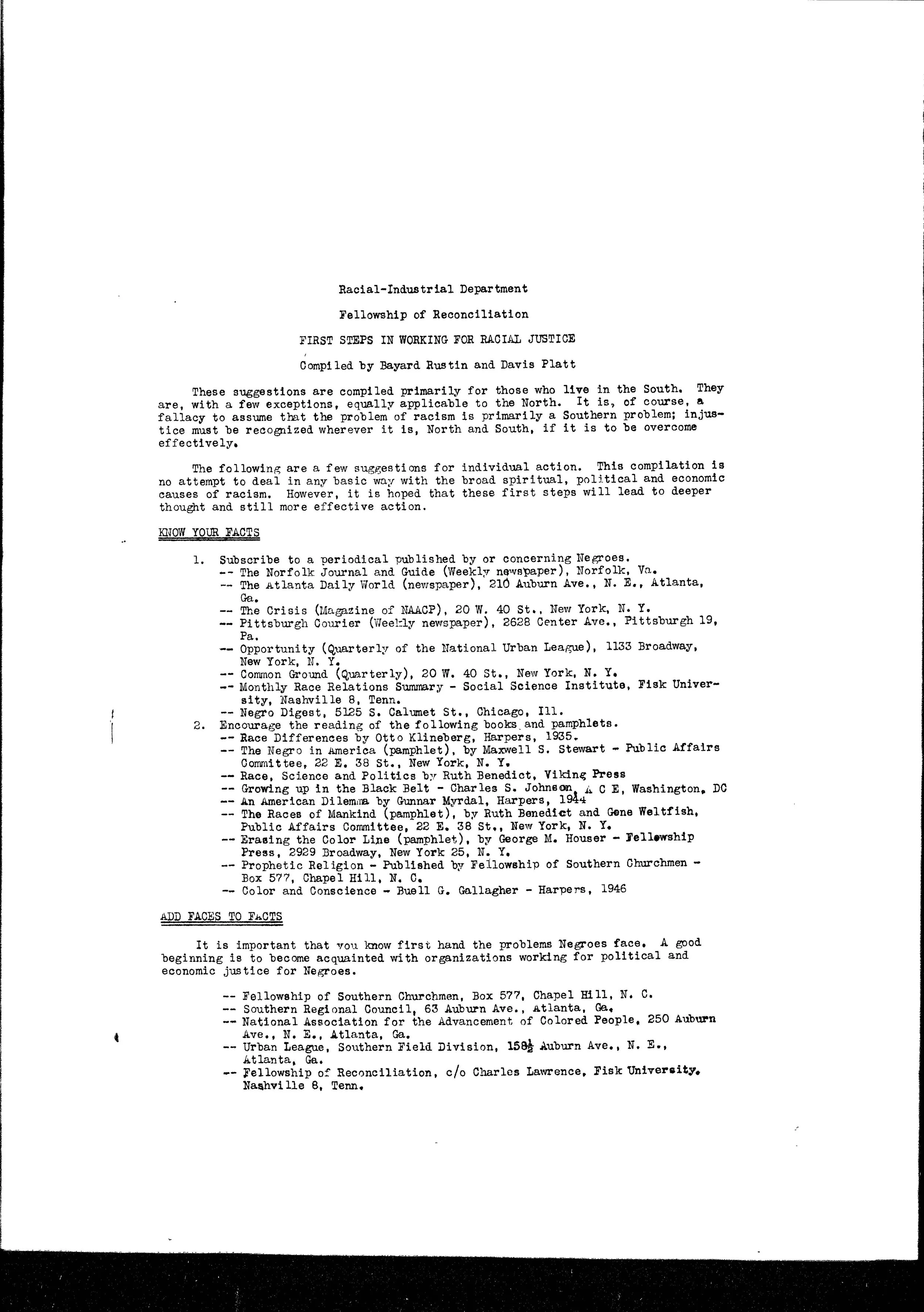
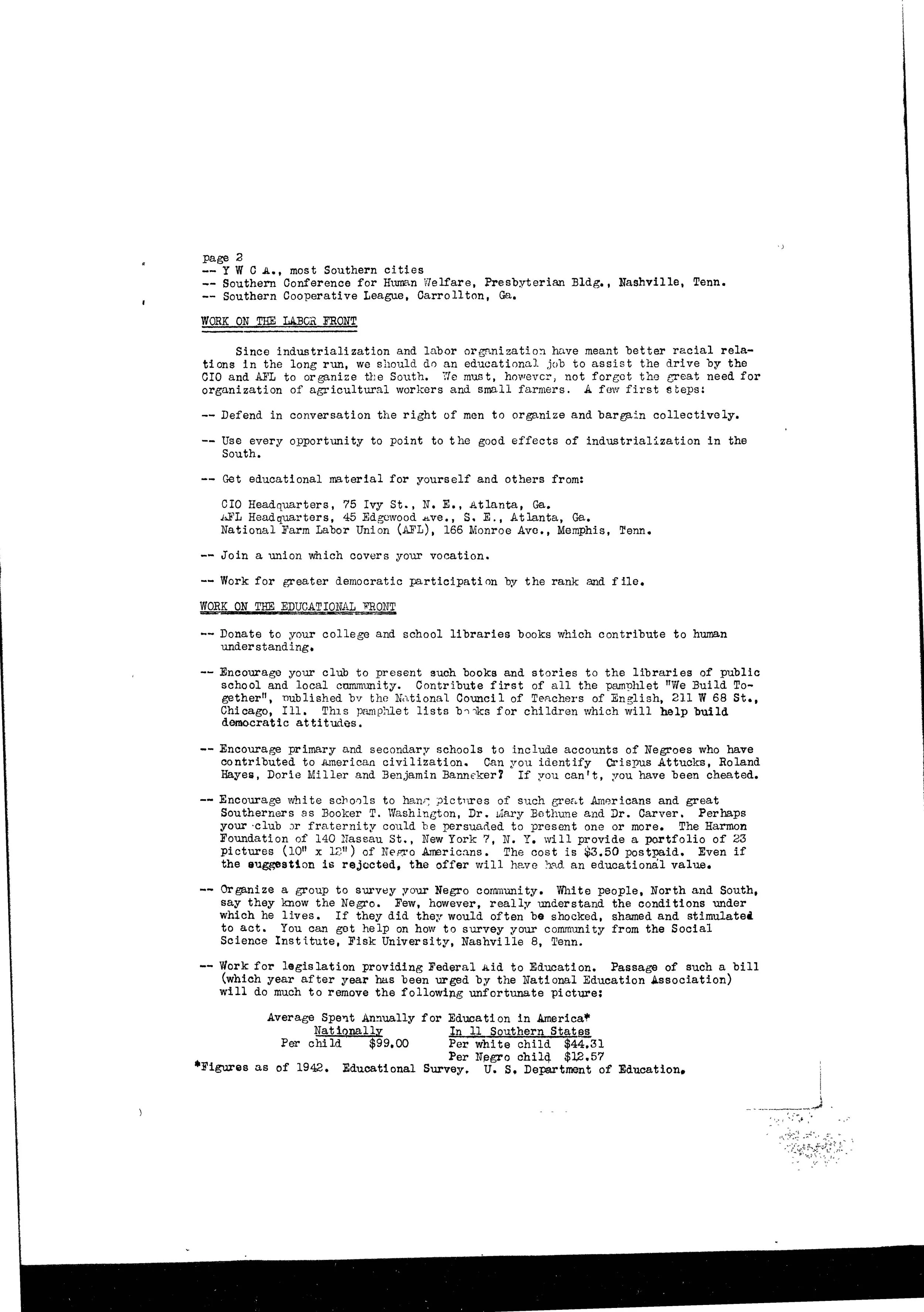
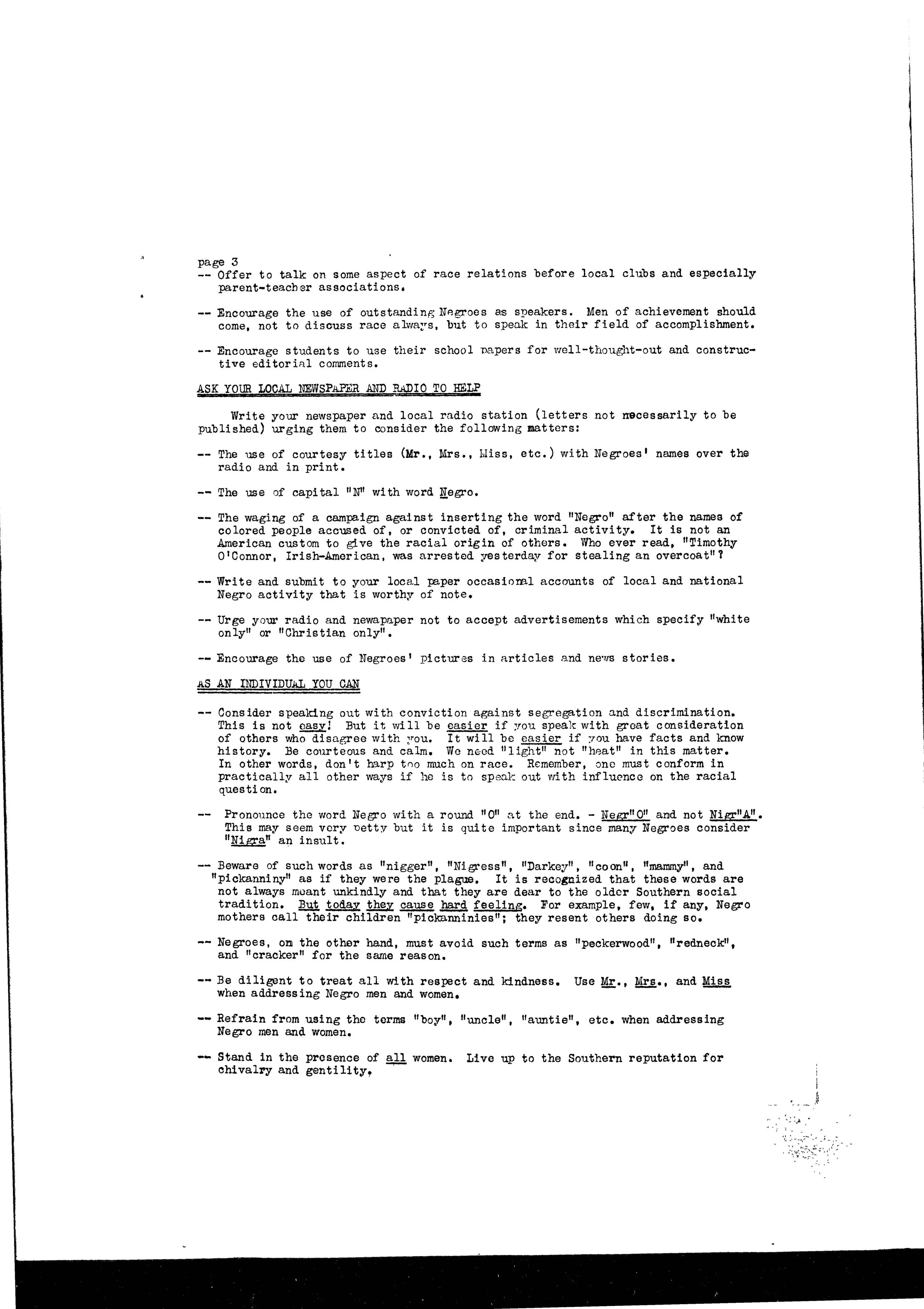
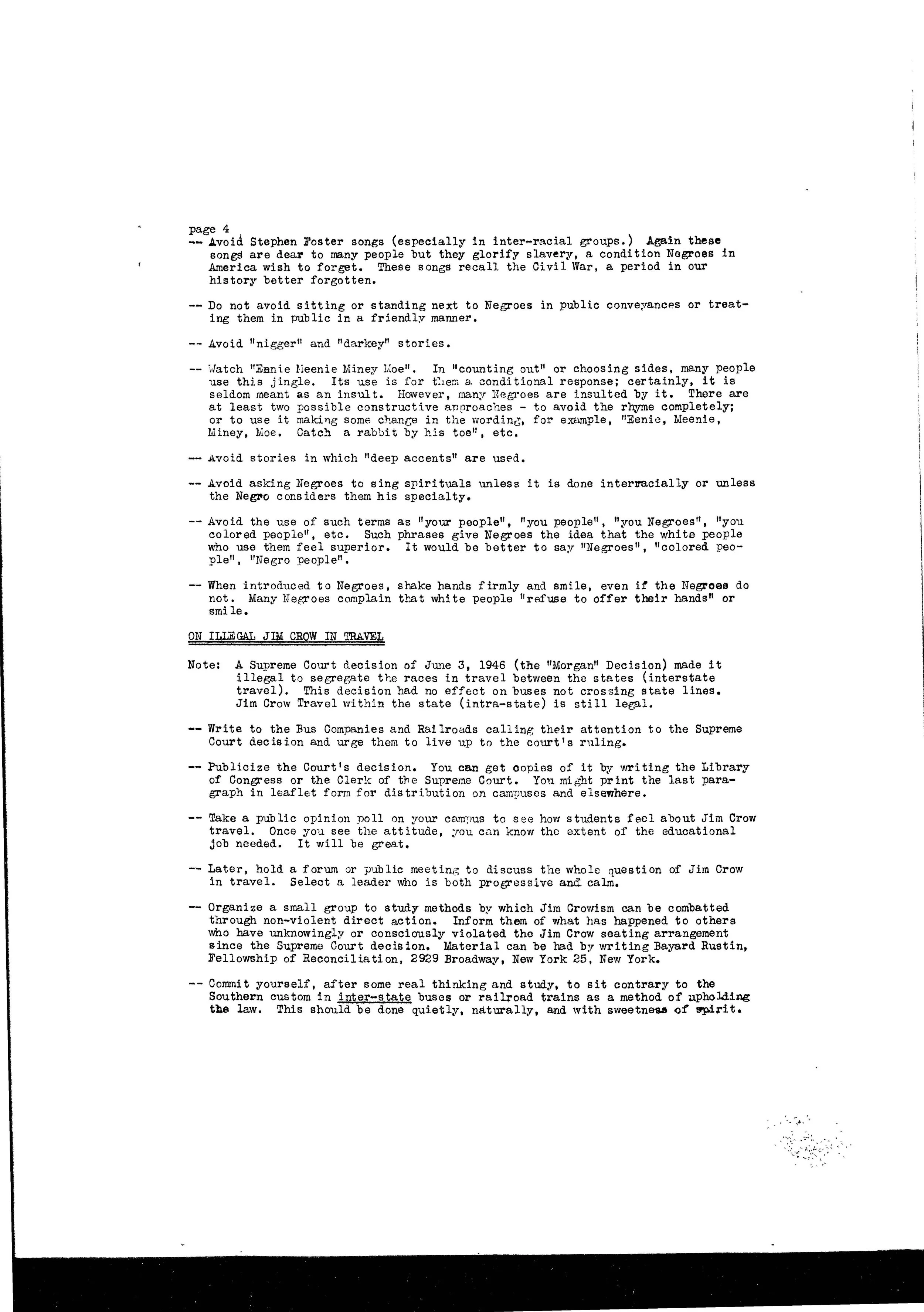
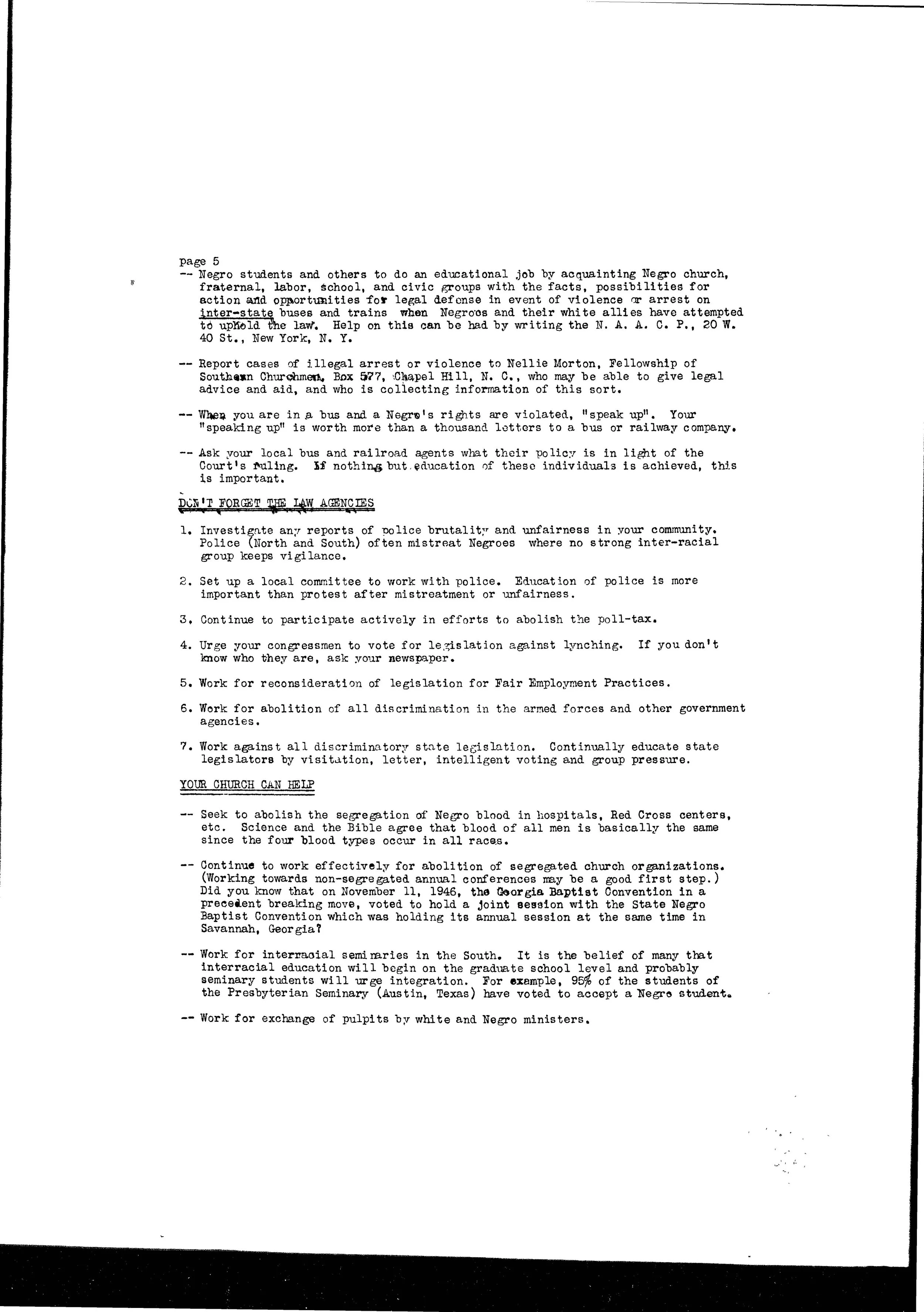
Rustin, Bayard and Davis Platt. "First Steps in Working for Racial Justice." Racial-Industrial Department, Fellowship of Reconciliation, c. 1944–1946.
