
Please note the exact date of this article is unknown.
Description
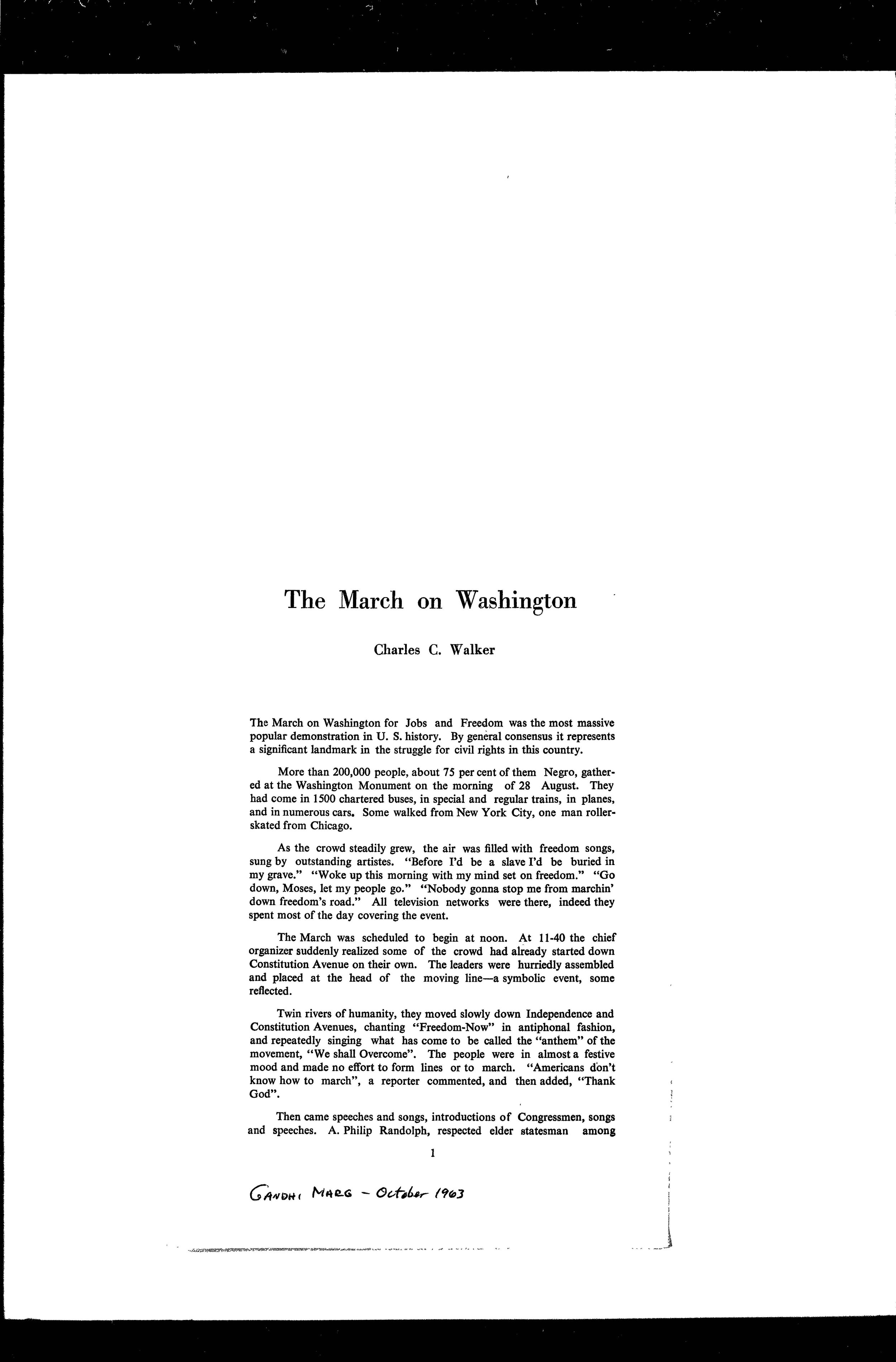
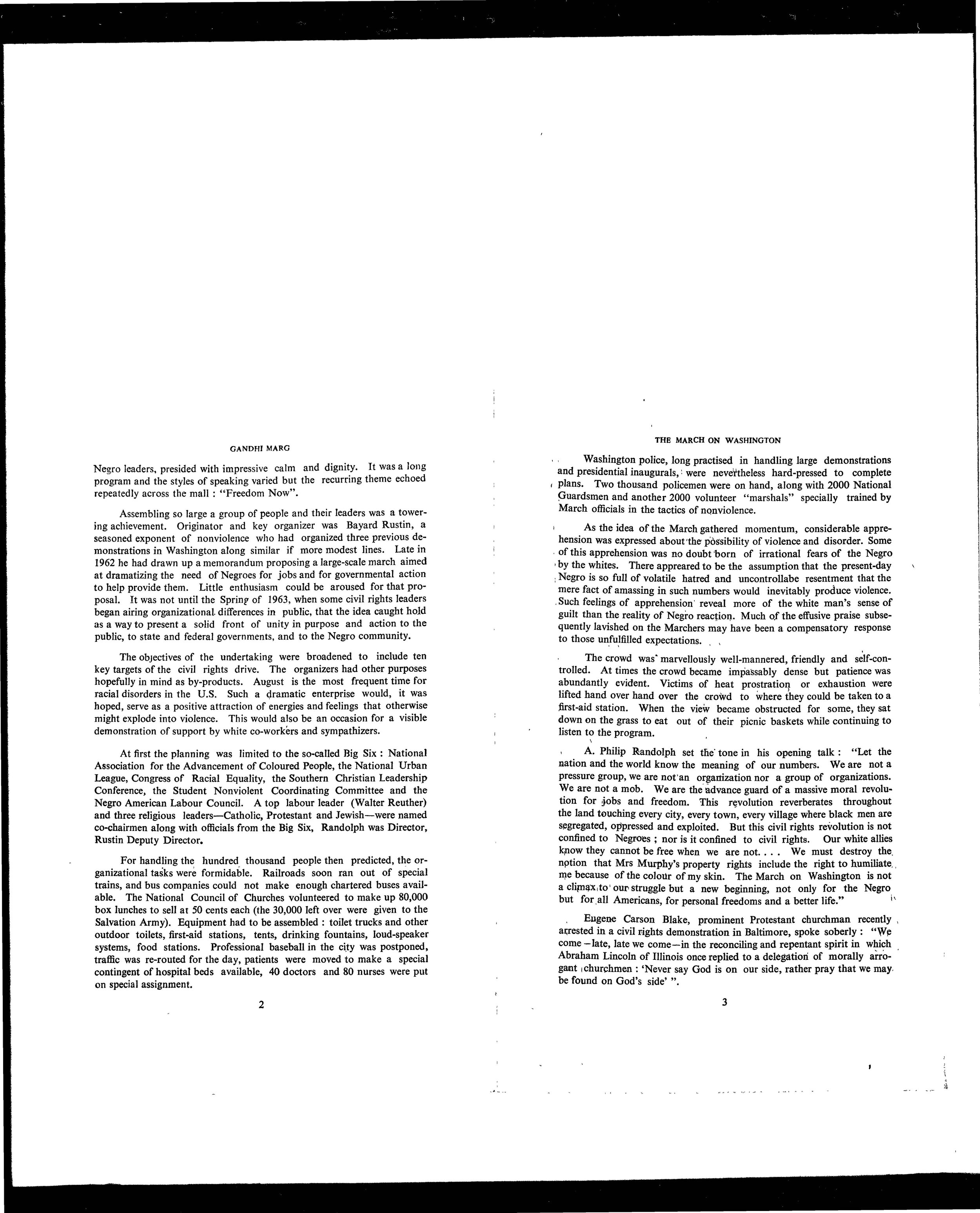
In this analytical piece for Gandhi Marg, Charles C. Walker details the logistical and symbolic magnitude of the March on Washington, which he describes as the most massive popular demonstration in U.S. history. Walker captures the "festive mood" of the 200,000 participants who traveled by bus, train, and even roller skates to the capital, effectively turning Independence and Constitution Avenues into "twin rivers of humanity." The article highlights the specific role of Bayard Rustin, describing him as the "originator and key organizer" and a "seasoned exponent of nonviolence" whose extensive organizational experience provided the foundation for this achievement.
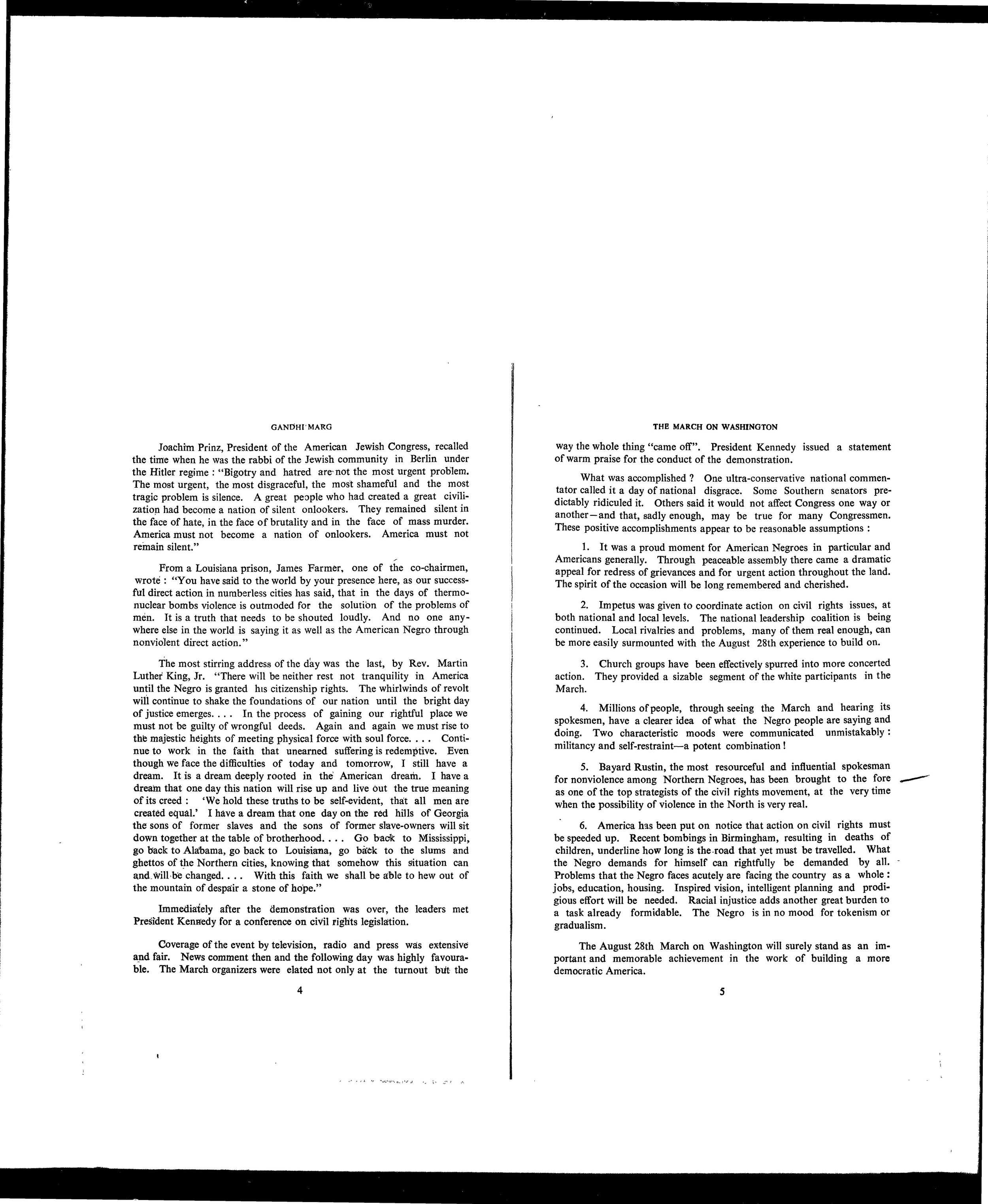
The text documents the precise technical demands of the event, from the distribution of 80,000 box lunches by the National Council of Churches to the mobilization of 40 doctors and 80 nurses on special assignment. Walker also summarizes the day's rhetoric, noting how the diverse speaking styles of leaders such as A. Philip Randolph, Eugene Carson Blake, and Joachim Prinz converged on the recurring theme of "Freedom Now." He concludes with an analysis of Dr. King’s "I Have a Dream" speech, framing it as a redemptive "soul force" that carved a stone of hope out of a mountain of despair.
Historical Context
Walker’s analysis, written only months after the event, addresses the "irrational fears" and widespread apprehension among white Americans that the mass gathering would inevitably lead to violence. He argues that the impeccable conduct of the marchers served as a direct rebuttal to these prejudices and a "compensatory response" to unfulfilled expectations of disorder. The article underscores that the March was intentionally scheduled for August, traditionally the month with the highest frequency of racial unrest, to redirect energies that might otherwise have erupted into violence.
A significant portion of the context is devoted to Rustin’s emergence as a top strategist of the civil rights movement. Walker notes that while Rustin’s 1962 proposal for a large scale march initially garnered little enthusiasm, the internal organizational differences that surfaced in the spring of 1963 made the March a necessary vehicle for presenting a "solid front of unity." The article concludes by positioning the March not as a climax but as a "new beginning" for American democracy, warning that the path ahead remained long and that the Negro community was in no mood for "tokenism or gradualism."
Walker, Charles C. "The March on Washington." Gandhi Marg, October 1963.
