
Please note: This article was published in a March 1985, The Crisis issue.
Description
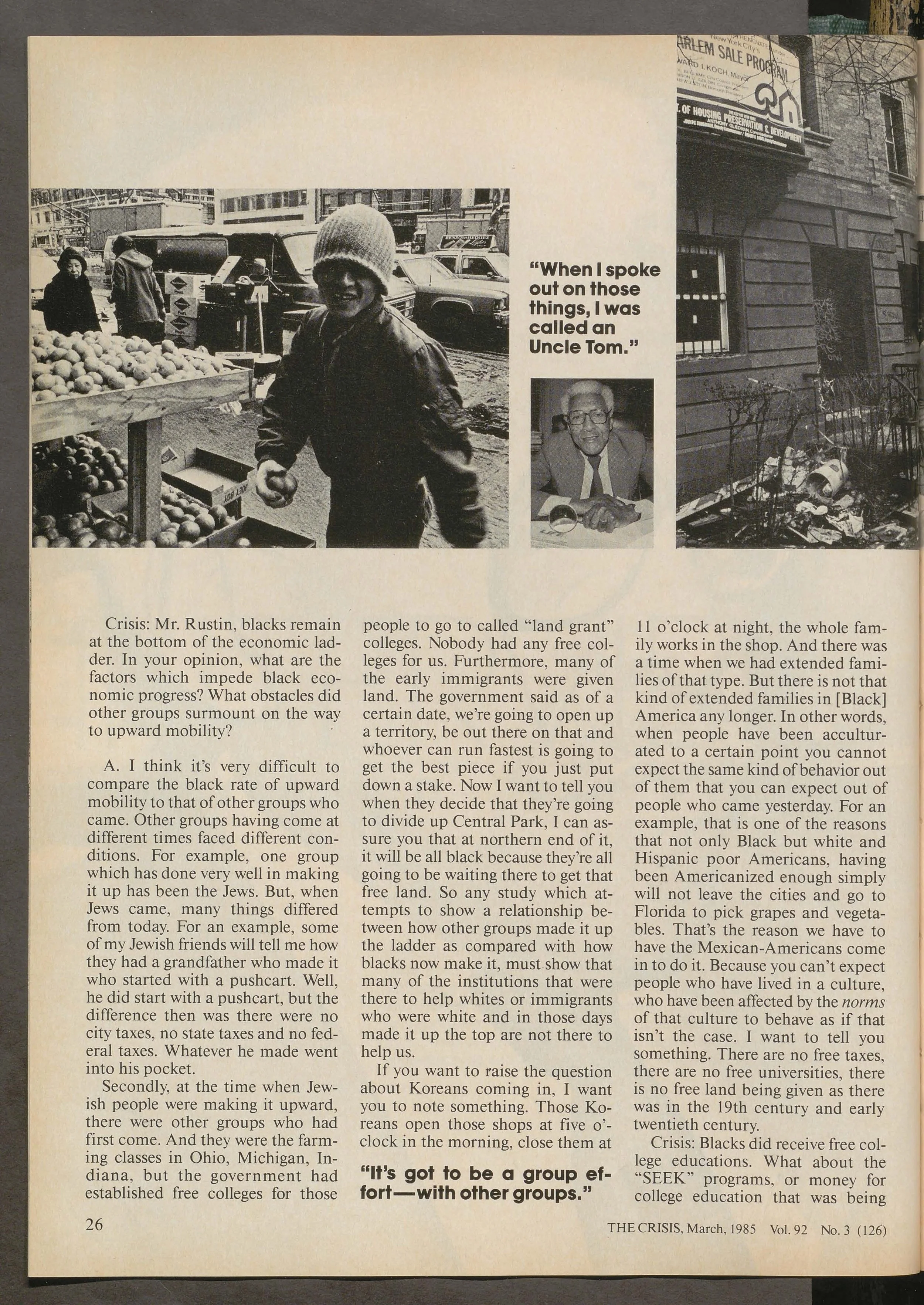
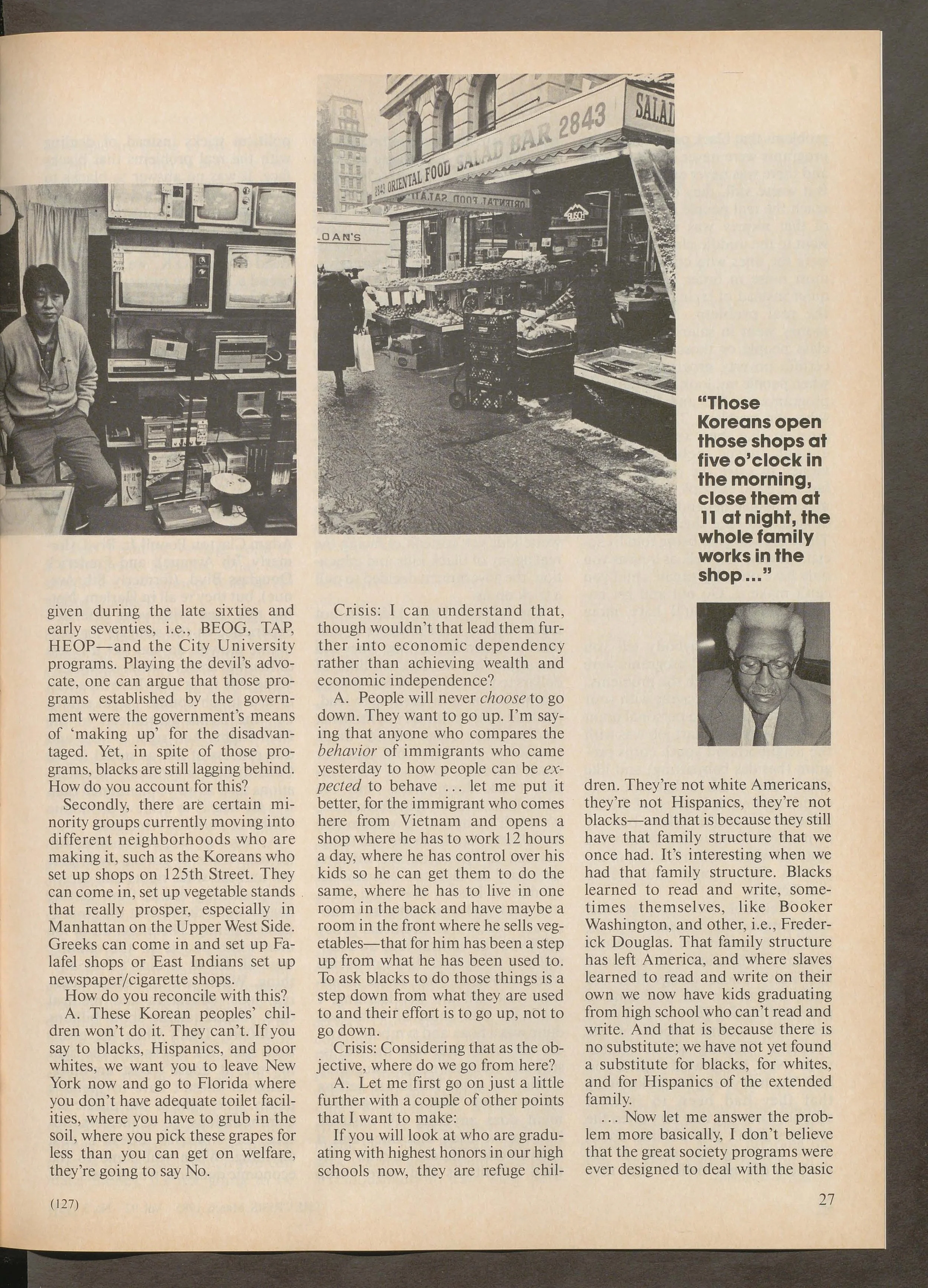
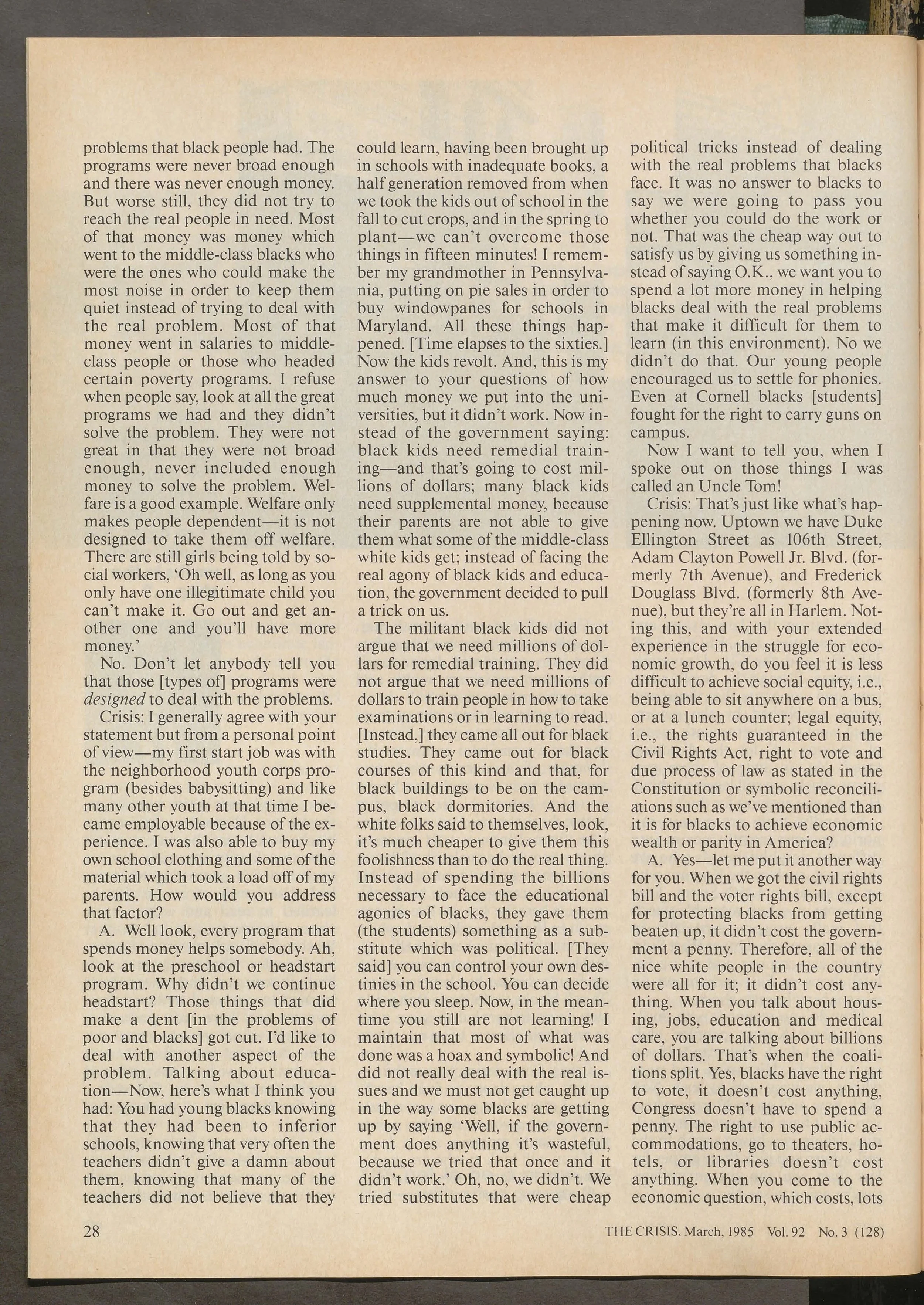
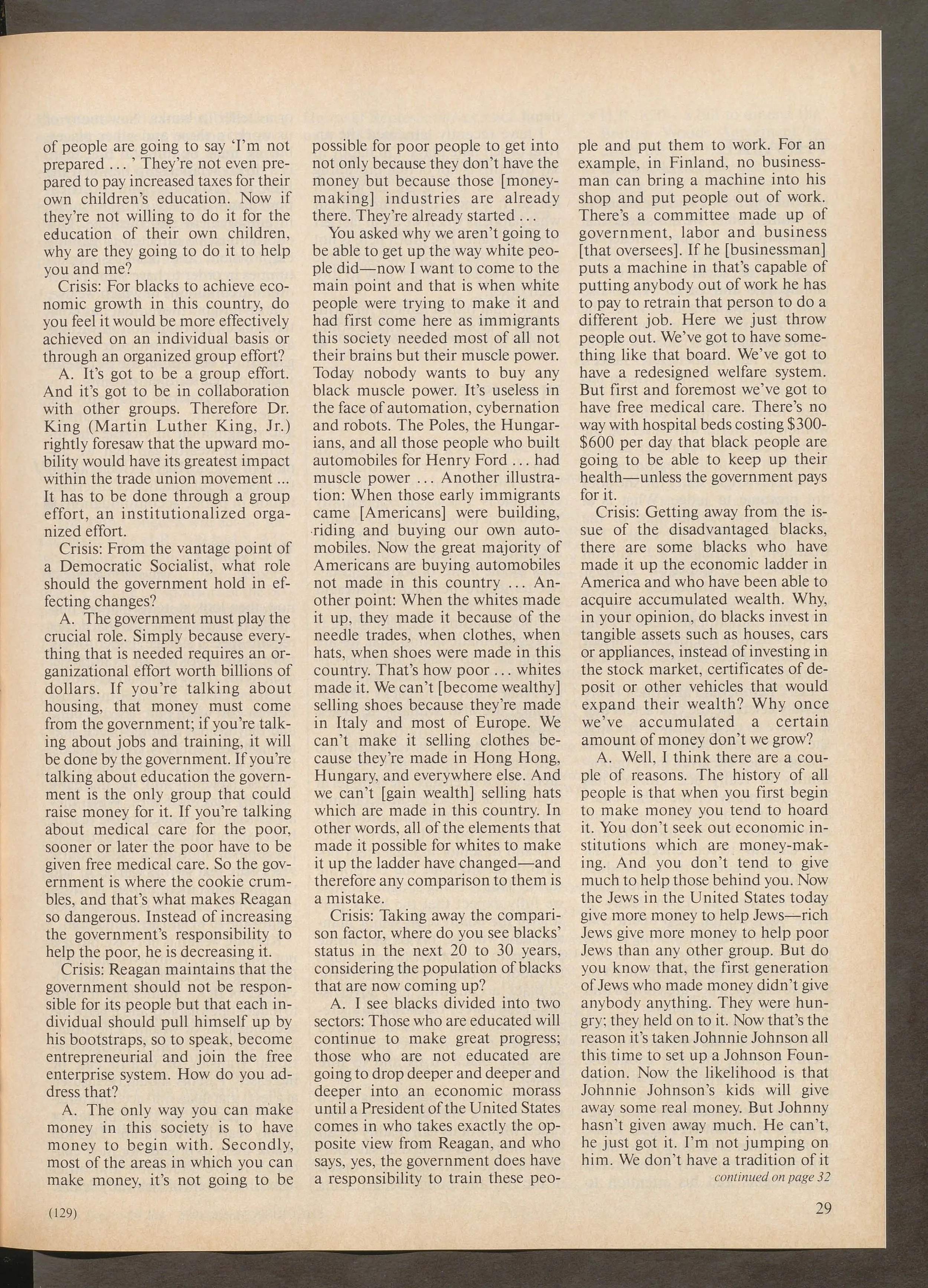
In this 1985 interview with The Crisis, Bayard Rustin provides a clinical analysis of what he identifies as a deepening class schism within Black America. He argues that while a sector of the community has successfully transitioned into the middle class through education and professional integration, an uneducated underclass is falling into a permanent economic morass that traditional civil rights laws cannot reach. Rustin challenges the common comparison between Black upward mobility and that of immigrant groups like Jews or Koreans, pointing out that earlier white immigrant success was subsidized by the state through free land, "land grant" colleges, and a lack of local taxes—institutional advantages never afforded to Black citizens.
Rustin offers a "naked" critique of Great Society programs, asserting that government anti-poverty initiatives were fundamentally flawed because they prioritized the employment of middle-class Black administrators over the direct economic independence of the poor. He maintains that welfare and guaranteed income programs, while necessary for the "crippled," often created a cycle of financial dependency rather than providing the job training and capital required for neighborhood reconstruction. For Rustin, the "nature of politics" had shifted from a fight for dignity to a fight for the irreducible minimum of survival, which he argued required billions in federal spending for housing and medical care rather than small-scale social experimentation.
Furthermore, Rustin dismisses many contemporary racial "victories" as "phonies" and "symbolic reconciliations." He contends that white society is often willing to concede symbolic gestures—such as renaming streets, implementing Black Studies programs, or appointing Black officials to high-profile but powerless positions—precisely because these actions cost nothing and do not disturb the existing economic hierarchy. Rustin emphasizes that the utility of politics in the post-civil rights era must be measured by the transfer of material resources, insisting that true equality cannot be achieved until the movement forces a national commitment to full employment and a structural overhaul of the urban economy.
Historical Context
Conducted in the mid-1980s, this interview captures Rustin’s role as the "architect" of the social-democratic wing of the civil rights movement during the Reagan era. It reflects the enduring disappointment of the post-1965 era, where the legal foundations of racism had been dismantled but the economic reality for millions remained unchanged. Rustin’s focus on the "Freedom Budget" legacy demonstrates his continued effort to shift the national dialogue from race-specific remedies to universalist economic reforms that could build an interracial majority.
The 1980s were a period of "competitive scarcity" and the rollback of social spending, and Rustin’s advocacy for massive federal intervention was increasingly at odds with the prevailing political climate. This document serves as a record of his professionalization of the "long game," where he moved from the radical pacifism of his youth to a sophisticated, class-based critique of American capitalism. By highlighting the failure of symbolic progress, Rustin sought to warn the next generation of activists that the most difficult stage of the struggle—the reconstruction of the national economy—was the only path toward real liberation.
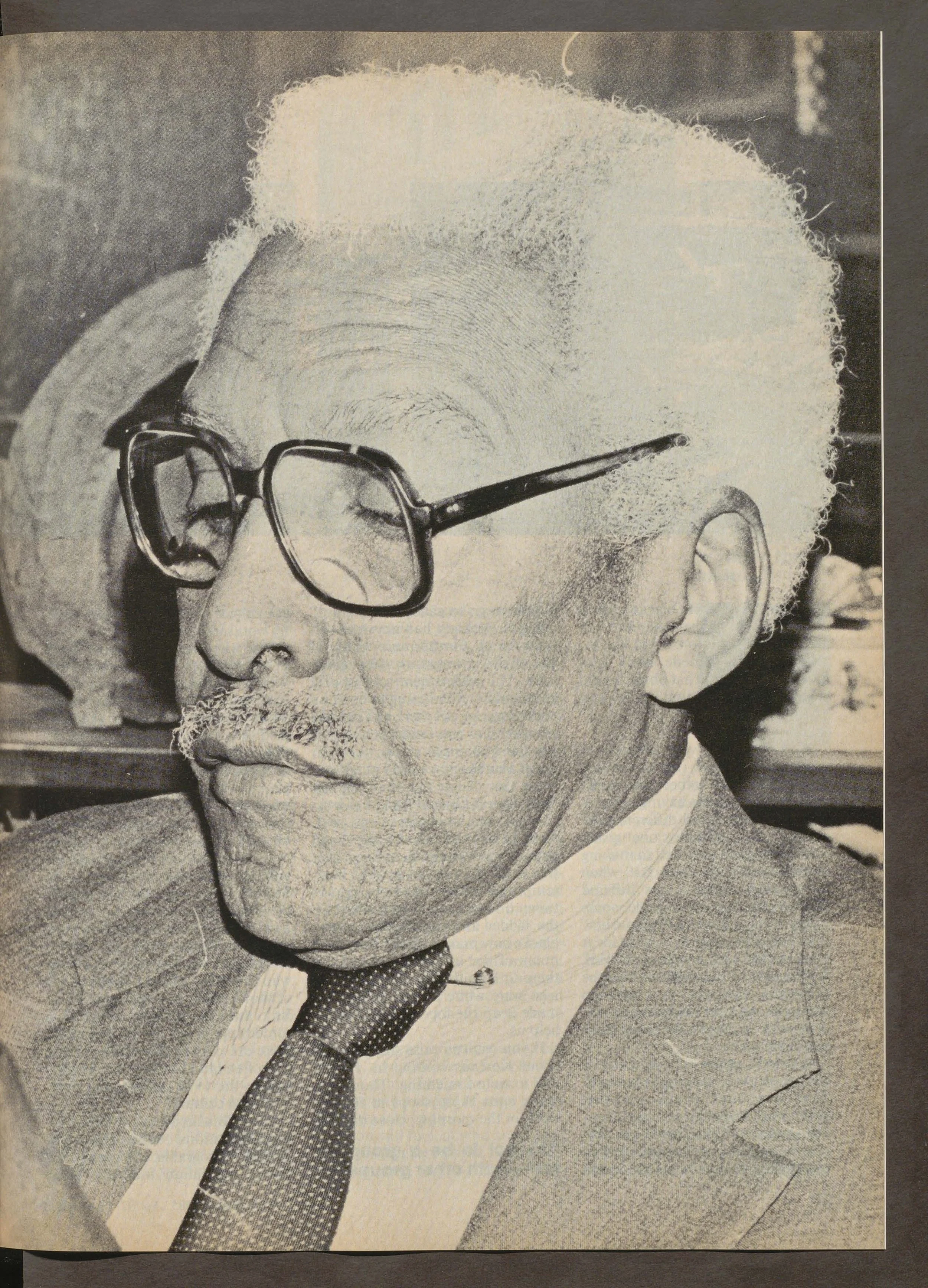
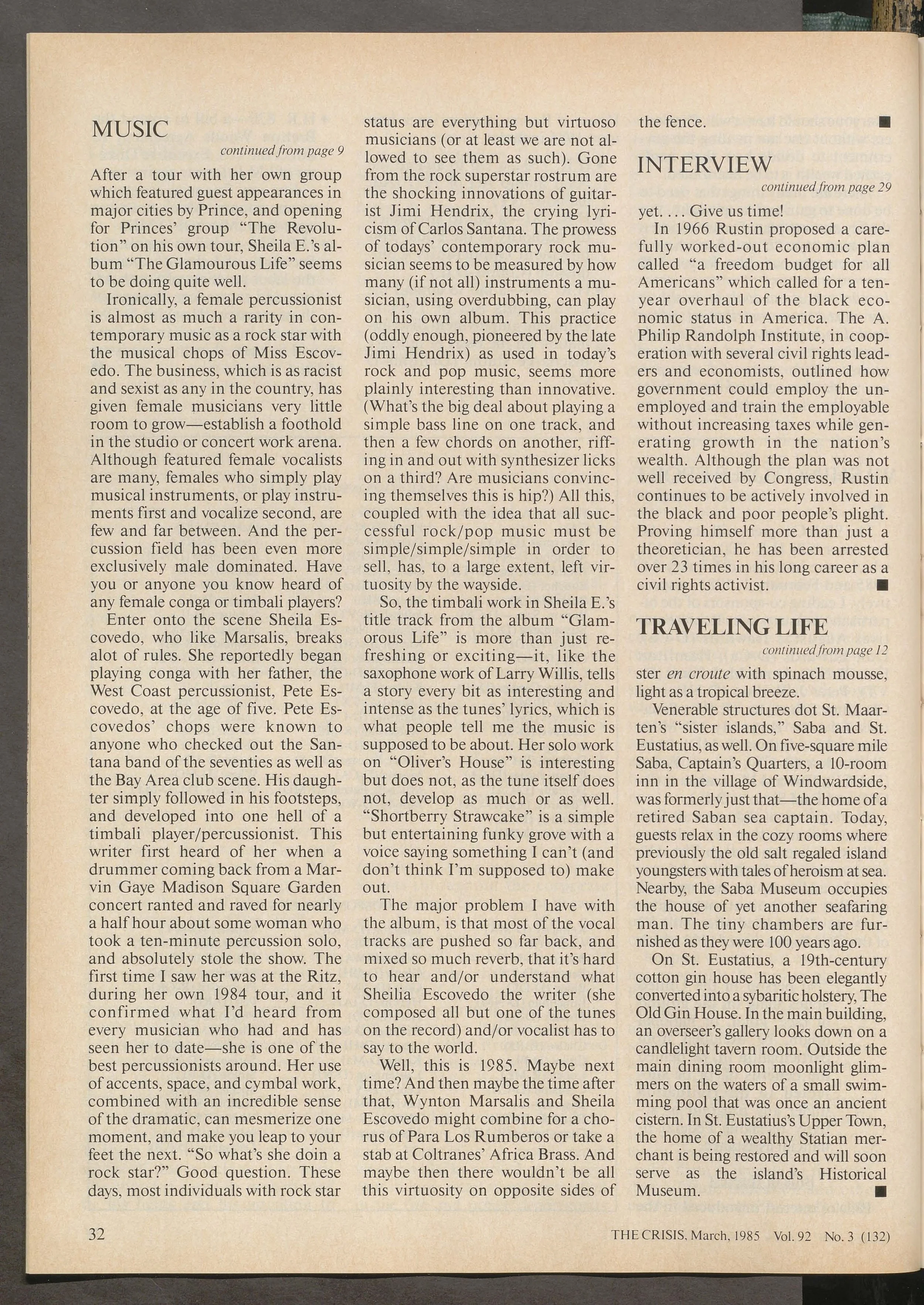
Cooper, Patricia. "The Crisis Interview: Bayard Rustin." The Crisis, March 1985, Vol. 92, No. 3.
