
Description
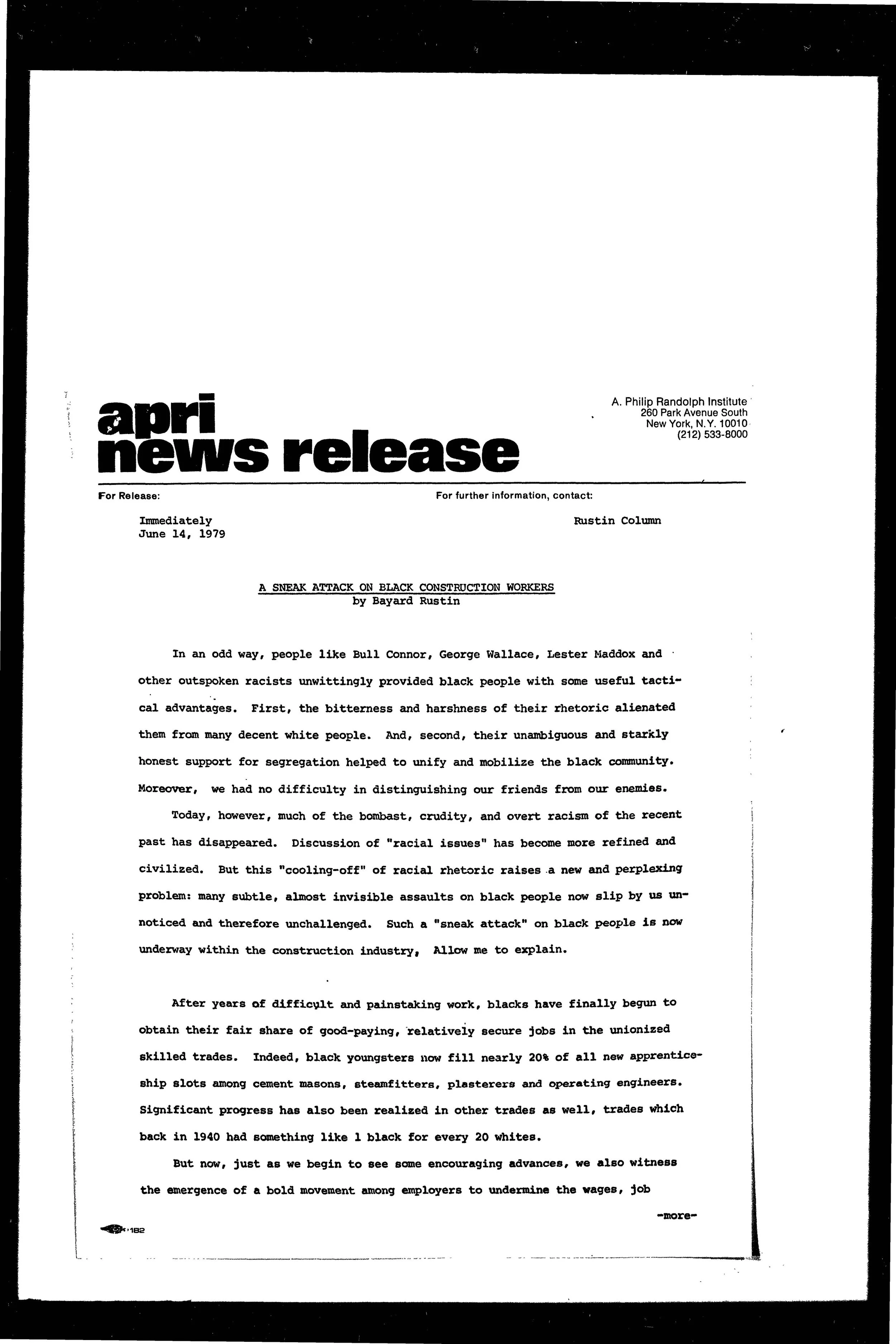
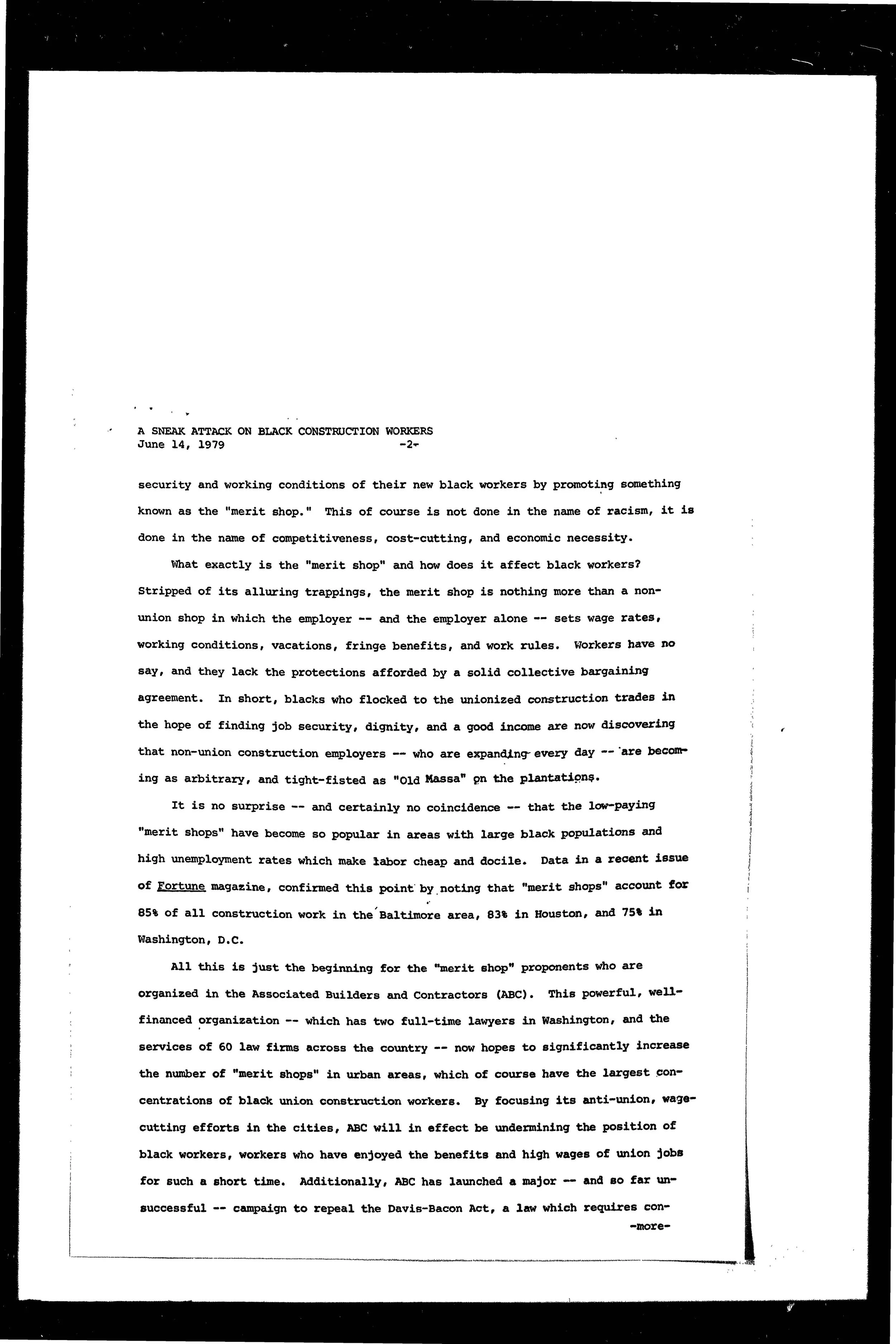
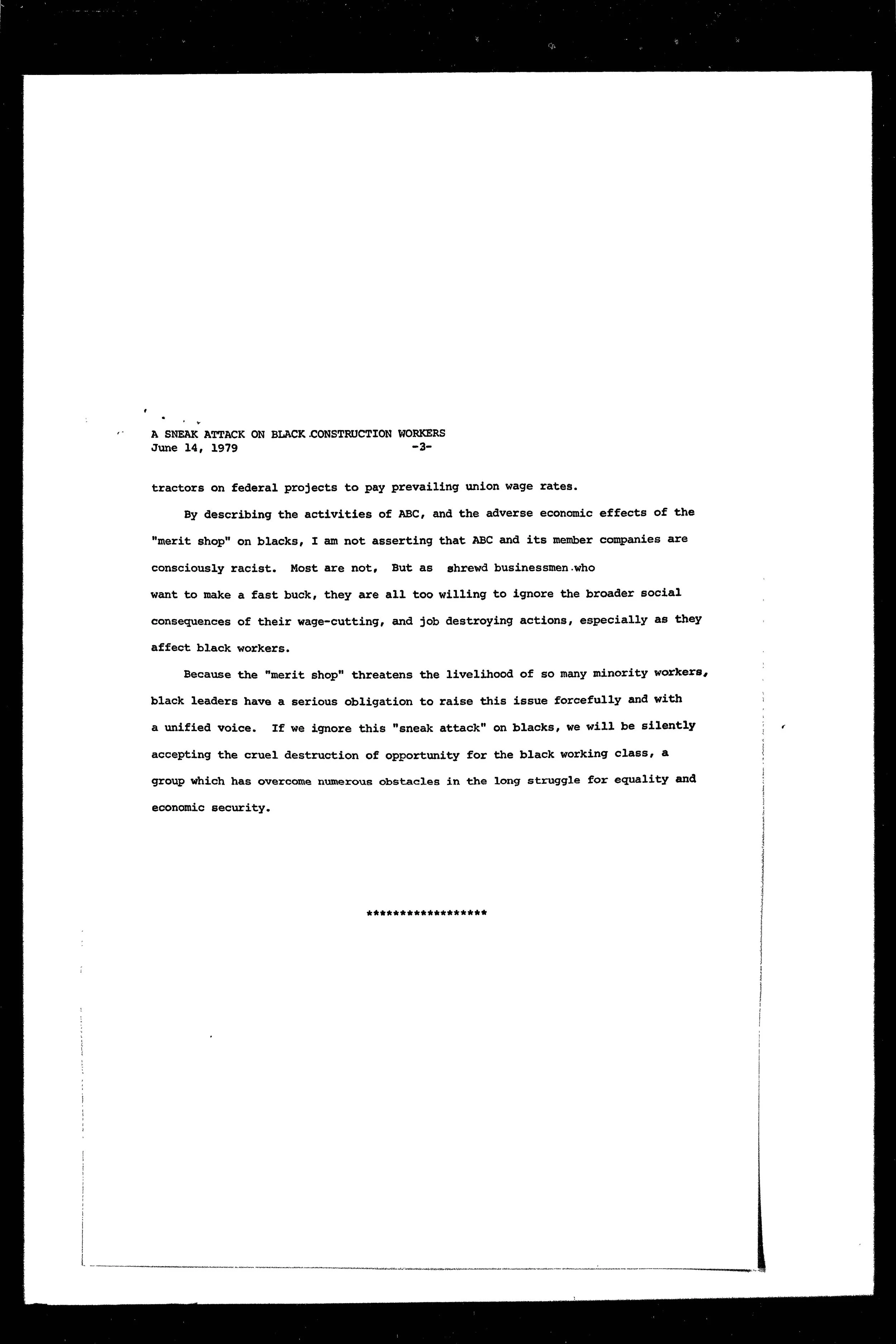
In this column published by the A. Philip Randolph Institute, Bayard Rustin warns that a quiet and dangerous attack is underway against Black workers inside the American construction industry. Rustin explains that after years of difficult struggle, Black workers had finally started gaining a solid foothold in good-paying, secure unionized trade jobs, filling nearly 20 percent of new apprenticeship slots in fields like cement masonry, steamfitting, plastering, and operating engineers. However, he points out that employers were pushing a new corporate strategy known as the "merit shop" to undermine the wages, job security, and working conditions that unions had fought hard to secure.
Rustin defines a merit shop simply as a non-union business where the employer holds absolute power to set wages, hours, and working conditions without any collective bargaining or worker input. He notes that these low-paying non-union shops were rapidly expanding in major cities with high Black unemployment, leaving workers completely unprotected and vulnerable to exploitation. He targets the Associated Builders and Contractors (ABC), a powerful lobbying group representing thousands of contractors, accusing them of driving down wages and trying to repeal the federal Davis-Bacon Act, which required fair prevailing wages on public construction projects. Rustin concludes that Black leaders and labor allies had to speak out with a unified voice to stop this quiet destruction of economic opportunity for working-class minorities.
Historical Context
By the late 1970s, the American construction industry was locked in an intense battle between traditional building trade unions and a rapidly growing non-union corporate movement. During the civil rights struggles of the 1960s and 1970s, labor unions and civil rights groups fought bitter legal and political battles, including federal affirmative action plans and outreach programs, to open skilled construction jobs to minority workers. Just as those integration efforts began to bear fruit, the deep economic stagflation and recessions of the decade prompted employers to seek non-union labor in order to cut costs and avoid union wage standards.
As a veteran labor and civil rights strategist, Bayard Rustin viewed the rise of the "merit shop" not as a benign free market innovation, but as a direct threat to the financial stability of Black working-class families. He understood that without the collective bargaining power and wage protections guaranteed by labor unions, minority workers could be subjected to arbitrary corporate control and poverty-level wages. By exposing the activities of organizations such as the Associated Builders and Contractors, Rustin sought to rally the labor-civil rights coalition to defend union standards as an essential foundation for both racial and economic justice.
Rustin, Bayard. "A Sneak Attack on Black Construction Workers." A. Philip Randolph Institute News Release, June 14, 1979.
