Please note: The exact date of this letter is unknown.
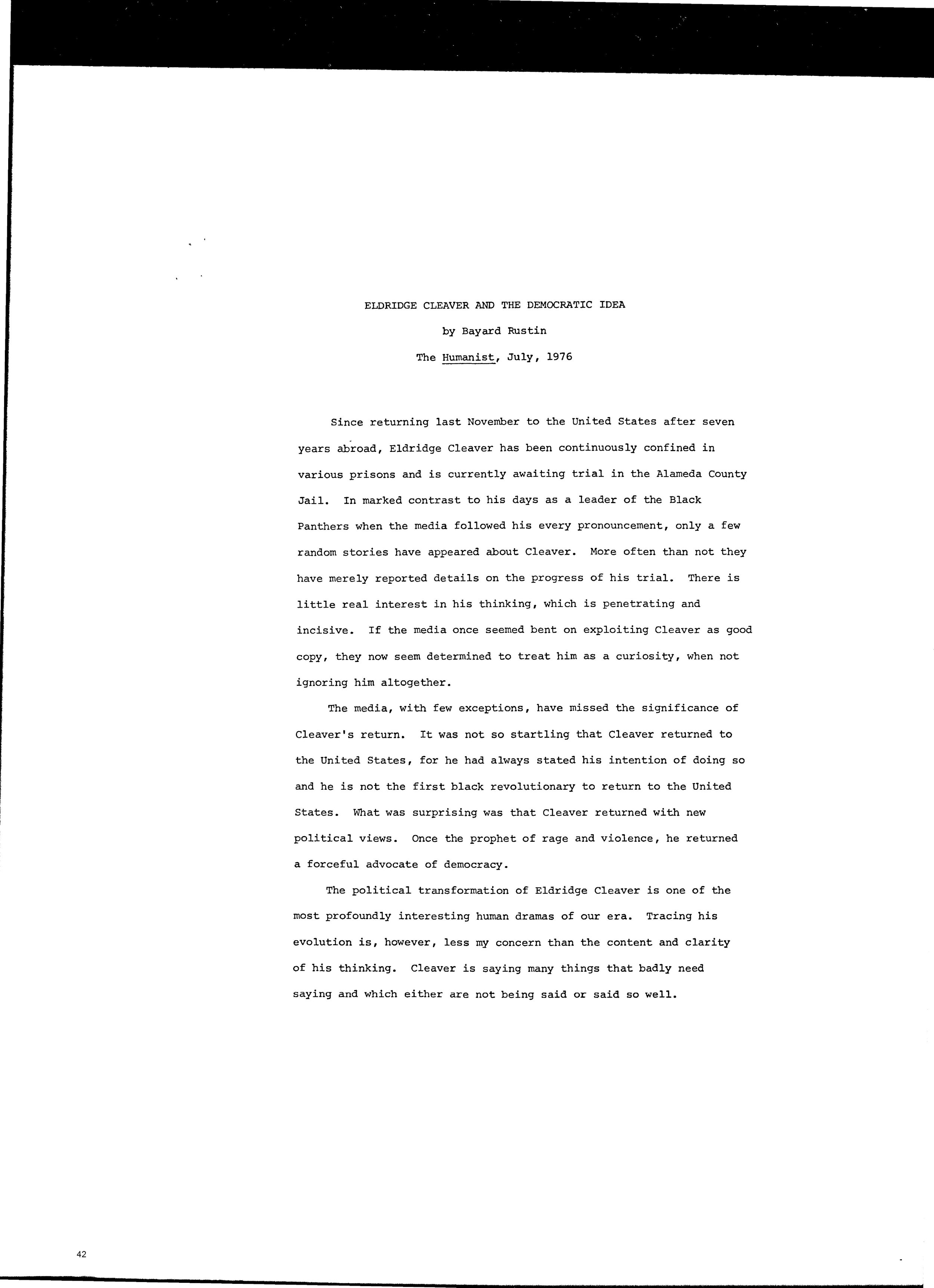
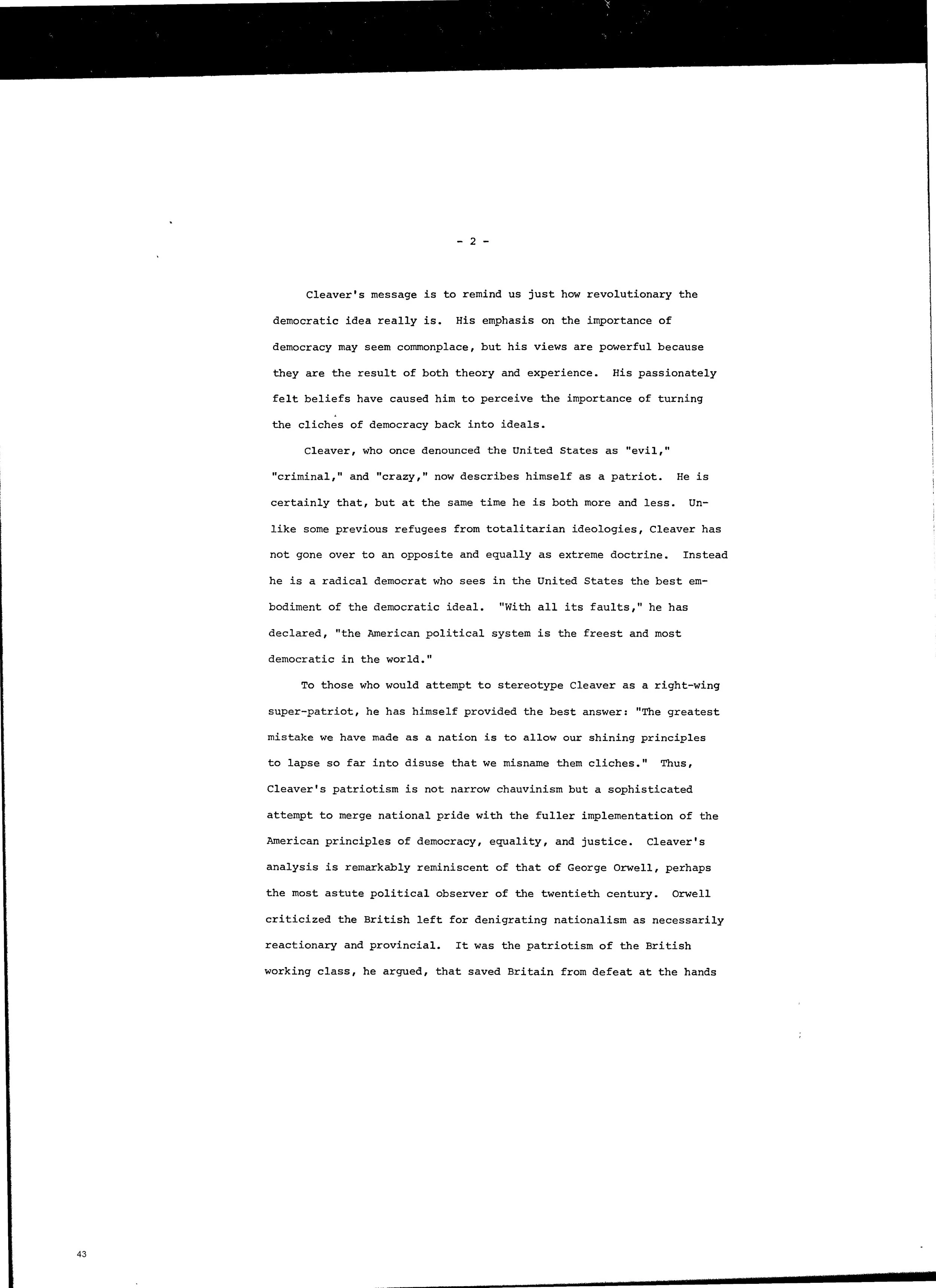
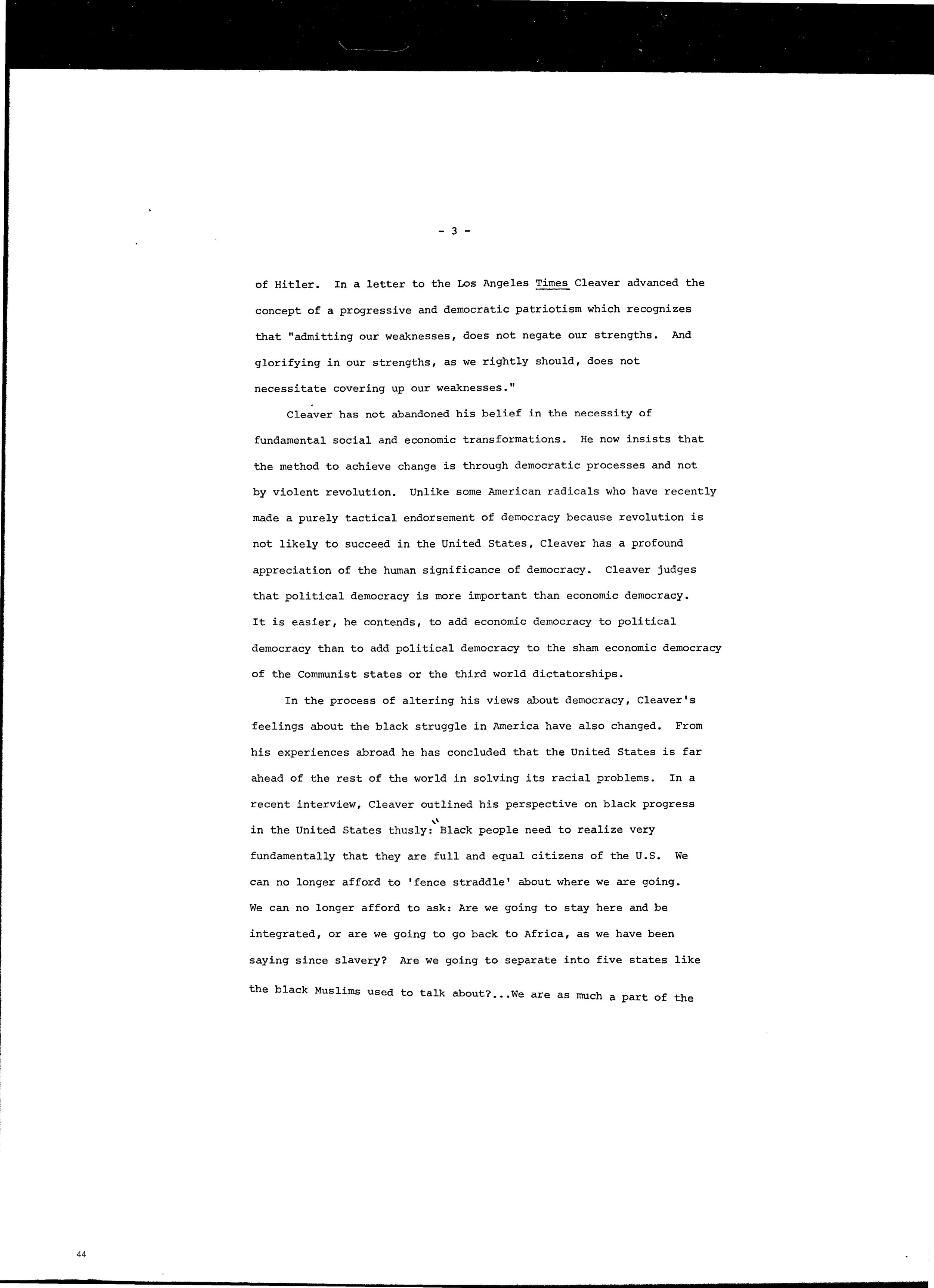
The press release announced a legal and public campaign, led by Bayard Rustin and Kathleen Cleaver, to win Eldridge Cleaver’s release on bail, arguing that new parole guidelines showed he had already served more than his original sentence required. It emphasized that a parole hold, not new charges, was keeping him jailed and hindering his ability to prepare for trial, prompting calls for public support and upcoming public events.
Historical Context:
The legal battle over Cleaver's parole status reflected broader debates about criminal justice reform in 1970s California. The In re Rodriguez decision by the California Supreme Court in 1975 fundamentally altered how indeterminate sentences were calculated. It established that prisoners could not be held indefinitely based on subjective assessments by parole boards. Instead, sentences had to be grounded in objective criteria, primarily the average time served for comparable offenses.
Cleaver's case tested whether these new protections would apply to high-profile political prisoners. The Adult Authority's refusal to discharge Cleaver despite his clear eligibility under Rodriguez suggested that his continued detention was politically motivated. This was exactly the conclusion Judge Raymond Sherwin had reached in 1968. Rustin's involvement as Defense Fund Chairman signaled that Cleaver's case was not merely about one man's freedom. It was about whether democratic principles of due process would be honored for those deemed politically dangerous.
The newly appointed Chairman of the Adult Authority, Raymond Procunier, faced a choice. He could uphold the rule of law or bend to political pressure. Rustin's strategy was to make Cleaver's discharge a test of California's commitment to criminal justice reform. By framing the issue in terms of legal rights rather than political ideology, Rustin aimed to build a coalition that transcended traditional left-right divides.
Description:
This press release from the Eldridge Cleaver Defense Fund announced a coordinated legal and public campaign to secure Cleaver's release from jail on bail. Bayard Rustin, serving as Chairman of the Defense Fund, and Kathleen Cleaver, Bay Area Coordinator, planned a press conference at the First Unitarian Church in San Francisco on April 6, 1976, eight years to the day after the Oakland shootout that led to Cleaver's initial arrest. The release explained that Cleaver's attorney, Frank Reagon, had filed a formal demand for discharge from parole with the California Adult Authority. He argued that under new parole guidelines established in 1975 following In re Rodriguez, Cleaver had already served more time than the average for his 1958 conviction.
The legal argument was straightforward but powerful. Cleaver's original 1958 assault conviction, for an incident in which no weapon was found and no one was injured, carried an indeterminate sentence of one to fourteen years. He served nine years in prison and nearly two years on parole before his 1968 arrest. After that arrest, prison authorities reset his time to the maximum fourteen years without trial or hearing. Under the Rodriguez decision, prisoners were entitled to have their sentences recalculated based on average time served for similar offenses, which ranged from five to nine years. Cleaver had spent nearly eleven years under Adult Authority jurisdiction. He was eligible for immediate discharge.
The press release emphasized the injustice of Cleaver's situation. He was being held in Alameda County Jail not because of the 1968 charges against him, but because the Adult Authority had placed a parole hold that prevented him from making bail. This meant he could not meet with witnesses, consult freely with his attorney, or speak publicly in his own defense. All of this prejudiced his upcoming trial scheduled for June 14, 1976. The Defense Fund called for public support to secure Cleaver's release, with Rustin scheduled to speak at a meeting at the Rainbow Sign in Berkeley on April 5 alongside Reverend Cecil Williams, Dr. Nathan Hare, and Kathleen Cleaver.
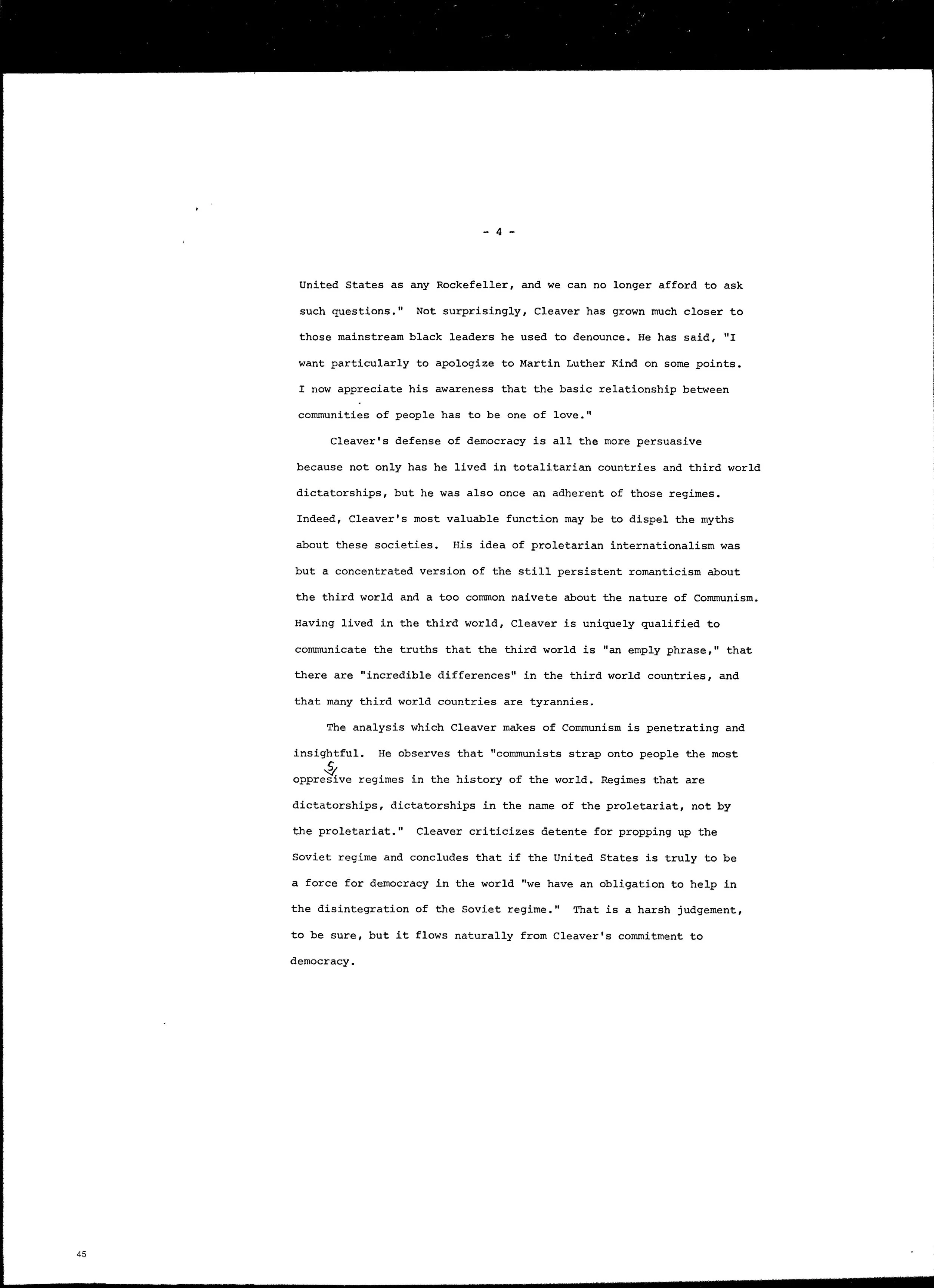
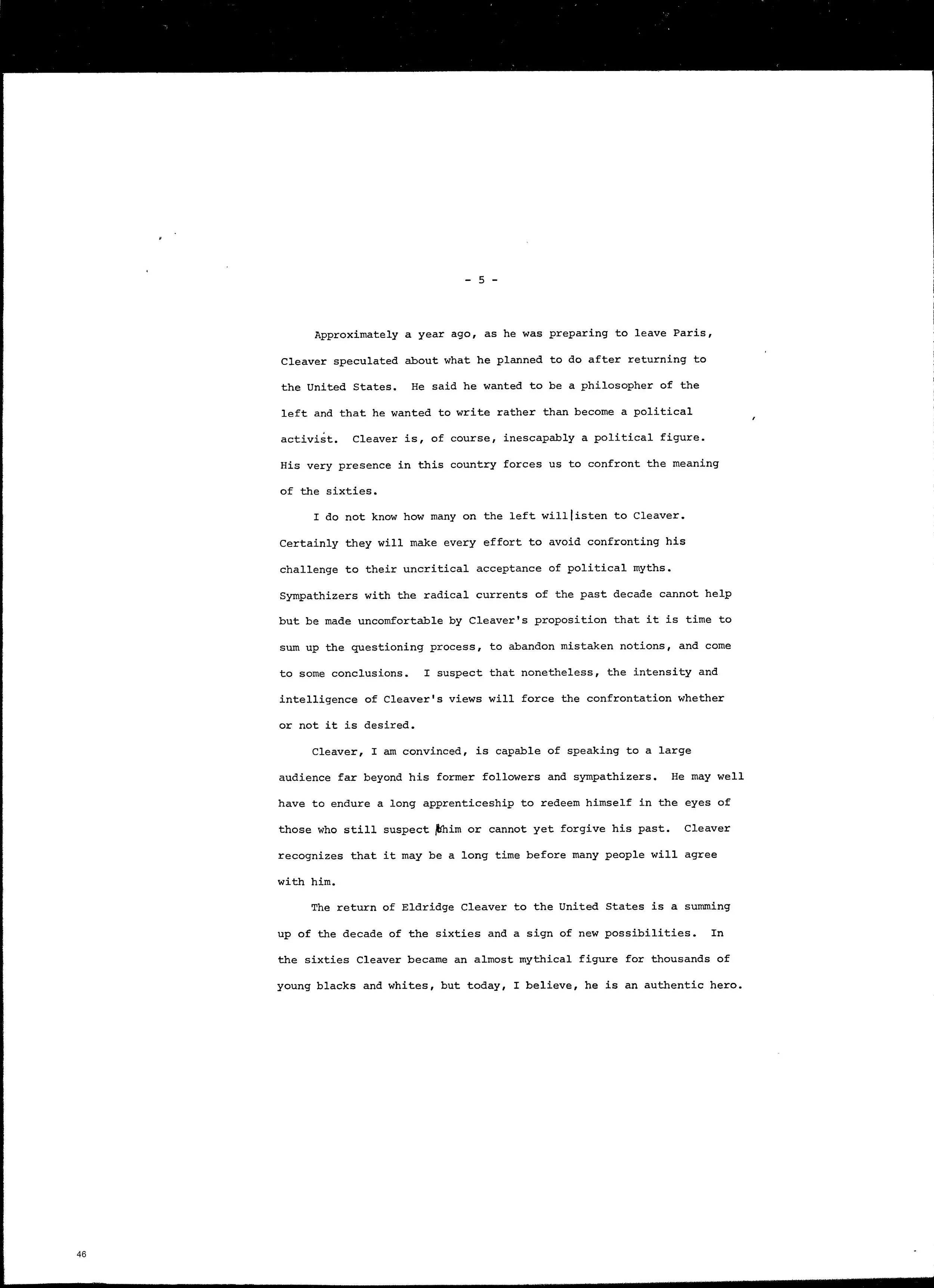
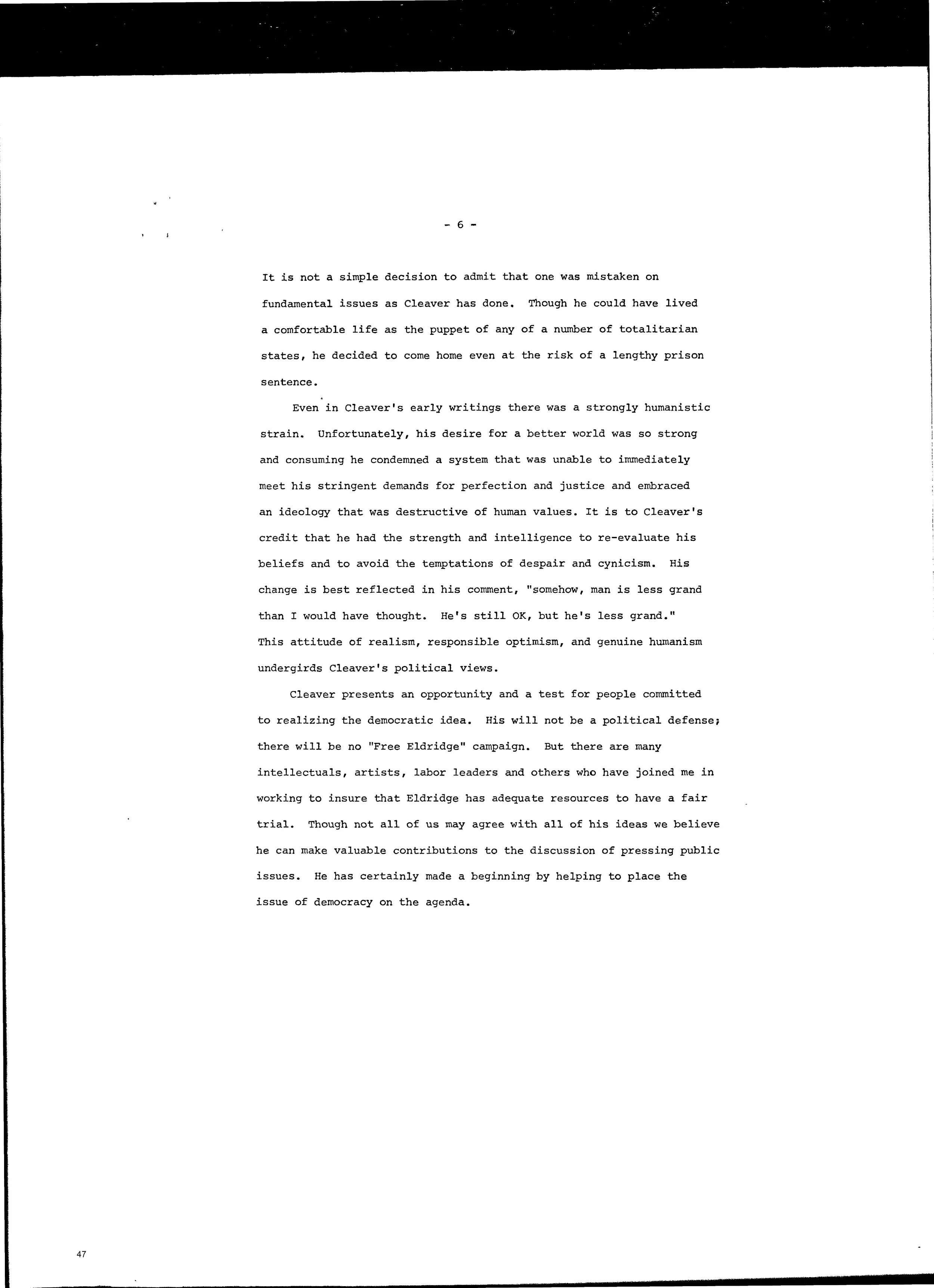
Eldridge Cleaver Defense Fund. "Demand for Discharge from Parole for Cleaver Filed with Adult Authority." Press release, April 2, 1976. Oakland, California.
