Description
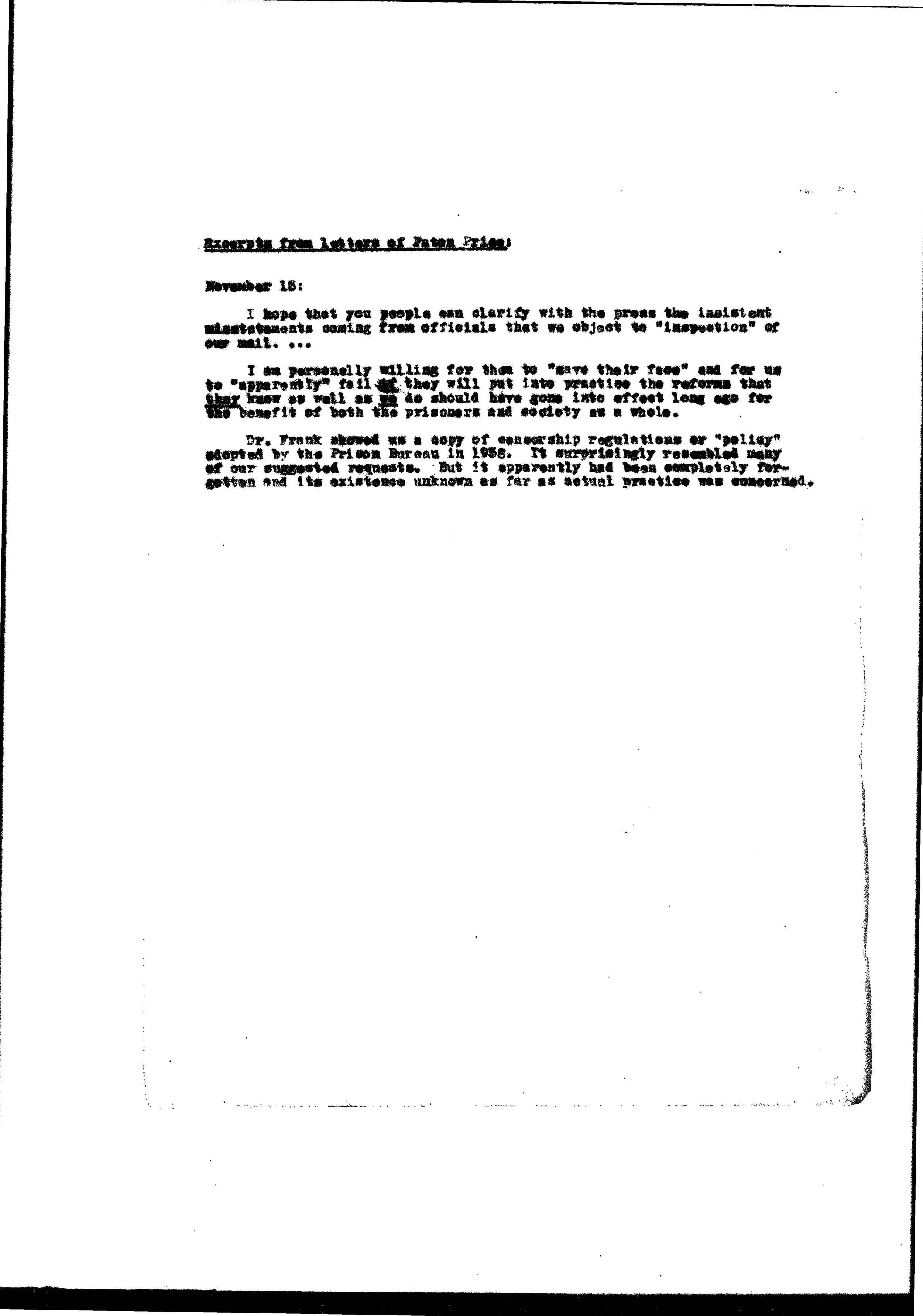
This compilation of correspondence from Paton Price, an imprisoned conscientious objector held at Lewisburg Penitentiary, documents a prolonged hunger strike and non-violent protest against severe institutional censorship. Price explains that he and fellow inmates initiated a hunger strike on September 29, 1943, because it was their only remaining weapon against an absolute wall of silence that isolated prisoners from the outside world. While acknowledging that prison authorities have a legitimate right to inspect mail for contraband or violence, Price sharply condemns ideological censorship that dictates what inmates can read, write, or think.
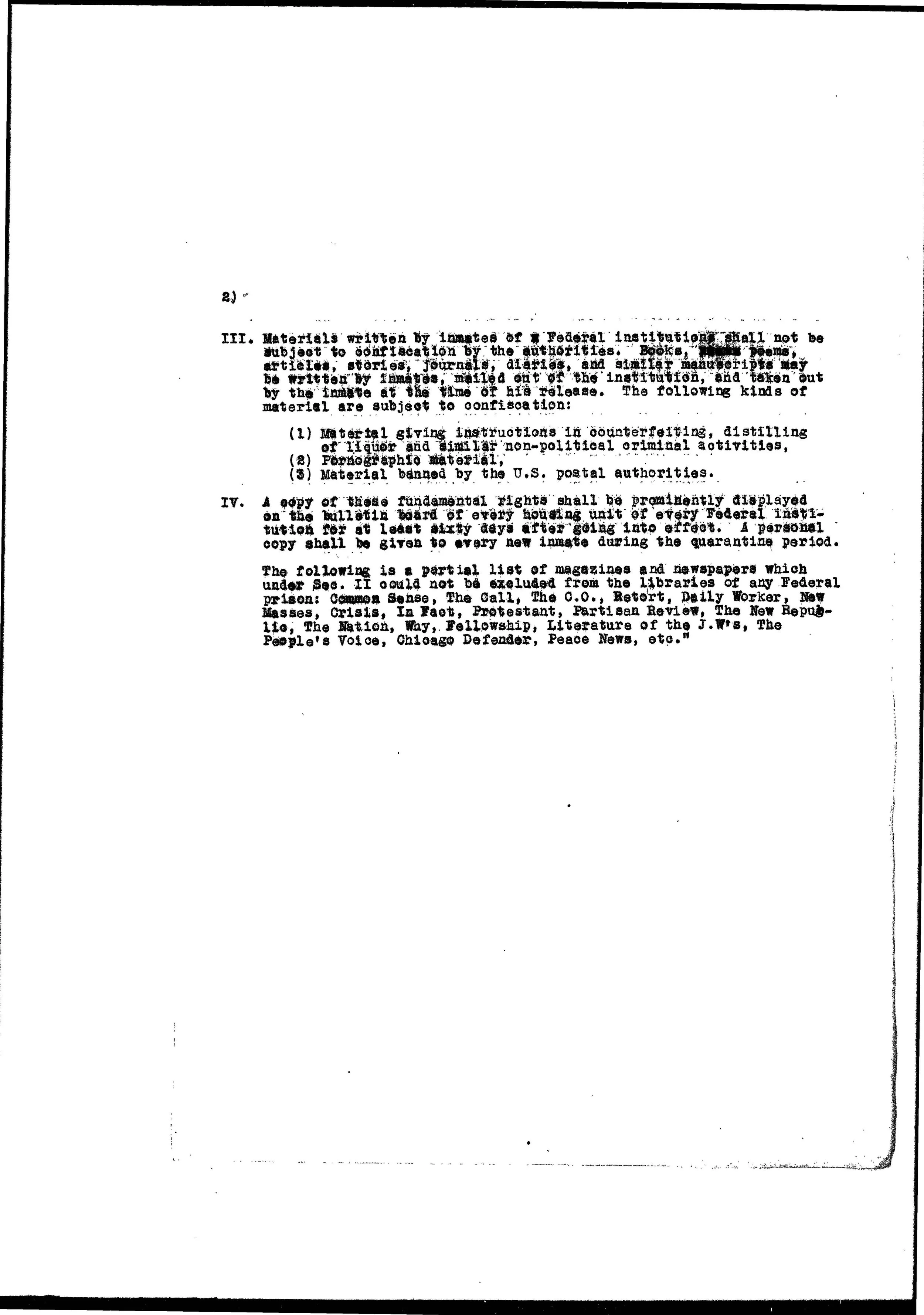
The letters track the progression of the strike through late October and November 1943, noting the onset of painful forced tube-feeding beginning on October 23. Price reflects on the physical toll of the fast, the psychological resilience required to maintain non-violent resistance, and discussions with Bureau of Prisons Educational Director Dr. Frank regarding minimum acceptable standards for prisoner rights. The correspondence outlines specific foundational demands, including unrestricted access to books and journals, clear limits on mail handling, and the protection of inmate-written manuscripts from arbitrary confiscation.
Historical Context
Inside federal penitentiaries during World War II, the strict enforcement of penal mail restrictions functioned as a mechanism of total institutional control, limiting inmates to restricted correspondence lists and banning political or ideological literature. For anti-war activists and conscientious objectors—individuals who declined military service and the draft due to deeply held ethical, moral, or religious beliefs against war—these censorship rules were viewed as a domestic manifestation of totalitarianism that suppressed free speech and hid internal prison abuses from public view. By utilizing hunger strikes and enduring forced medical intervention, incarcerated objectors sought to force federal corrections officials to honor basic civil liberties.
These protests also highlighted a generational shift in pacifist philosophy during the mid-20th century. Imprisoned activists frequently criticized external peace organizations for being too cautious or passive, calling for a more dynamic, revolutionary form of non-violent direct action that directly challenged state authority. The transmission of these letters outside prison walls galvanized external advocacy groups, bridging the gap between isolated hunger strikers and national networks of anti-war supporters.
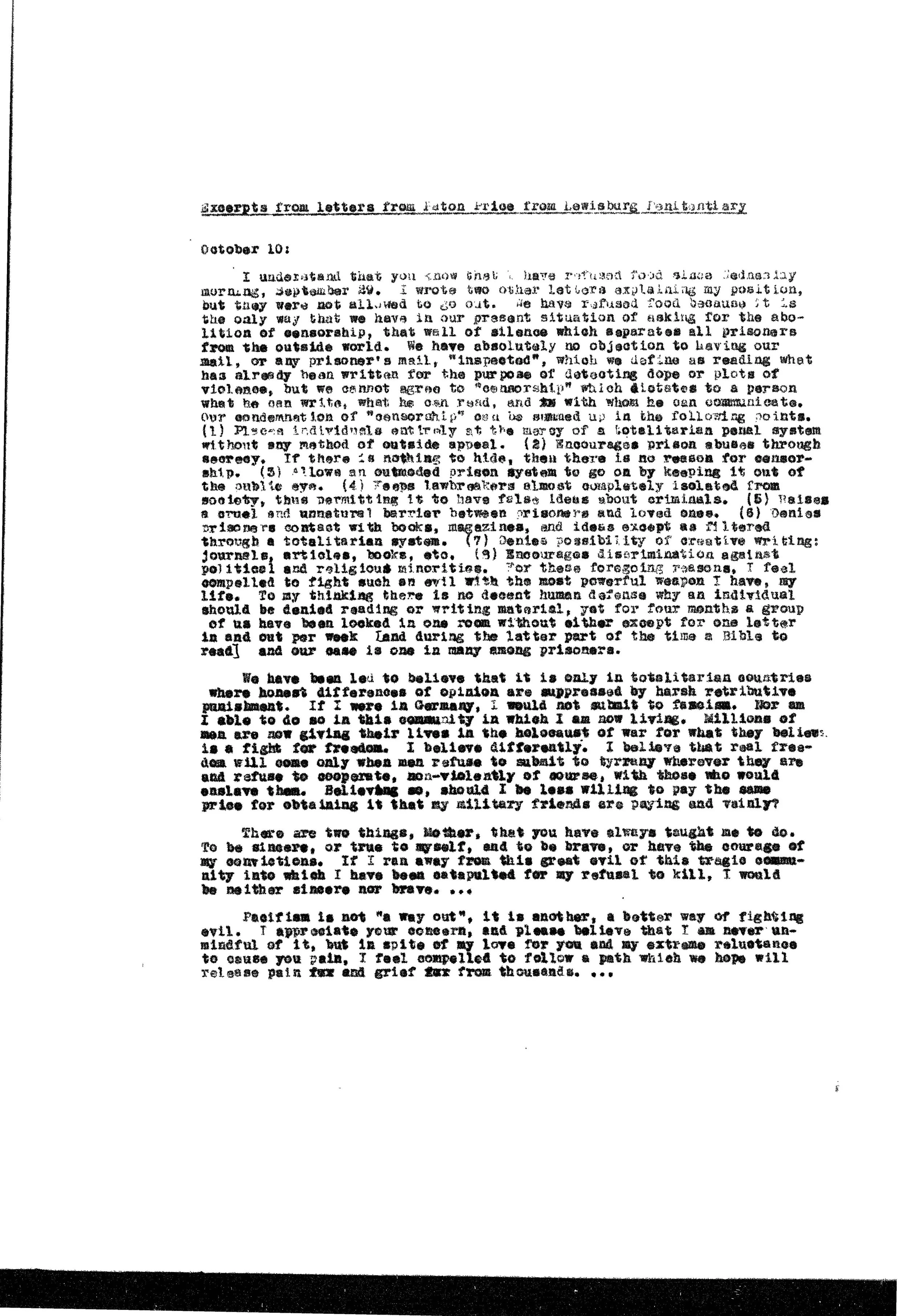
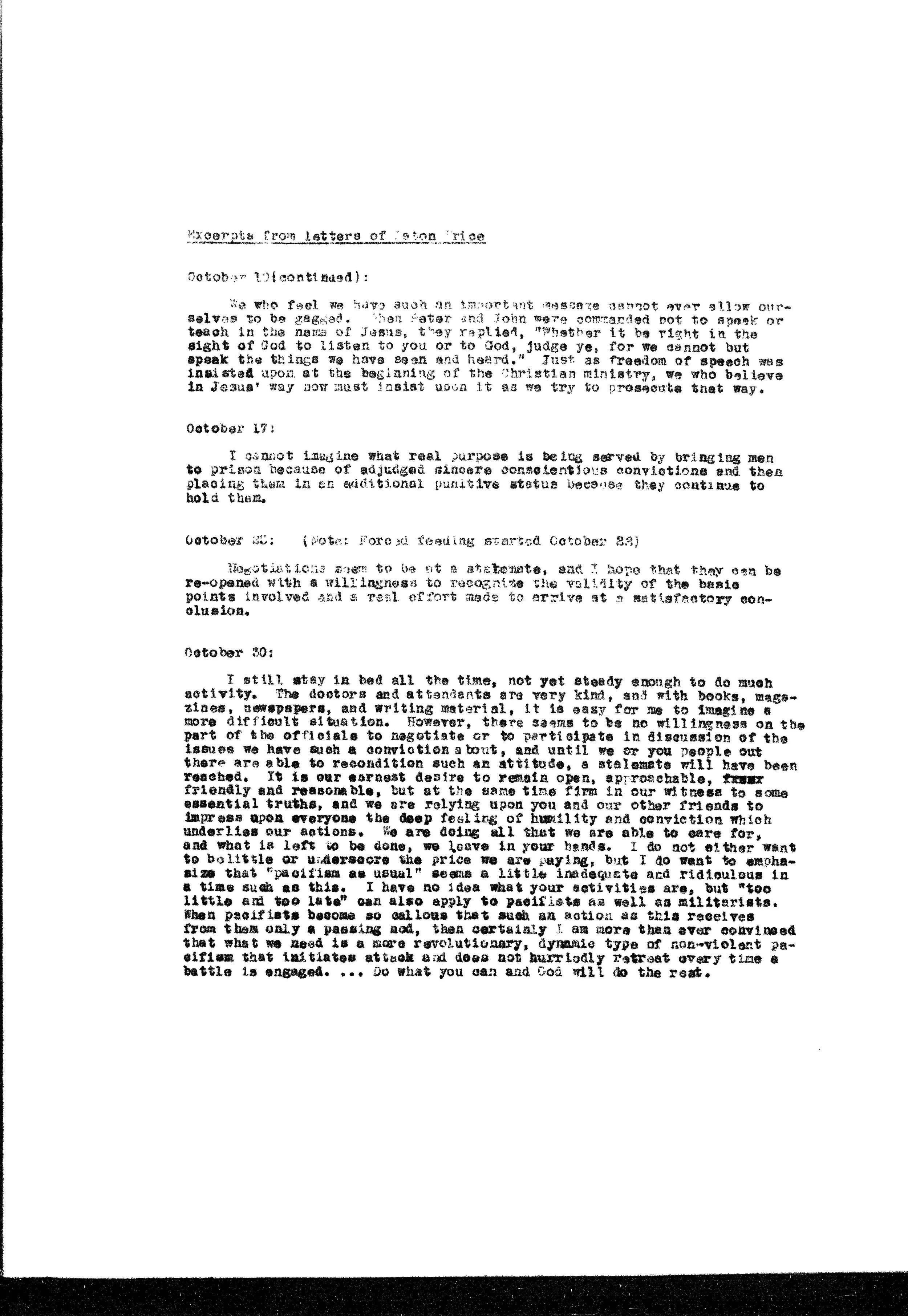
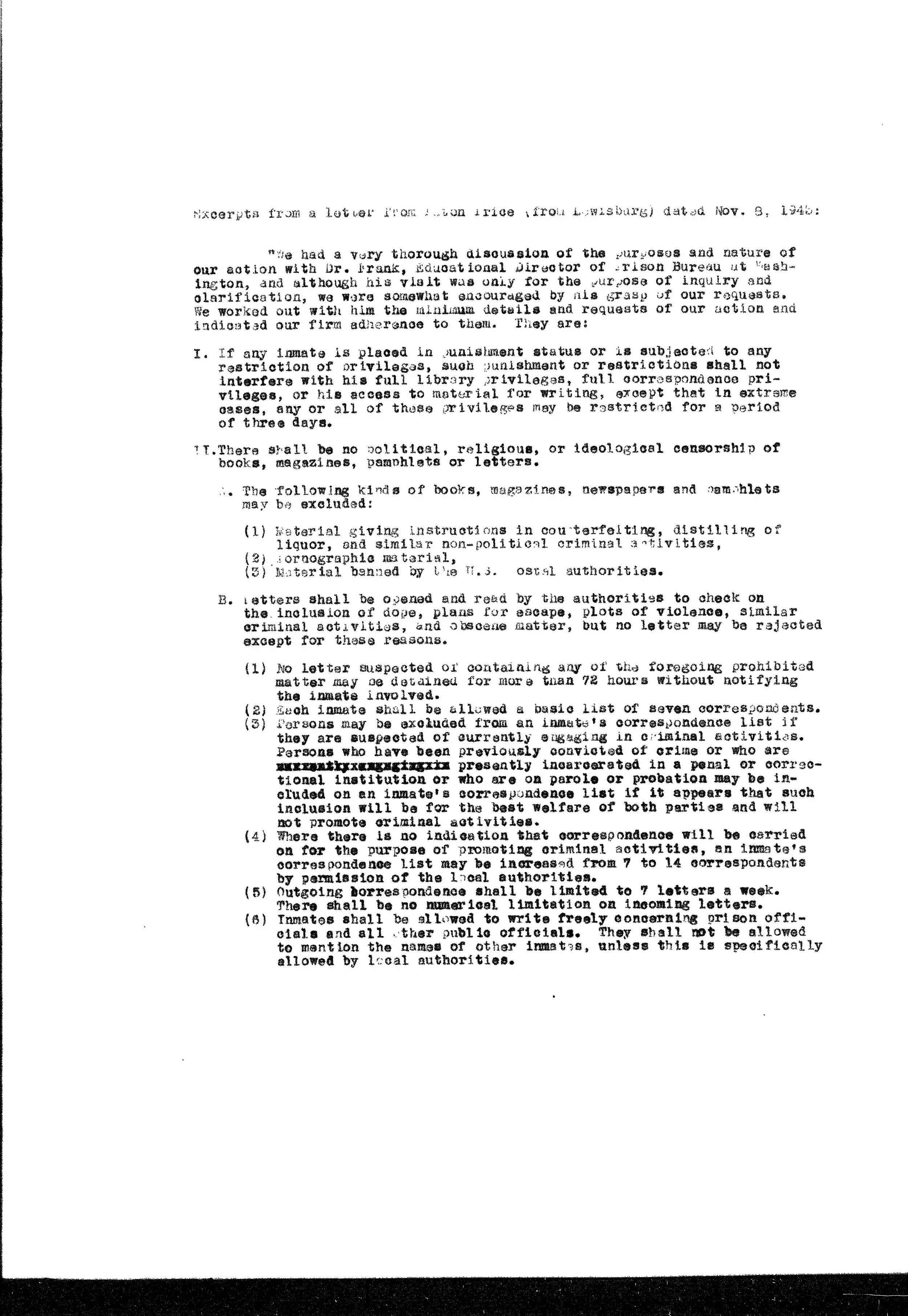
Price, Paton. Excerpts from letters from Lewisburg Penitentiary, October 10 – November 18, 1943.
