Description
This personal correspondence from imprisoned conscientious objector Charles Butcher to fellow pacifist leader Bayard Rustin analyzes the deep structural compromises within the Civilian Public Service (C.P.S.) program and federal prison parole policies. A conscientious objector is an individual who refuses to bear arms, participate in military service, or comply with military conscription on the grounds of freedom of thought, conscience, religion, or moral conviction. Butcher critiques the National Service Board for Religious Objectors (N.S.B.R.O.) for maintaining a facade of equal partnership with the Selective Service System while real power and disciplinary control remain firmly in the hands of General Lewis B. Hershey. He argues that pacifist organizations must abandon secrecy and openly acknowledge the extent of their concessions to military conscription to maintain intellectual and moral integrity.
Butcher also details a recent prison visit by a federal committee consisting of James Bureau of Prisons Director James V. Bennett, Selective Service representatives, and religious leaders who interviewed inmates regarding parole options under Executive Order 8641. He evaluates the restrictive terms of these paroles, noting that non-registrants are forced back into C.P.S. control, political objectors face military induction pressure, and immense pressure is placed on inmates to compromise their principles rather than serve standard sentences. Finally, Butcher addresses the severe internal crisis of morale among imprisoned pacifists. He warns that without active solidarity, spiritual support, and consistent witness from external organizations like the Fellowship of Reconciliation, incarcerated activists risk sliding into cynicism and despair.
Historical Context
During World War II, the administration of alternative service for conscientious objectors—individuals who refused military service and conscription due to religious, moral, or philosophical opposition to war—exposed deep ideological rifts within the American peace movement. While historic peace churches and religious agencies attempted to administer work camps cooperatively, government oversight through the Selective Service System meant that participants were ultimately subjected to state-enforced civilian conscription. This arrangement forced religious organizations and pacifist leaders into a delicate balancing act, trying to negotiate humane alternatives for war objectors while managing the inevitable friction caused by military supervision and institutional compromises.
Concurrently, the federal prison system served as a harsh disciplinary arena for absolute objectors who refused both military induction and alternative service camps. Inmates incarcerated under the Selective Service Act faced continuous bureaucratic and psychological pressure from prison officials and parole boards to accept modified service plans, creating intense internal conflicts over whether accepting conditional freedom constituted a betrayal of pacifist principles. Letters smuggled or cleared out of penitentiaries served as vital lifelines, connecting isolated anti-war prisoners with external leaders like Bayard Rustin and fueling ongoing debates over strategy, transparency, and morale within organizations like the Fellowship of Reconciliation.
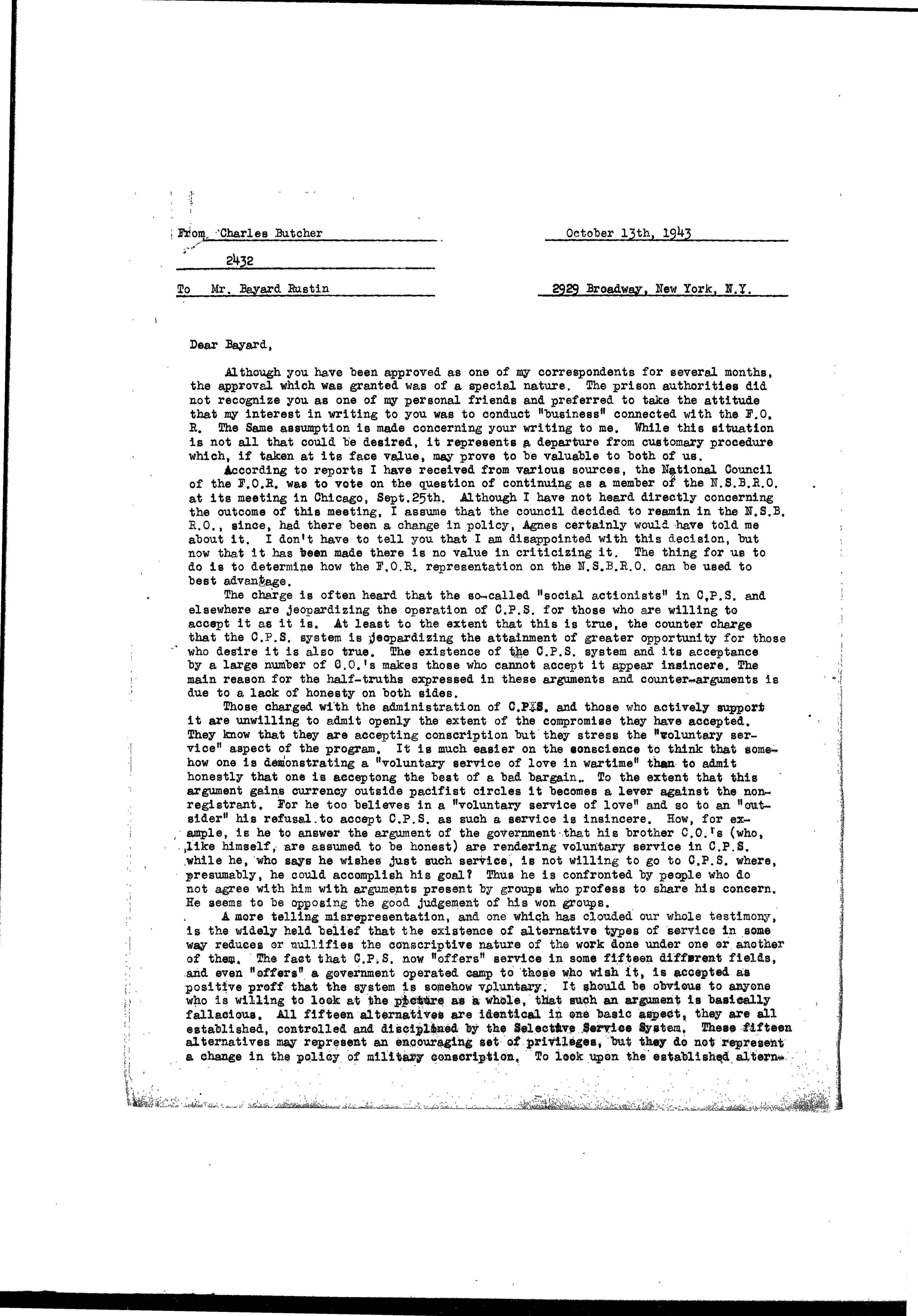
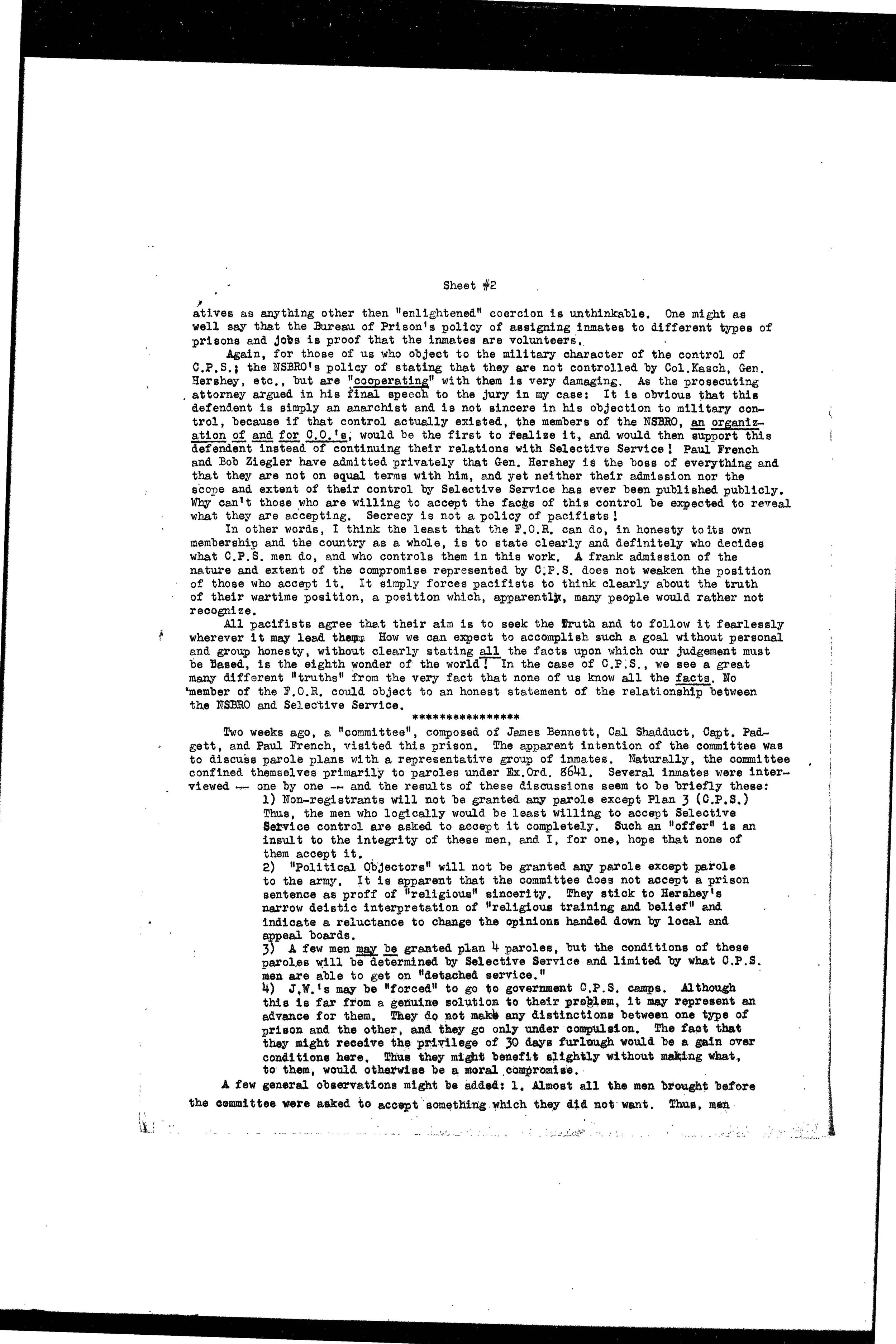
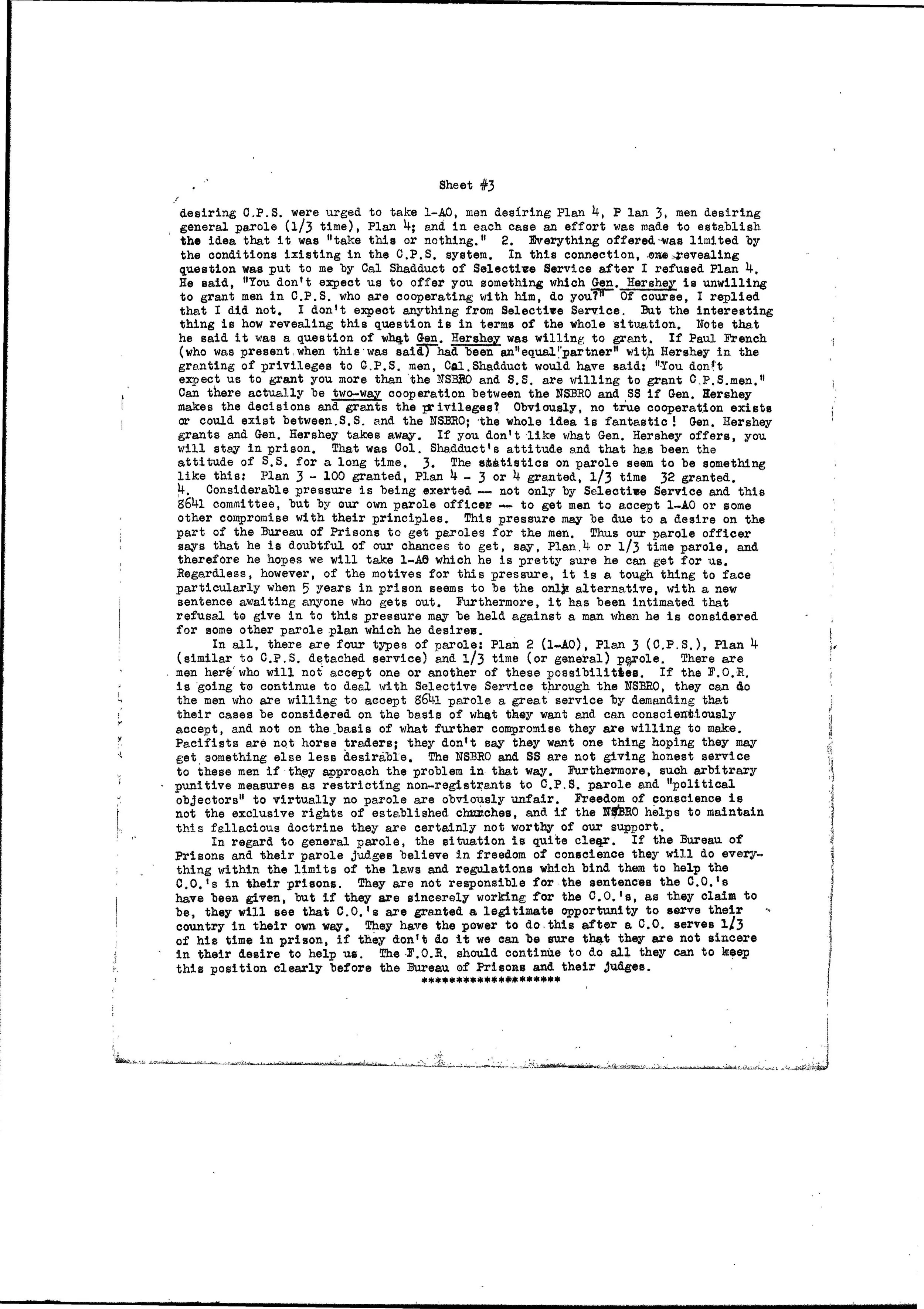
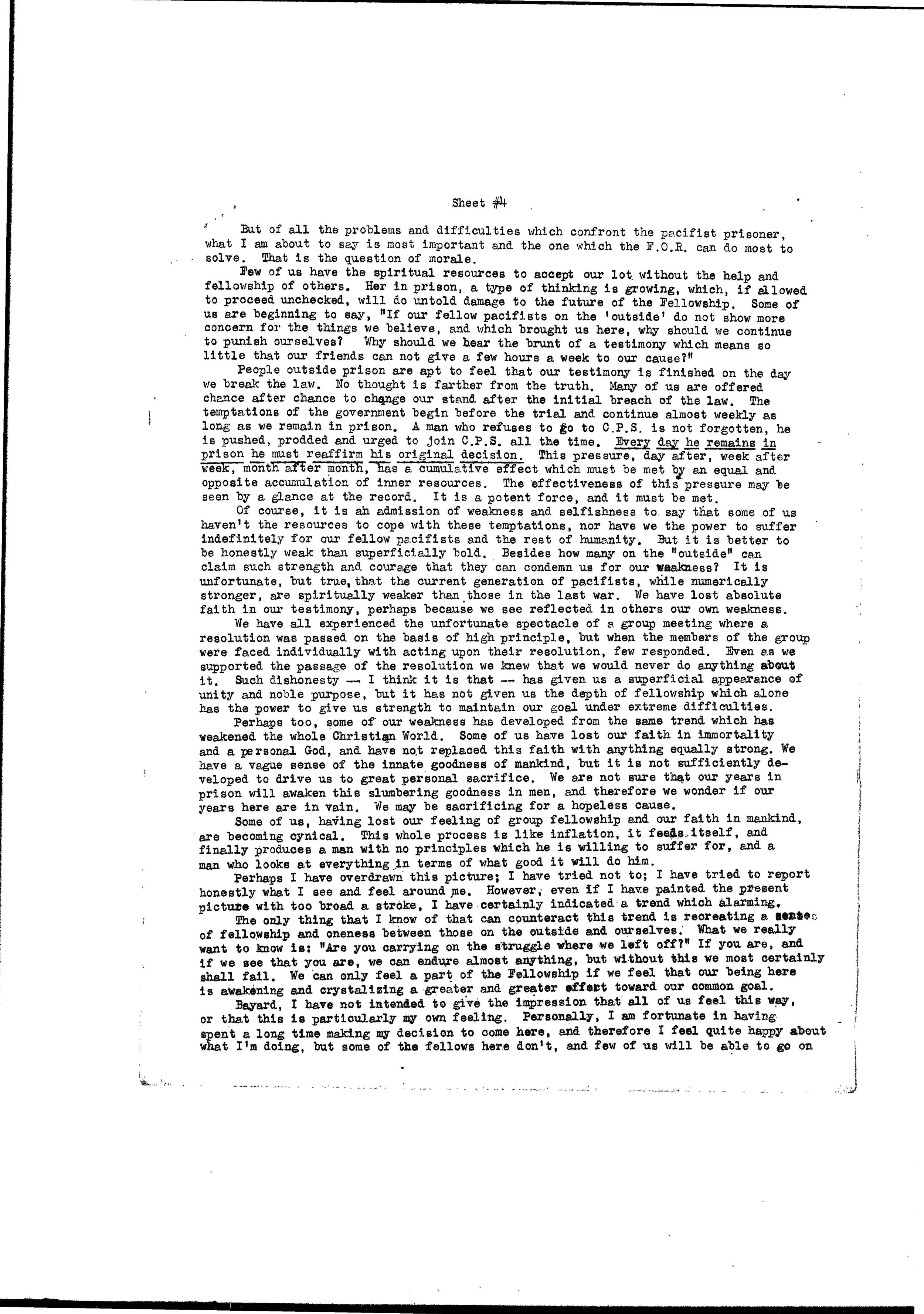
Butcher, Charles. Letter to Bayard Rustin, October 13, 1943.
