Description
This administrative memorandum and update, prepared by pacifist leader A.J. Muste for the staff and council of the Fellowship of Reconciliation (FOR)—where rising strategist and activist Bayard Rustin served as secretary for the Racial and Industrial Department—outlines high-level negotiations between religious service committees and the Selective Service System regarding the future of the Civilian Public Service (C.P.S.) program. A conscientious objector is an individual who refuses to bear arms, participate in military service, or comply with military conscription on the grounds of freedom of thought, conscience, religion, or moral conviction. Muste details proposed policy shifts, including providing financial pay and dependent allowances for conscientious objectors, reducing the financial burdens on religious camp sponsors, and establishing orientation reception centers to screen out individuals unsuited for alternative service. He also reports on direct discussions with Selective Service Director General Lewis B. Hershey concerning growing unrest and protests within federal penal institutions.
Muste evaluates the broader implications of these negotiations, noting that religious agencies like the American Friends Service Committee expressed readiness to withdraw from administering alternative service entirely unless meaningful human service projects and true pacifist management could be secured. Hershey agreed to a substantial reduction in religious-run camps and consented to the establishment of orientation reception centers, though he remained unenthusiastic about expanding direct social service projects. For staff members like Bayard Rustin—who was deeply engaged in anti-war and anti-discrimination organizing before his own impending imprisonment as a draft refusal—Muste's memorandum served as a critical internal communication tool, guiding pacifist leadership on how to balance administrative advocacy with the pressing grievances of incarcerated members.
Historical Context
By late 1943, the church-administered Civilian Public Service (C.P.S.) program was under intense strain from both financial pressures and internal ideological dissent. Historic peace churches struggled to sustain the maintenance costs of assignees who rejected military-entangled alternative service, while many participating conscientious objectors—anti-war activists who refused military induction based on ethical or religious opposition to war—demanded structural reforms, fair compensation, and freedom from military control. Simultaneously, tensions inside federal prisons reached a boiling point as incarcerated objectors launched strikes against systemic injustices, placing religious organizations in a difficult bind.
Pacifist leaders and organizers, including A.J. Muste and Bayard Rustin, had to navigate these conflicting pressures while bridging the gap between external advocacy and the realities faced by anti-war prisoners. These negotiations reflected the broader struggle of the American peace movement during World War II: attempting to maintain an independent ethical witness against state conscription while managing administrative partnerships with wartime government agencies.
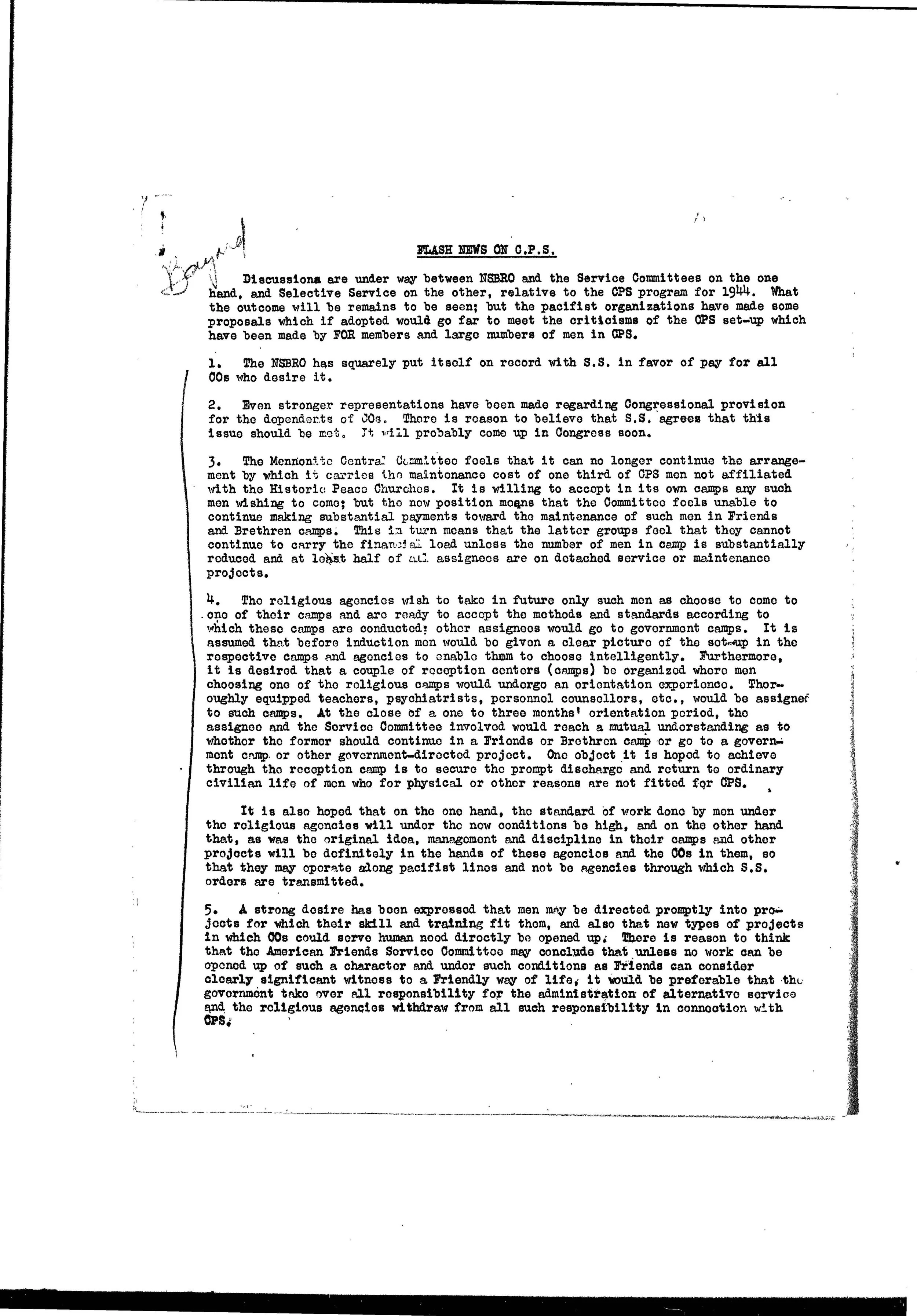
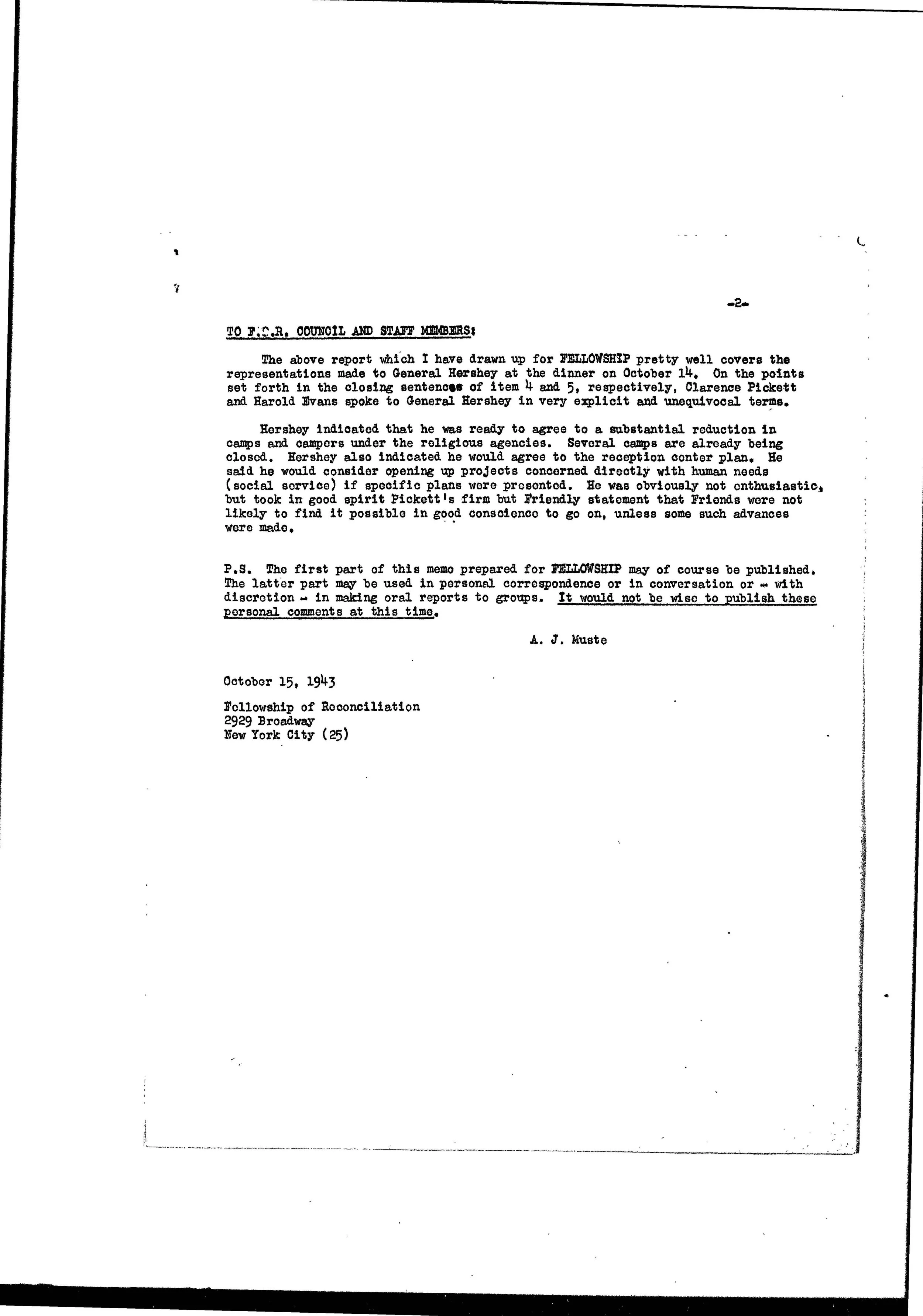
Muste, A.J. "Flash News on C.P.S." and Memorandum to F.O.R. Council and Staff Members, October 15, 1943.
