Description
In this special report published by the War Resisters League, Bayard Rustin shares his on-the-ground assessment of the Montgomery Bus Boycott during its eleventh week. Rustin analyzes the deep social tensions across the South that sparked the movement, pointing to rapid industrialization, the white backlash against the 1954 Supreme Court school desegregation decision, the rise of the violent White Citizens Councils, and the total collapse of white Southern liberalism. He documents how the boycott arose spontaneously from the rank and file following the arrest of Rosa Parks, noting that local Black churches and ministers quickly stepped in to provide leadership. He highlights the courageous work of the Montgomery Improvement Association (MIA), led by a young Reverend Martin Luther King, Jr., who was actively developing a Gandhian view of nonviolent resistance and organizing a highly efficient car pool system to keep 45,000 Black citizens off the segregated buses.
Rustin details the severe threats and retaliation faced by the Black community, including the bombing of leaders' homes, mass indictments of over one hundred boycott leaders, and economic intimidation by white authorities. Despite this state-sanctioned terror, Rustin observes that the protest gave Black Southerners a profound new sense of dignity, proving that they could stick together, refuse intimidation, and successfully utilize nonviolent direct action. He explains that the MIA's minimum demands were remarkably moderate—requesting courteous treatment, first-come-first-served seating within the segregation pattern while courts reviewed the law, and Black bus drivers on predominantly Black routes—yet white segregationists drew a hard line against any progress. Rustin concludes by outlining the urgent duty of Northern pacifists to support the MIA with literature, workshops, and funds, while simultaneously fighting for total racial integration in the North.
Historical Context
This report was written in March 1956, a volatile moment in American history when the Southern segregationist counter-offensive was reaching a fever pitch following the Supreme Court's historic Brown v. Board of Education rulings. White politicians across the Deep Southern states signed the "Southern Manifesto" to resist integration, while extremist groups like the White Citizens Councils used economic boycotts, firings, and domestic terrorism to crush any challenge to white supremacy. Simultaneously, white moderate and liberal institutions in the South grew completely paralyzed by fear, leaving a stark vacuum where only segregationist extremists and militant Black citizens demanding immediate civil rights remained active.
Within this dangerous climate, the Montgomery Bus Boycott had transformed from a local transit protest into a national symbol of mass Black resistance. As an experienced pacifist organizer who had previously tested nonviolent direct action on North Carolina chain gangs and studied Gandhian methods in India, Rustin was dispatched to Montgomery by the War Resisters League to advise Dr. King and local leaders on maintaining strict nonviolent discipline. This report captures the precise historical juncture where the modern civil rights movement found its mass strategy, anchoring political protest within the stable structure of the Black church and introducing nonviolent direct action to the Deep South.
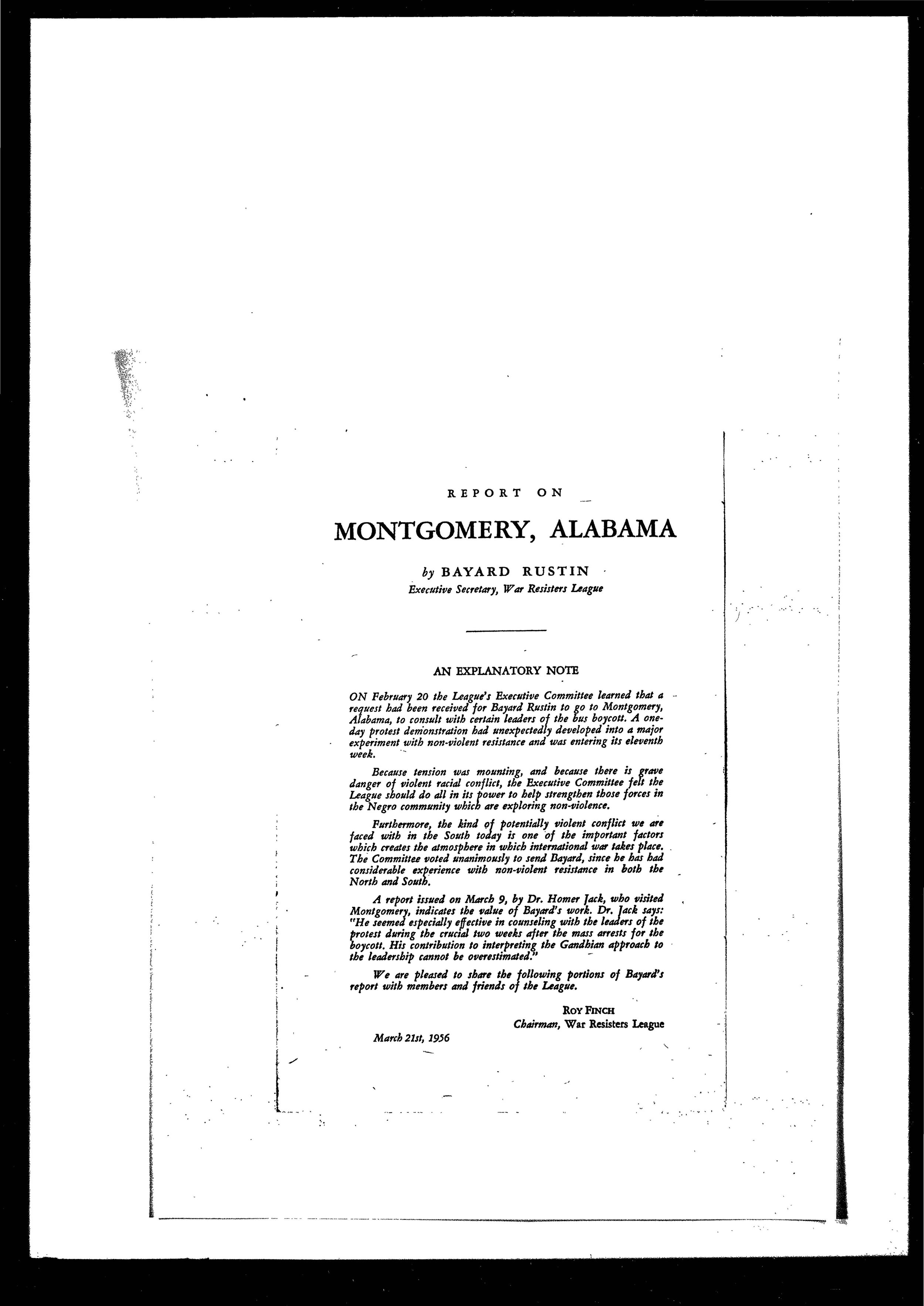
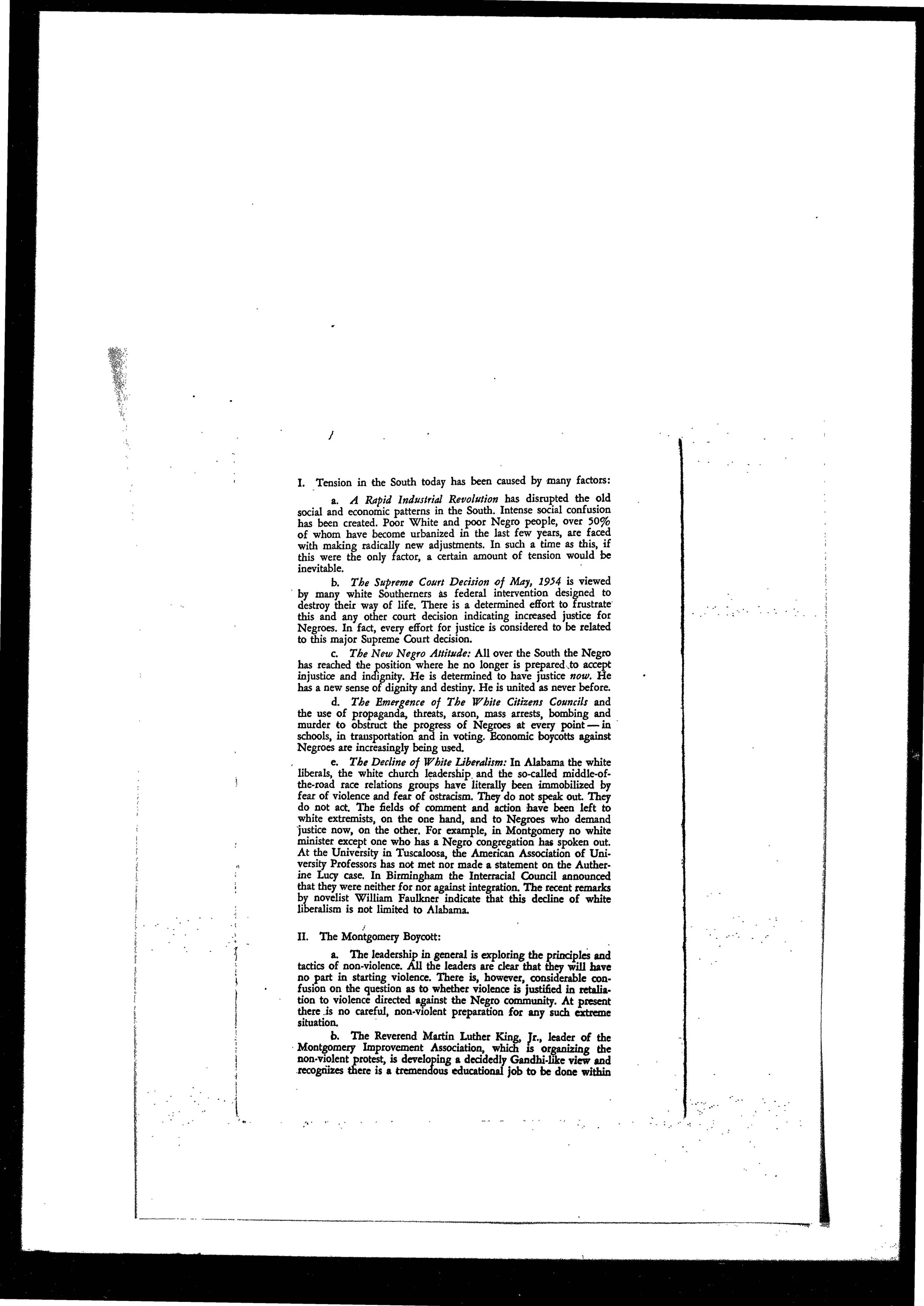
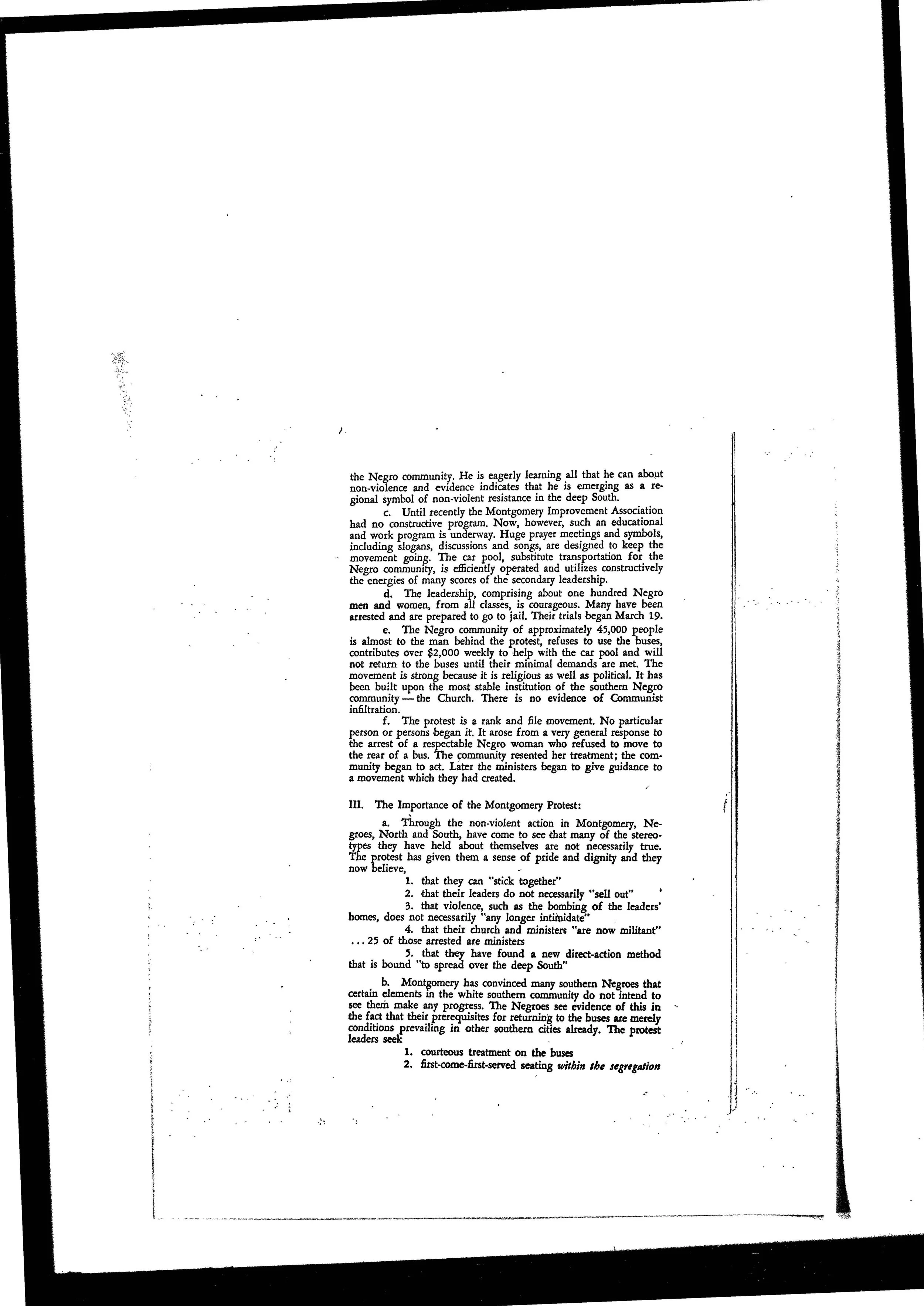
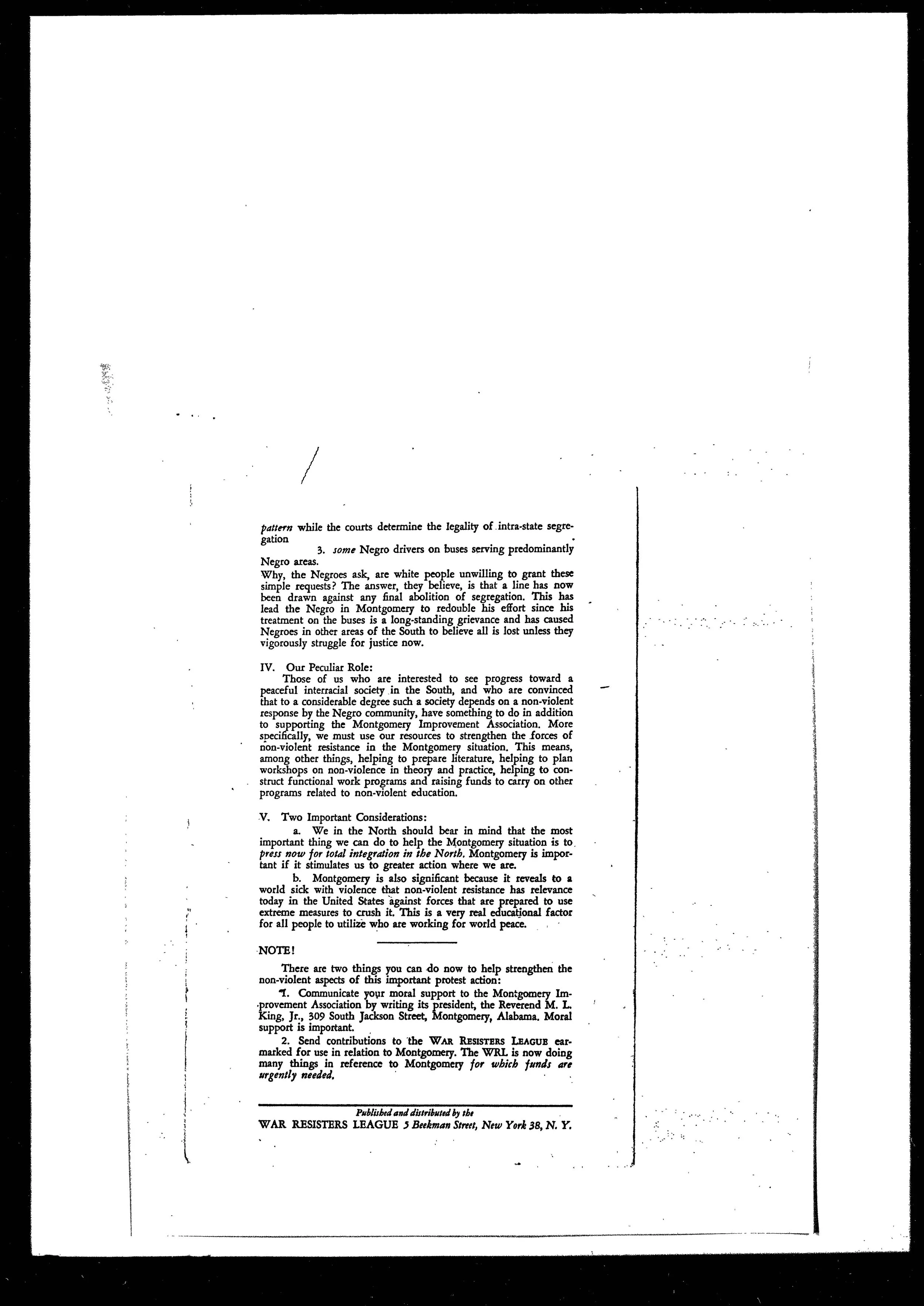
Rustin, Bayard. "Report on Montgomery, Alabama." New York: War Resisters League, March 21, 1956.
