Description
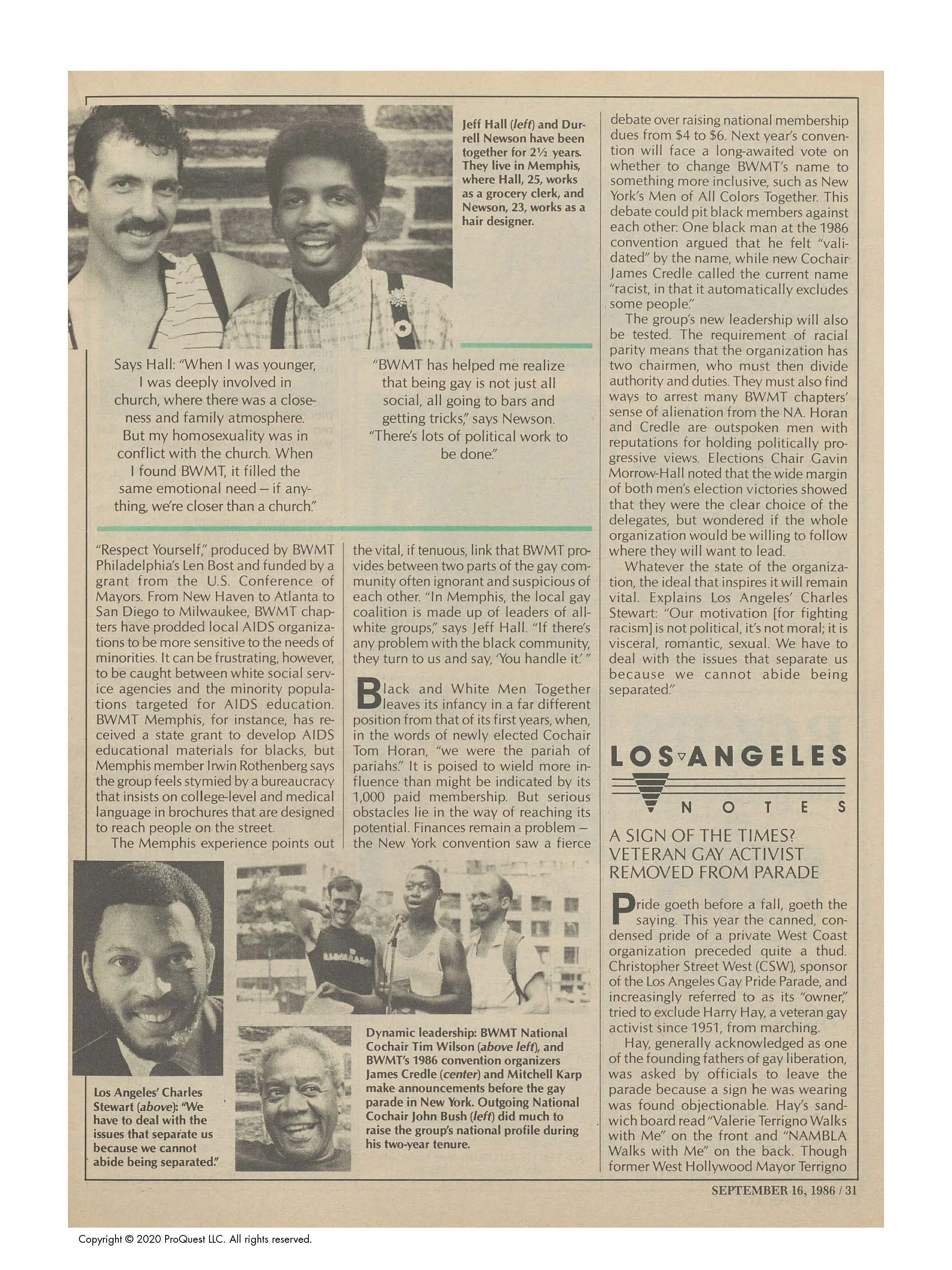
In this feature from The Advocate, the "architect" of the civil rights movement, Bayard Rustin, is celebrated as a vital voice for the emerging national organization Black and White Men Together (BWMT). The article describes how BWMT sought to combat "the forces of separatism" by building a "visceral, romantic, and political" interracial community. Rustin’s philosophy of coalition politics is presented as the essential "utility of politics" for the gay liberation movement, arguing that true freedom requires the rejection of both racial and sexual isolation.
The dialogue within the organization reflects the "nature of politics" in the late
1980s, where activists were struggling to maintain an "interracial majority" in the face of rising identity politics. By singing spirituals and marching "arm in arm," the members of BWMT sought to embody the "Beloved Community" that Rustin had championed decades earlier. The article highlights that the "enduring disappointment" of racism within the gay community can only be solved through a committed "professionalization" of activism that addresses the intersection of race, class, and sexuality.
Historical Context
Published in 1986, this article captures a moment of "maturity" for the interracial gay movement, occurring just as Bayard Rustin was becoming more public about his own identity. This was a period defined by the dual crises of the AIDS epidemic and a conservative political climate, which forced a "revolutionary" rethinking of coalition-based activism. Rustin’s involvement with BWMT was a direct application of his theory that "coalition vs. nationalism" was the defining choice for any marginalized group seeking real power.
The 1980s saw a shift from the "protest" of the 1970s to the "responsibility" of building national institutions like the National Association of Black and White Men Together. This document underscores the BRCSJ’s mission to connect Rustin’s civil rights legacy to the ongoing struggle for queer liberation, showing that the same "blueprint" he used for the 1963 March on Washington was being used to "reconstruct the face" of the gay rights movement.
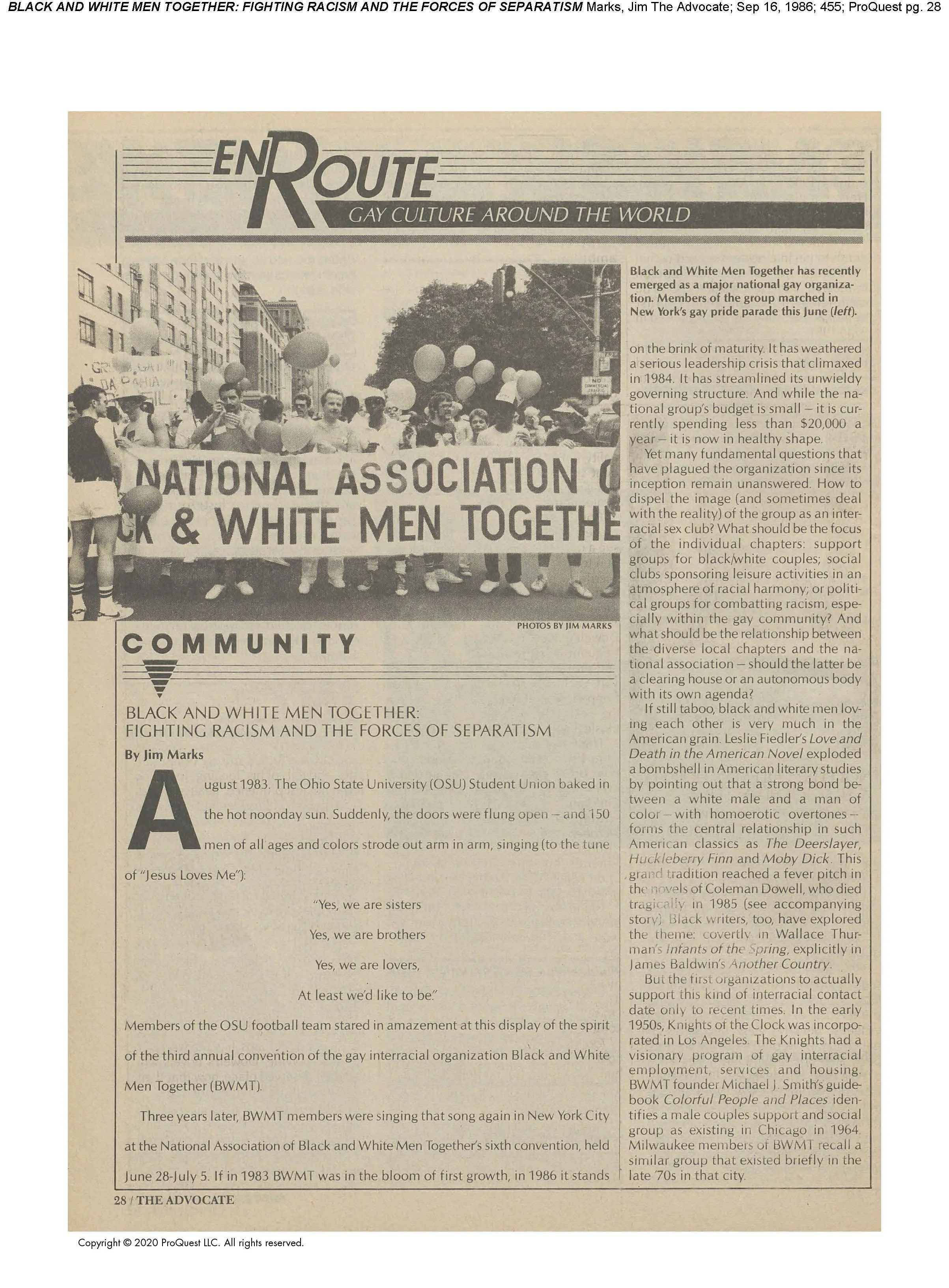
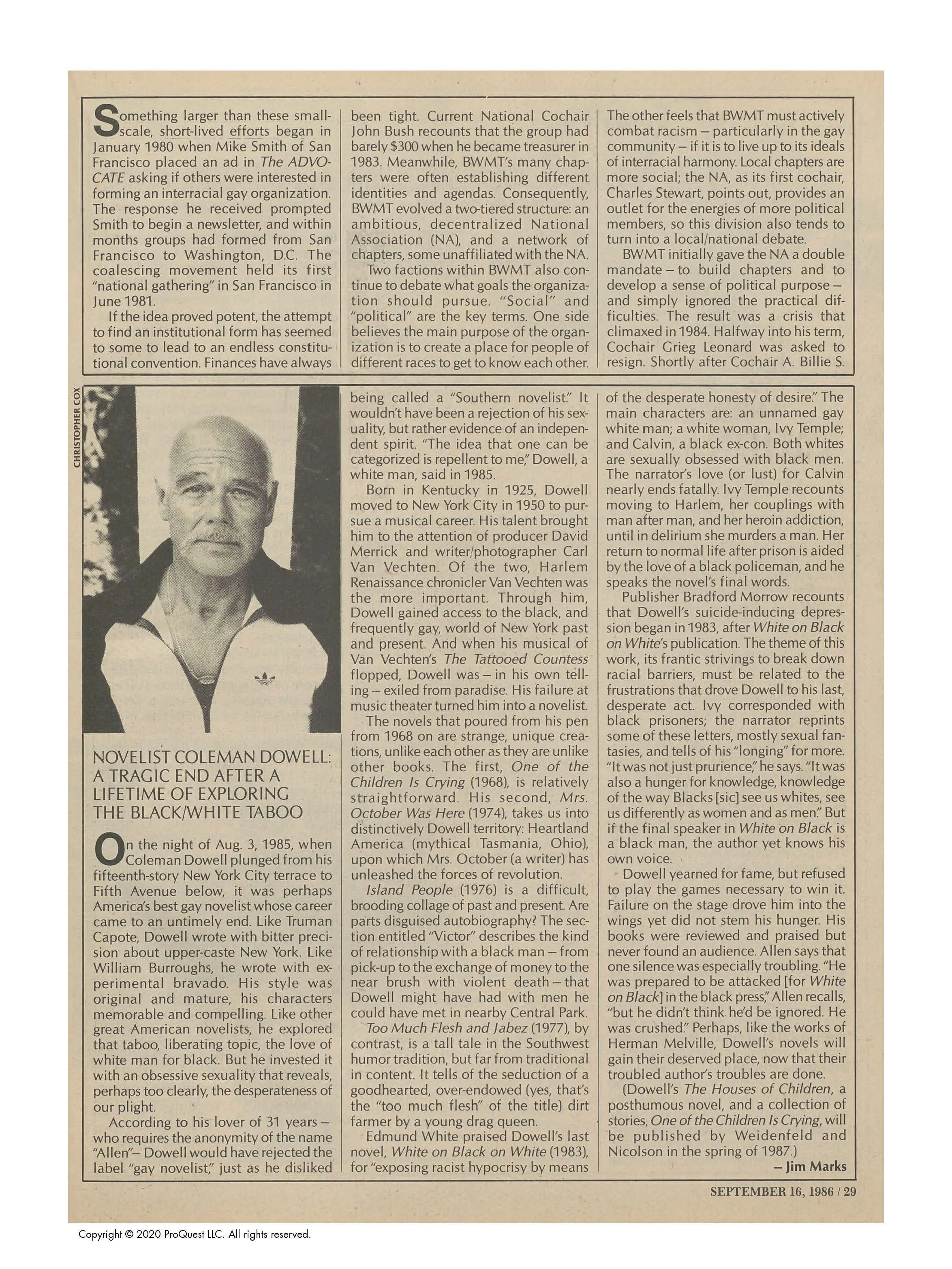
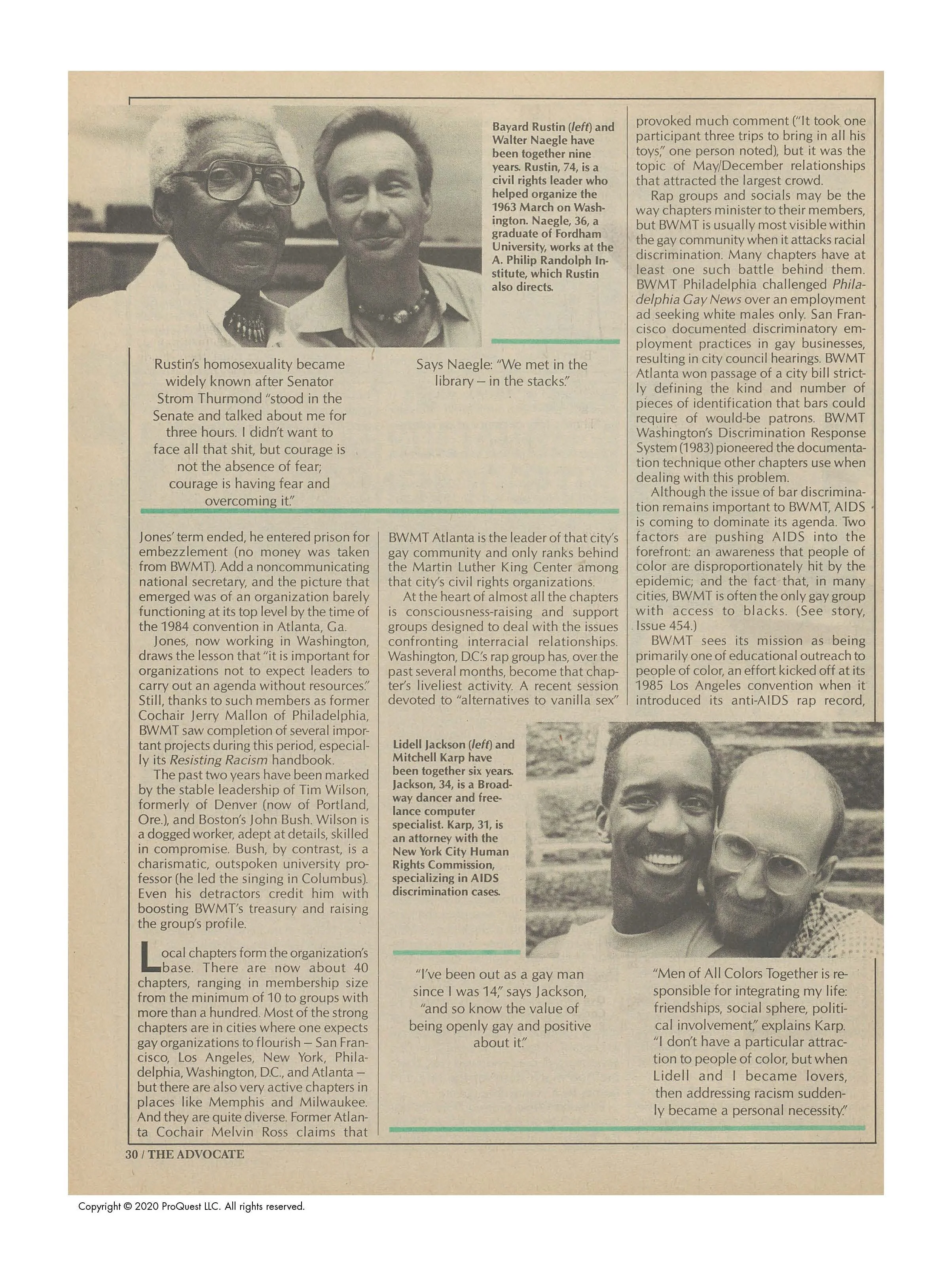
Marks, Jim. "Black and White Men Together: Fighting Racism and the Forces of Separatism." The Advocate, September 16, 1986.
