
Description
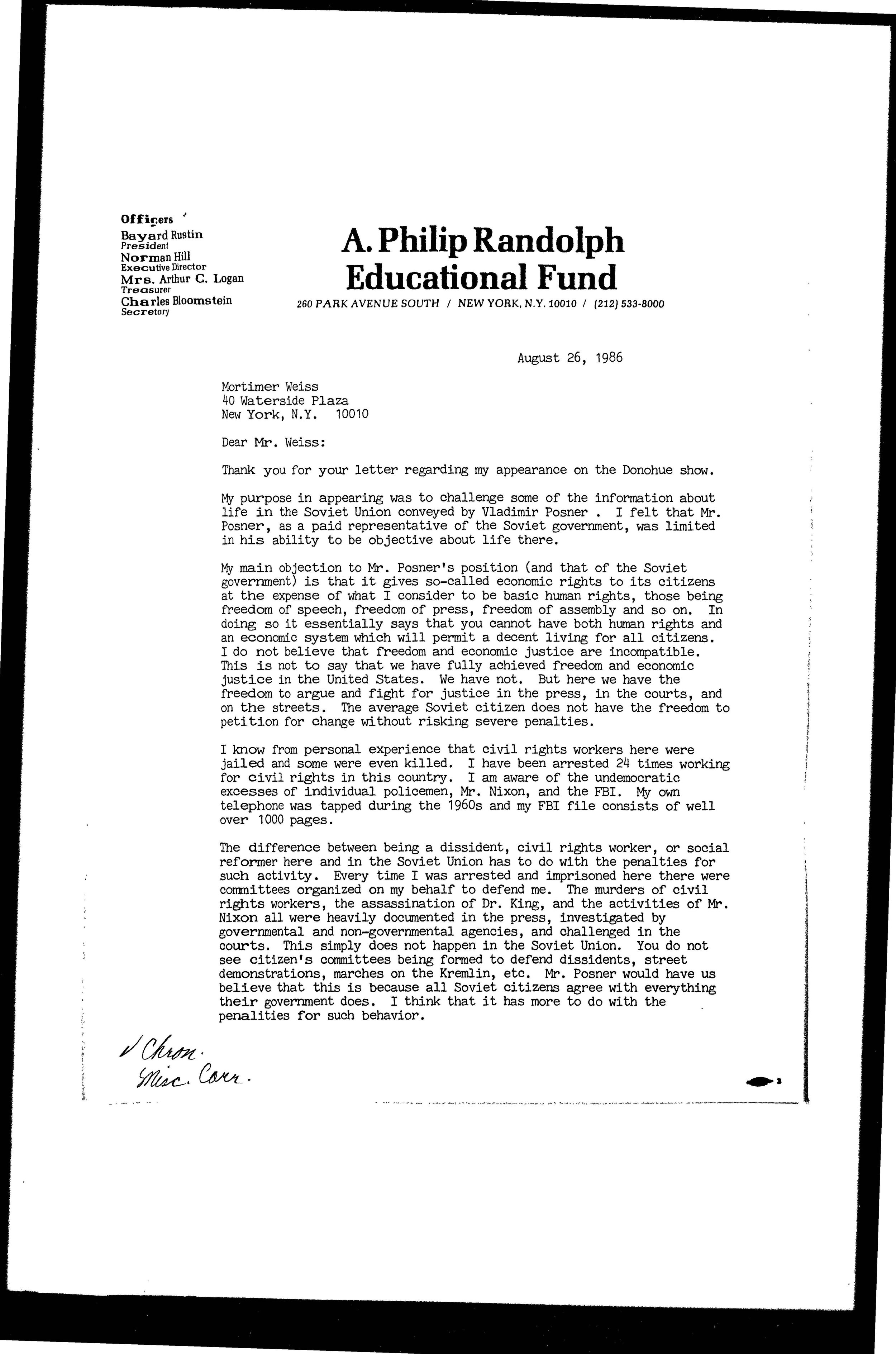
In this sharp response to Mortimer Weiss, Bayard Rustin explains his decision to challenge Soviet representative Vladimir Posner on the Donahue show. Rustin argues that the Soviet government makes a false trade-off by offering "so-called economic rights" while stripping away basic human rights like freedom of speech and assembly. He rejects the idea that freedom and economic justice are incompatible, asserting that a system that denies its citizens the right to petition for change cannot truly deliver justice.
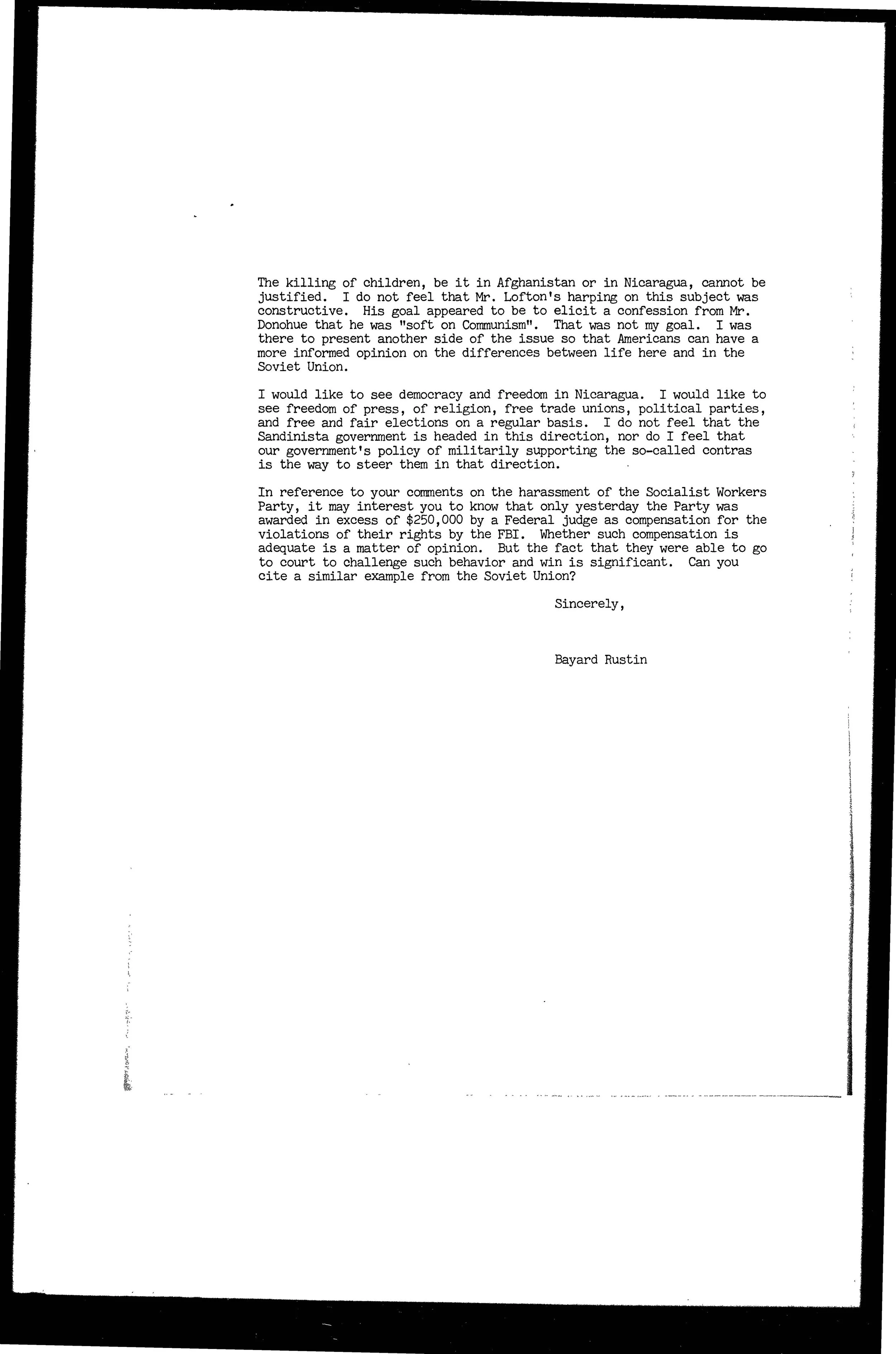
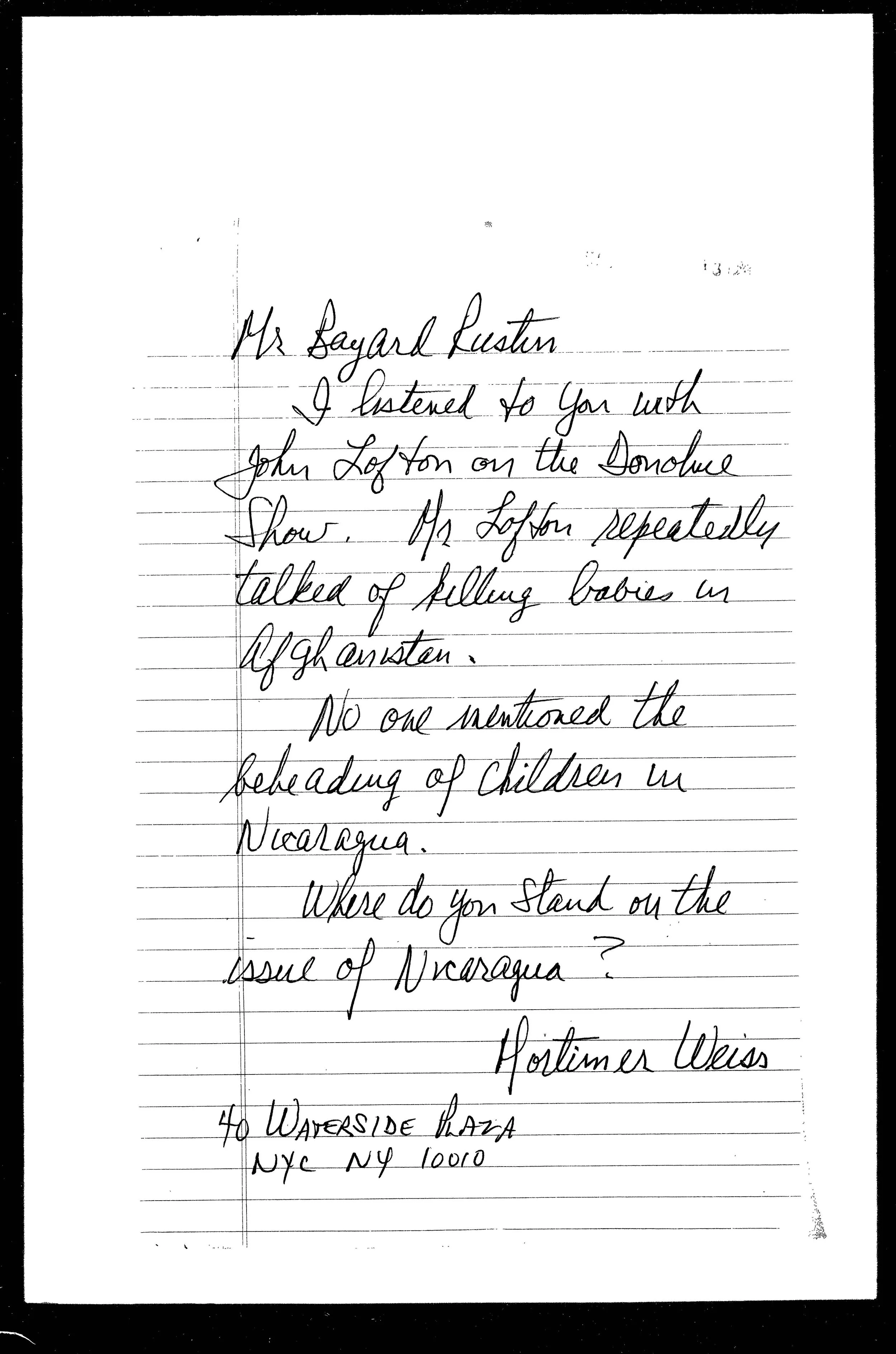
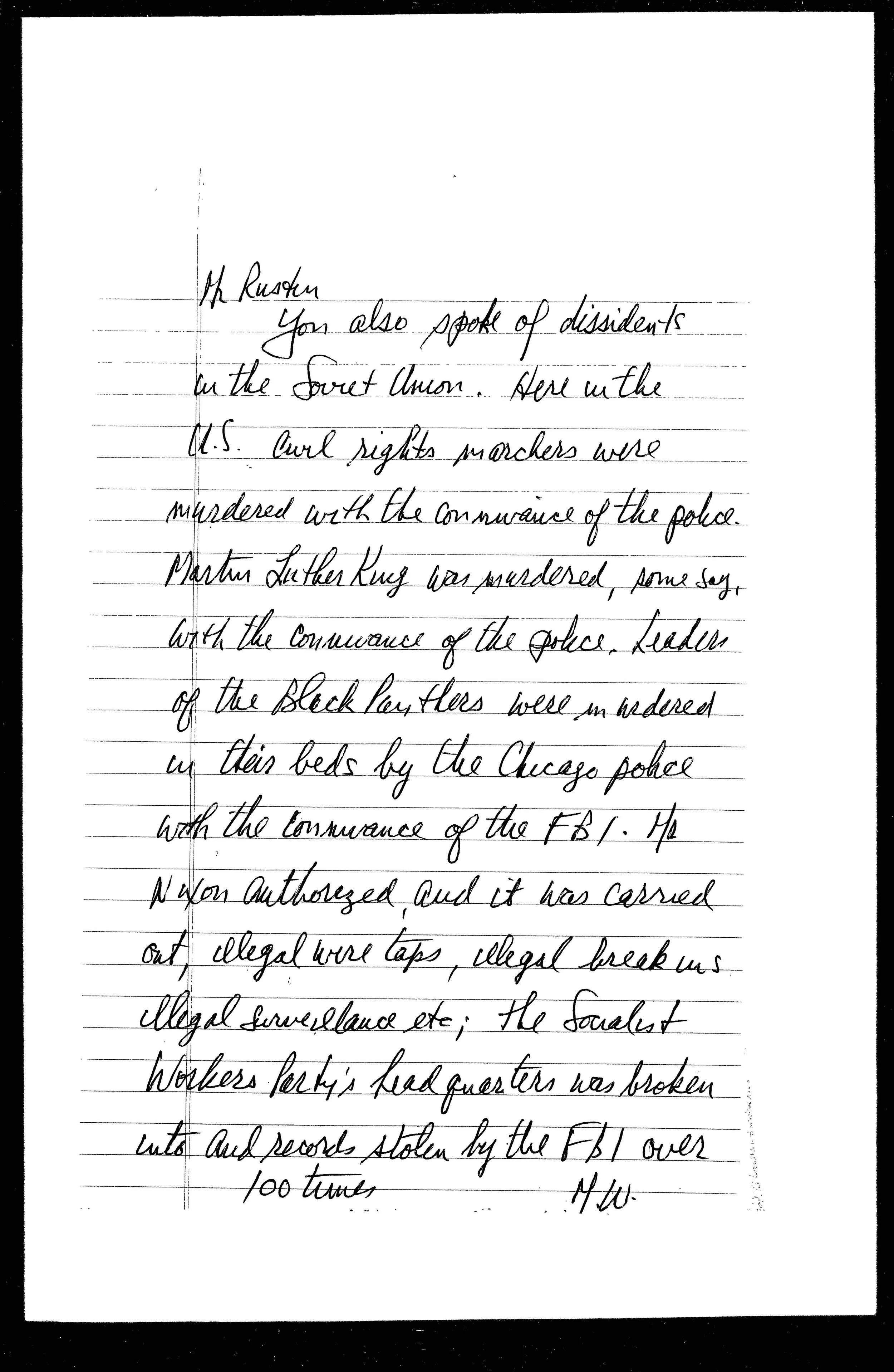
Rustin acknowledges that the United States has not yet fully achieved either freedom or economic justice, but he insists on a critical "utility of politics": in a democracy, citizens have the "freedom to argue and fight for justice in the press, in the courts, and on the streets". When Weiss points to the historical murders of civil rights marchers and Black Panthers as evidence of American hypocrisy, Rustin counters with a pragmatic example of democratic accountability. He cites a then-recent federal court ruling awarding over $250,000 to the Socialist Workers Party for FBI violations, asking rhetorically if such a legal victory against the state would ever be possible in the Soviet Union.
Historical Context
Written during the final years of the Cold War, this letter highlights Rustin’s "enduring disappointment" with activists who romanticized authoritarian regimes in their pursuit of economic equality. Rustin’s worldview was shaped by his belief that the "nature of politics" in a free society—however flawed—provides the only real mechanism for the poor to organize and demand a "Great Society". He viewed the Soviet model not as a revolutionary alternative, but as a "barbarism" that offered bread only at the cost of the soul.
This exchange also reflects the "professionalization" of Rustin’s later career as an international human rights advocate. By defending the rights of the Socialist Workers Party—a group with whom he had significant ideological disagreements—he demonstrates his commitment to coalition over nationalism and the belief that the law must protect even those at the fringes of society. For Rustin, the ability to challenge the police and the FBI in an open court was the ultimate "barometer" of a society’s potential for progress, a luxury he knew was unavailable to the "average Soviet citizen".
Rustin, Bayard. Letter to Mortimer Weiss. August 26, 1986. Bayard Rustin Papers, General Correspondence.
