Description
In this Associated Press interview published just weeks before the March on Washington, Bayard Rustin is introduced to the American public as "Mr. March on Washington Himself." Speaking from a sparsely furnished Harlem office, Rustin outlines the immense logistical stakes of the demonstration, then estimated at a quarter of a million people, and warns that the protest "MUST not be marred by any incidents" that could embarrass the movement. The article captures Rustin’s strategic brilliance as he uses the press to deny reports of his discharge, revealing that A. Philip Randolph had conceived of the march with Rustin specifically in mind. By leaning into his identity as a Quaker and lifelong pacifist, Rustin frames his activism as a moral necessity dedicated to the nonviolent resolution of global problems.
Critically, the article documents Rustin’s proactive handling of attempts to discredit him. He directly addresses his 1953 arrest in Pasadena on a "morals charge," stating his intention to bring the matter before civil rights leaders so they could determine whether it would affect the cause. By refusing to be blackmailed, Rustin centers his identity as a religious conscientious objector who had already served 28 months in federal prison for his beliefs. He speaks with pride about a career spanning decades, from his early days at CORE to his role in helping Dr. Martin Luther King Jr. organize the Southern Christian Leadership Conference.
Historical Context
By early August 1963, Bayard Rustin was under intense fire from segregationist politicians and even from within the movement’s own "Big Six" leadership. Opponents were preparing to weaponize his private life and past political affiliations to sabotage the March on Washington. This interview serves as a historical record of Rustin’s counteroffensive against efforts to sideline him. While leaders like Roy Wilkins initially blocked Rustin from being named the official Director due to his identity as a gay man and his former ties to the Young Communist League, A. Philip Randolph circumvented this by naming himself Director and appointing Rustin as his Deputy.
The article reflects the "military campaign" precision required to bring a crowd equal to one third of the capital’s population into the city and ensure they were fed and cared for in a single day. Rustin’s transparency regarding his 22 arrests in civil rights struggles and his time on a North Carolina chain gang underscores the physical and legal risks he had already endured. This document highlights the movement’s transition toward a more professional and sophisticated operation, where the chief strategist’s own history was transformed from a liability into a testament to his commitment to the ideal of nonviolent struggle.
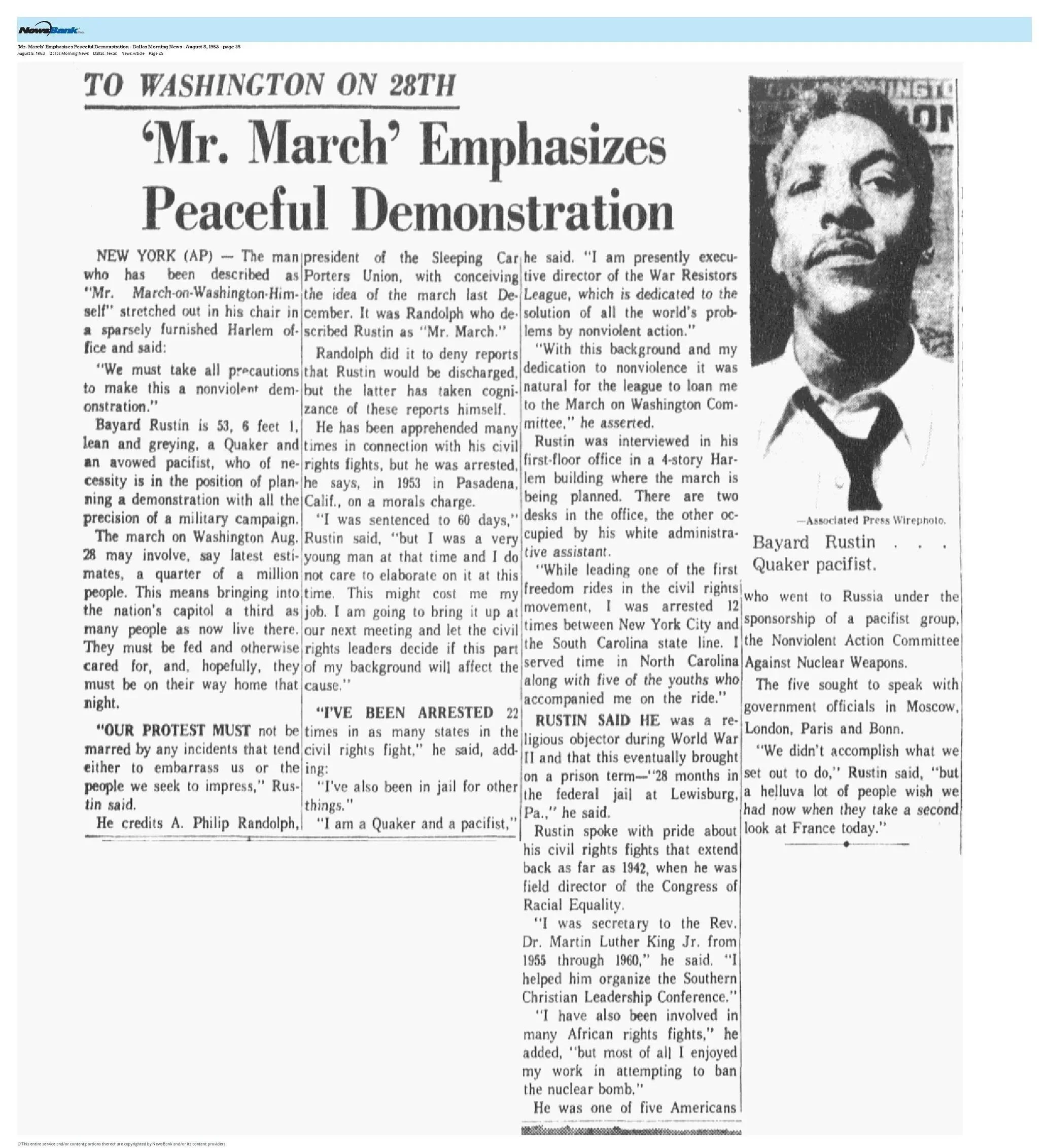
“‘Mr. March’ Emphasizes Peaceful Demonstration.” Dallas Morning News, August 8, 1963.
