
Please note: The exact date of publication is unknown.
Description
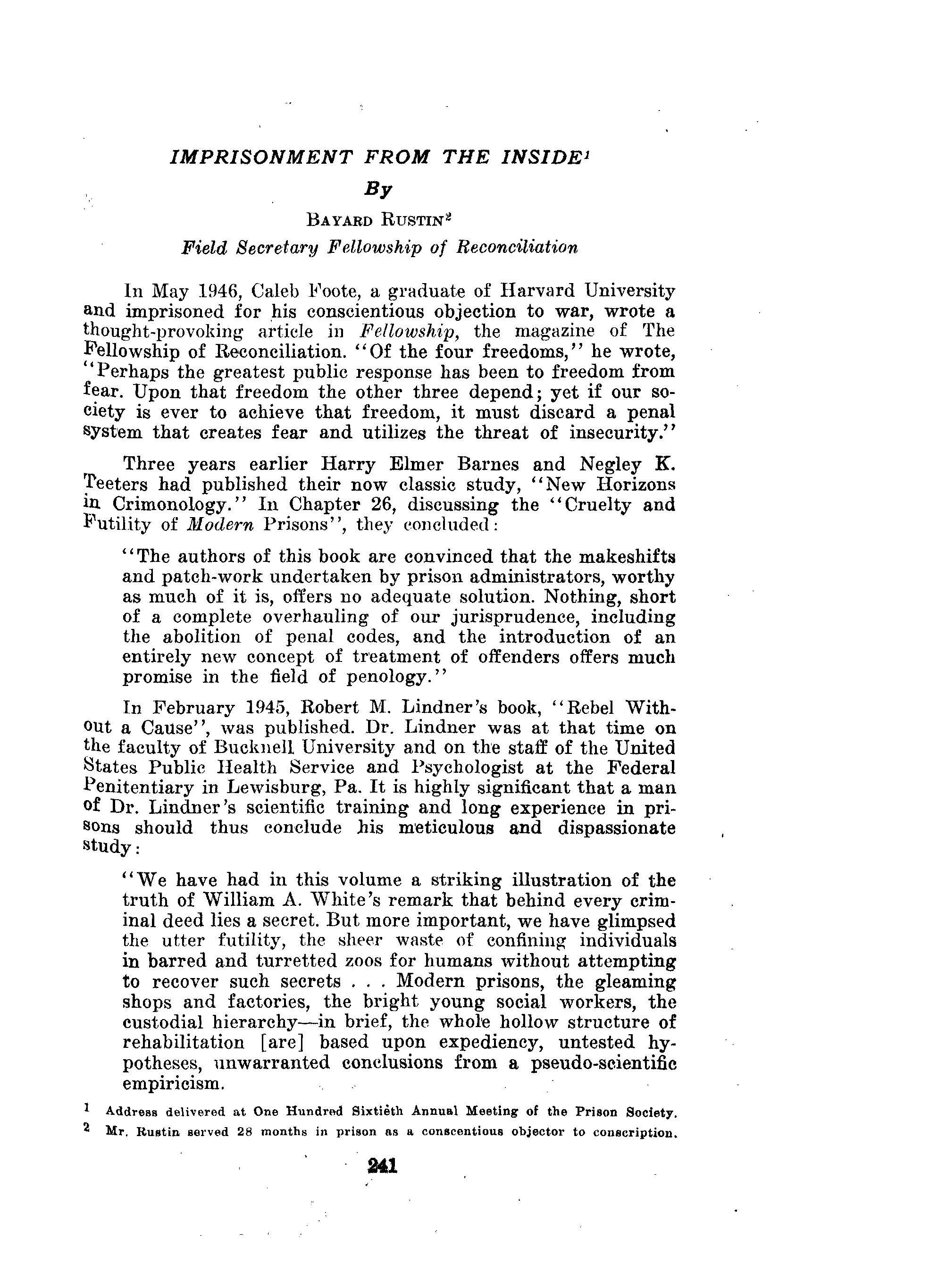
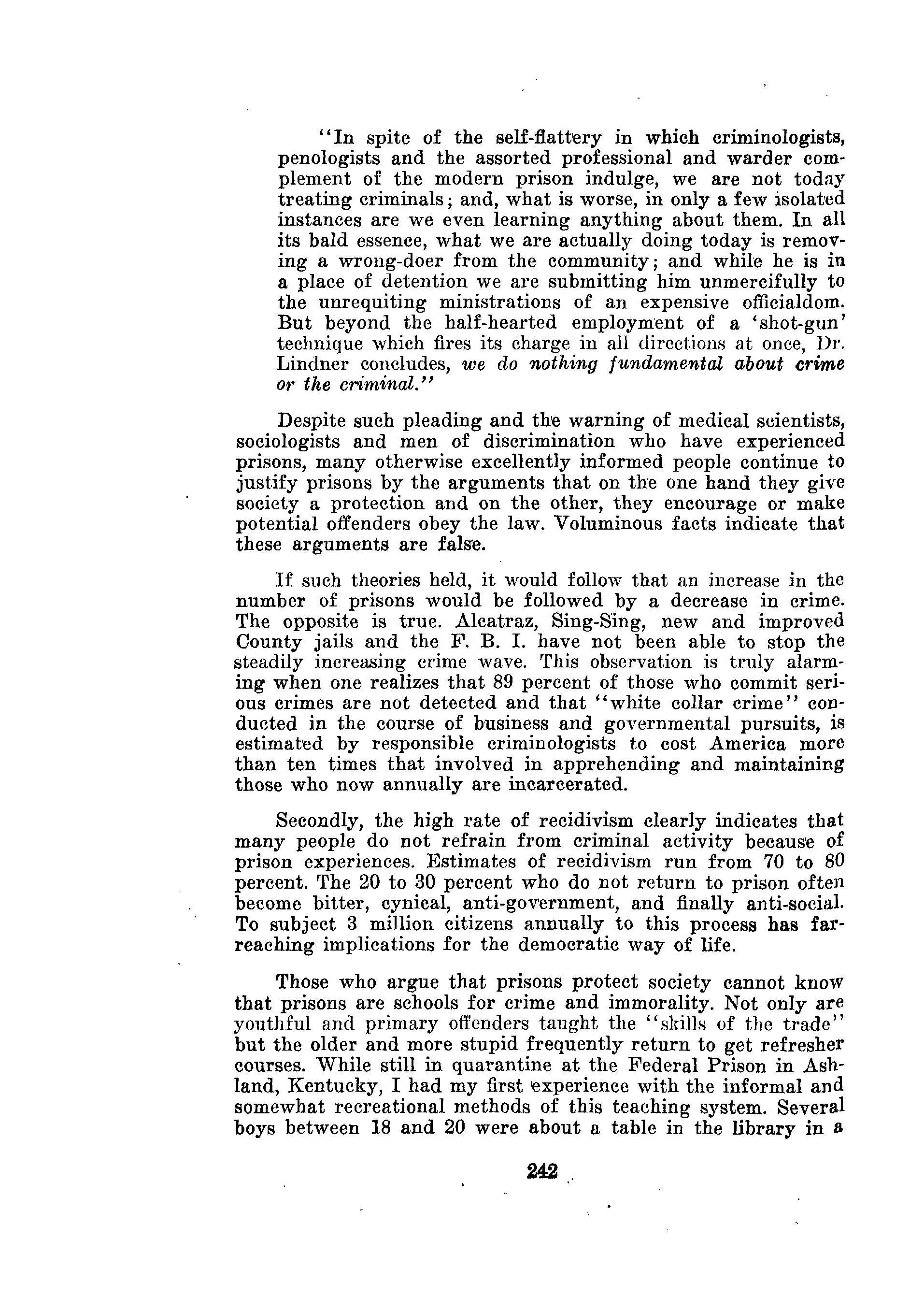
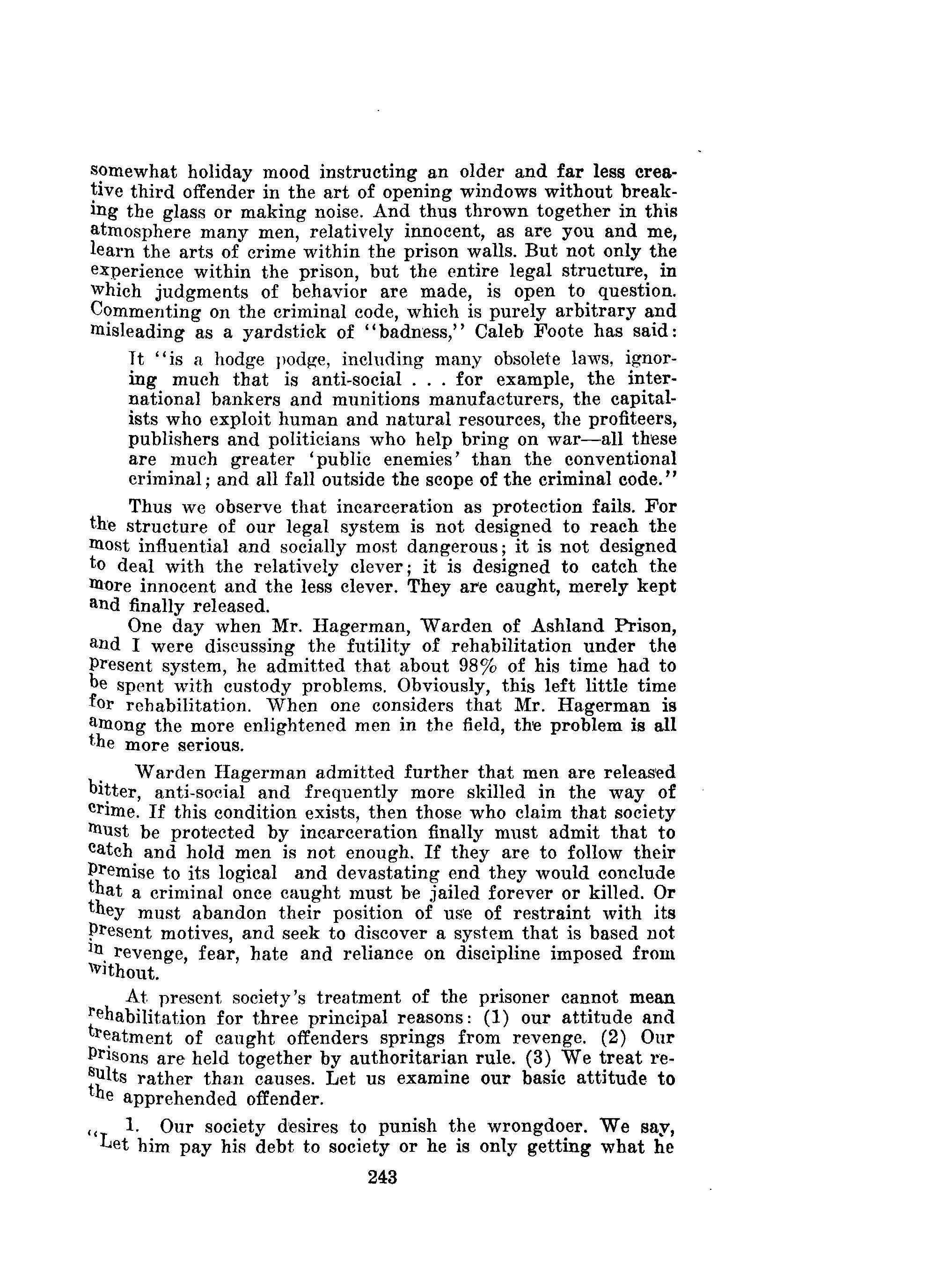
In this 1947 treatise, Bayard Rustin provides a naked assessment of the American penal system, characterizing it as a "corrupt society" that mirrors the reliance on violence found in international warfare. Rustin maintains that the prison experience is defined by a "frustrated life" where the total lack of privacy and constant authoritarian oversight inevitably lead to aggression rather than rehabilitation. He argues that current prisons act as "schools for crime," where youthful offenders are taught the "skills of the trade" by more experienced inmates, ensuring a high rate of recidivism. For Rustin, the utility of politics must include the abolition of penal codes based on revenge, fear, and outward discipline.
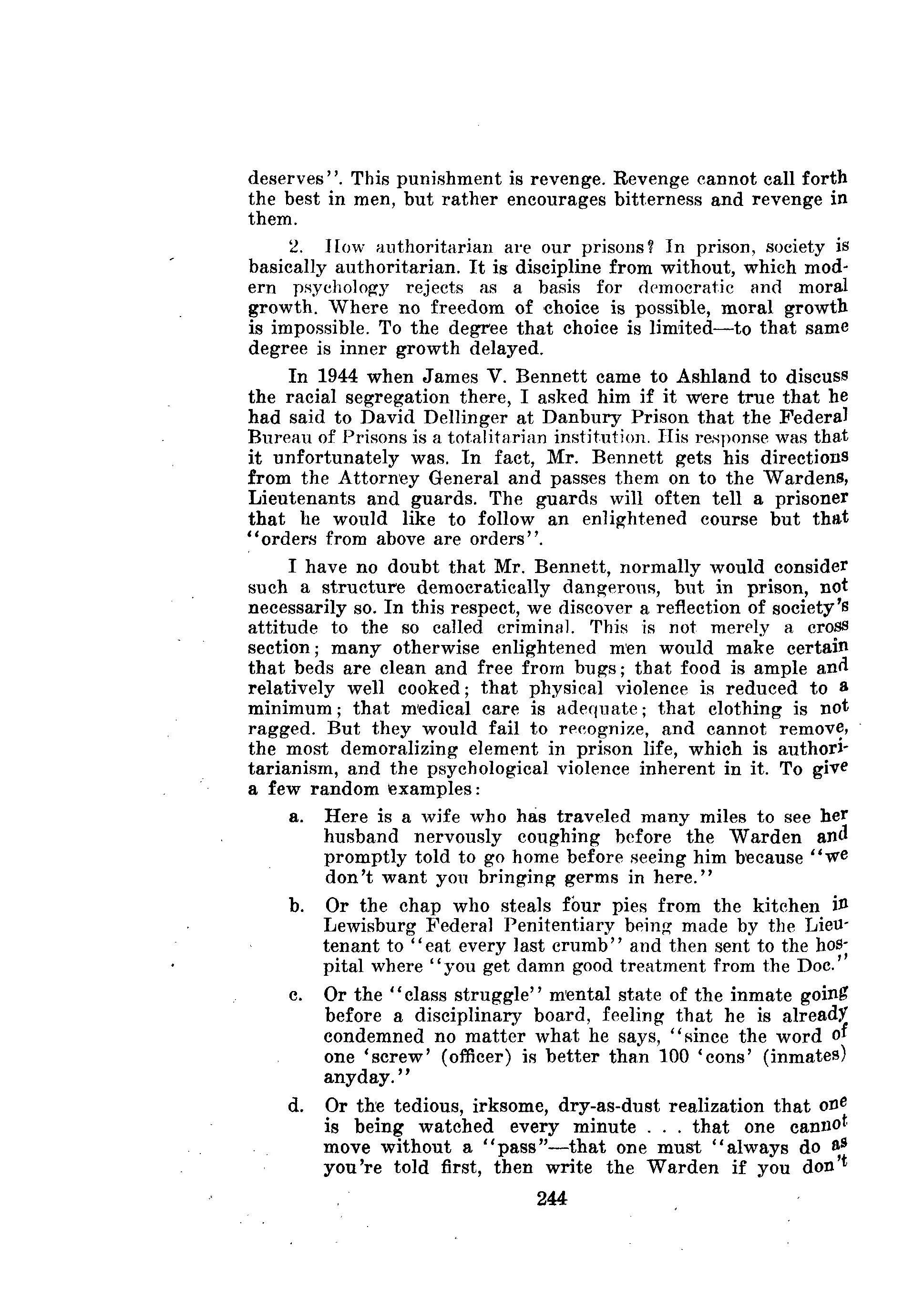
Rustin emphasizes that true rehabilitation requires a "complete overhauling of our jurisprudence" to replace punishment with an "entirely new concept of treatment." He offers a sharp critique of "makeshifts and patch-work" reforms, asserting that only a system rooted in patience and forgiveness can truly change a wrongdoer. Rustin highlights the psychological violence of authoritarianism, noting that the "ever-presence of the punishment cell" destroys the potential for inner growth. By documenting the "class struggle" within prison walls, Rustin sought to draw attention to the "unnoticed field of experience" where the state exercises its most absolute and demoralizing power.
Historical Context
The late 1940s represent a pivotal moment where radical pacifism was forged through direct physical confrontation with the state. This period was unique for the emergence of the "conscientious objector" as a figure of resistance, following a rise in the federal imprisonment of those who refused conscription during World War II. Intellectual life during this era was defined by a raw, first-hand witness to the legal foundations of Jim Crow, particularly in the wake of the 1947 Journey of Reconciliation, which challenged interstate bus segregation. There was a growing conviction that the struggle for freedom was inseparable from the struggle against the barbarism of the prison system.
This era marked a time of revolutionary transition as activists began testing the boundaries of the law through non-violent direct action. The tactical blueprint for the sit-ins and freedom rides of the future was established during this window, rooted in the belief that the nature of politics must be shifted from fear to "caritas" or love. By framing carceral mistreatment as a reflection of a society that utilized the atomic bomb, thinkers of this period sought to expose the connections between international warfare and internal state violence. This perspective preserves the voice of a movement before it became professionalized, highlighting an enduring commitment to the most vulnerable members of society.
Rustin, B. (1947). Imprisonment From the Inside. The Prison Journal, 27(1), 241-248. https://doi.org/10.1177/00328855470270010
