Description
On April 29, 1986, Bayard Rustin initiated a direct lobbying campaign by sending an urgent letter to New York City Mayor Edward I. Koch alongside a series of customized letters mailed to individual city councilmembers. Writing as President of the A. Philip Randolph Educational Fund, Rustin forcefully urges city leaders to completely reject a new wave of proposed amendments aimed at weakening Intro 2. Intro 2 was the recently passed city ordinance that officially banned discrimination based on sexual orientation in housing, employment, and public accommodations. Rustin maintains that the utility of politics requires leaders to "hold the line" against these changes, arguing that adding legal loopholes to the newly signed law would actively destroy the protections the city council had just voted to establish.
Rustin utilizes his own long history as a civil rights architect to pressure city officials into fulfilling their constitutional duties. He sends the Mayor a copy of his recent committee testimony to remind him of the bedrock lesson he learned from fifty years of activism: no group is ultimately safe from bigotry as long as any single group is subject to special negative treatment. In his letters to opponents of the bill, he explicitly compares the City Council's behavior to the congressional filibusters of the past, where southern segregationist politicians from 1876 until 1964 used procedural delays to block federal civil rights laws from ever reaching the floor for a fair vote. By deploying these direct historical parallels, Rustin sought to professionalize the lobbying effort, demanding that councilmembers vote for a "discharge motion"—a specific legal procedure used to force a bottled-up bill out of a hostile committee and bring it to the full council for open debate.
Historical Context
This correspondence was written during a period of intense political friction immediately following the passage of New York City's landmark gay rights bill in the spring of 1986. While gay activists celebrated the historic vote, conservative members of the City Council, heavily backed by the Catholic Archdiocese, immediately introduced dynamic new amendments designed to weaken the law. These proposed amendments sought to create massive legal exemptions that would allow religious charities, private schools, and small landlords to continue firing or evicting gay people based on their orientation.
This backdrop created a critical defensive window for the movement, as traditional civil rights leaders realized that winning a law on paper was meaningless if opponents could immediately write loopholes into the city code. Rustin launched this targeted mailing campaign to directly counter these stalling tactics, using his immense moral authority to keep the City Council from diluting the legal foundations of equal protection.
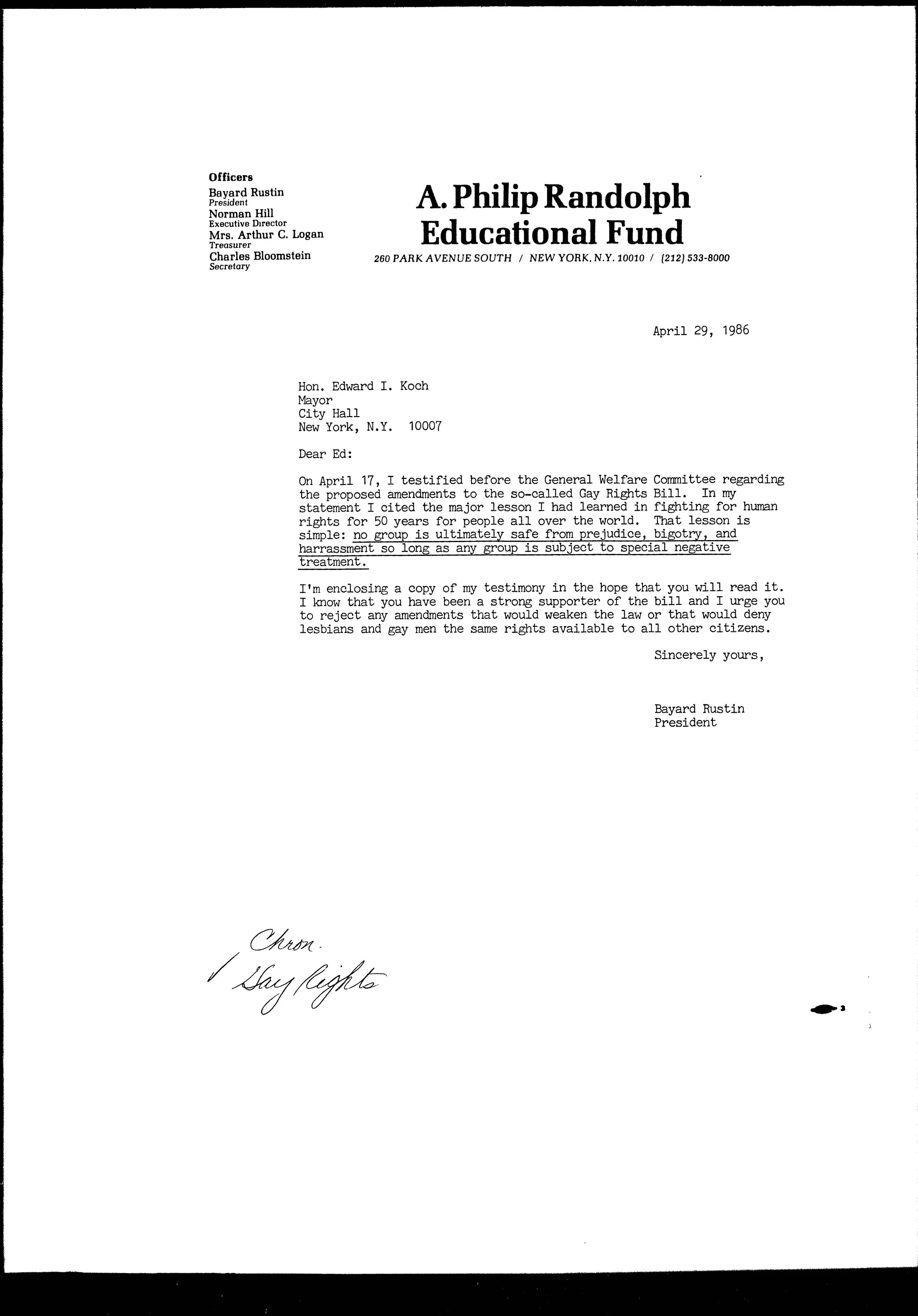
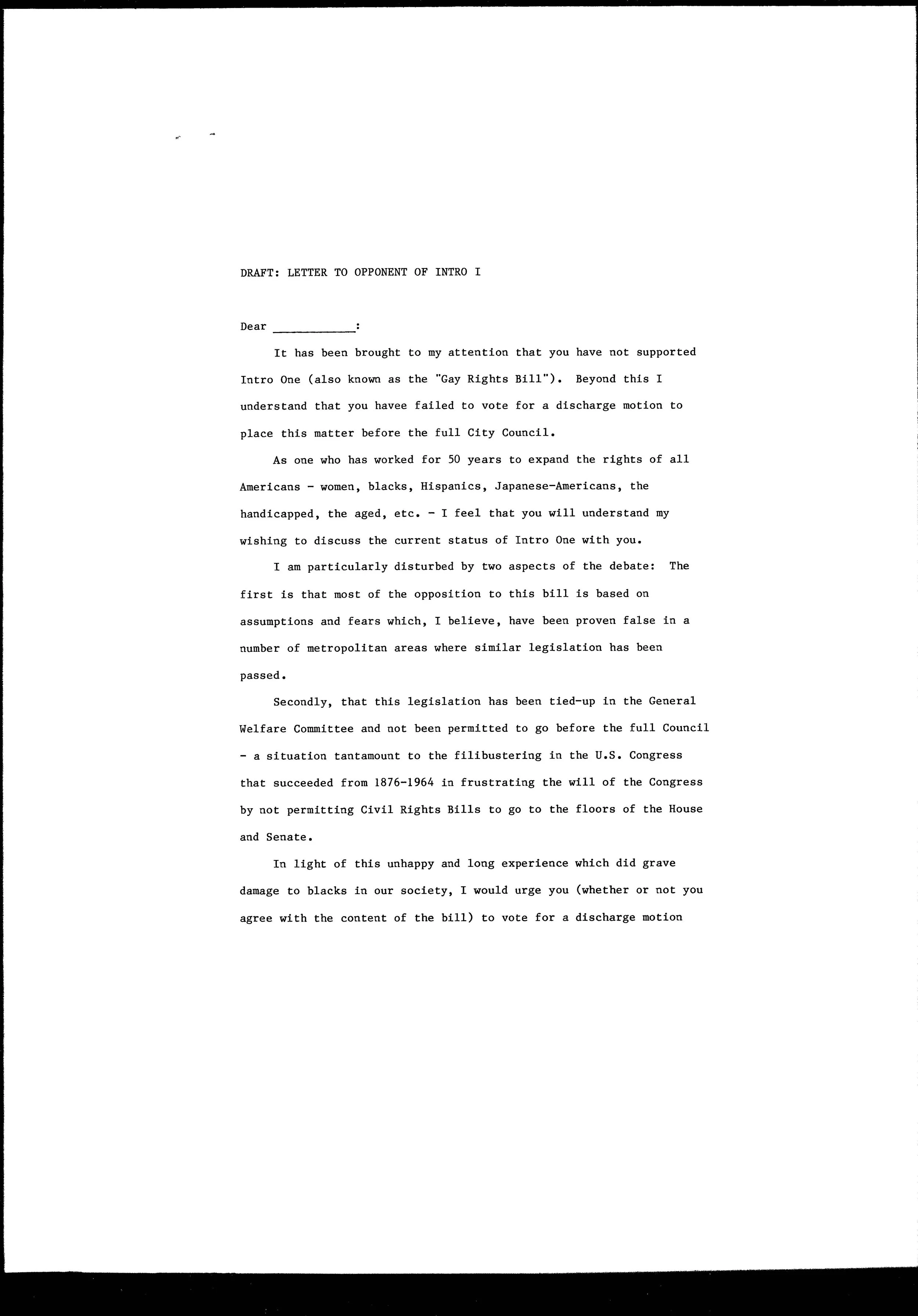
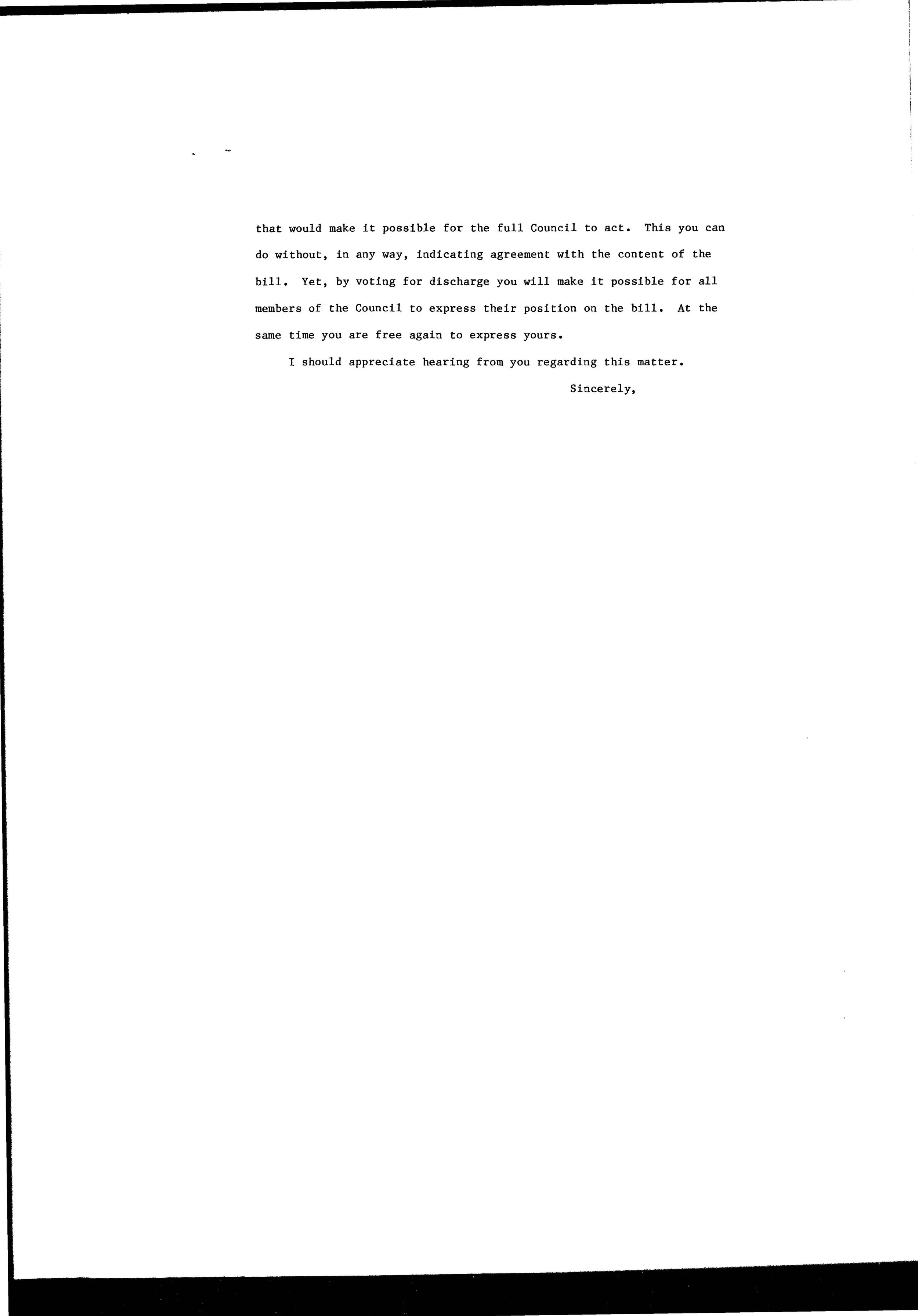
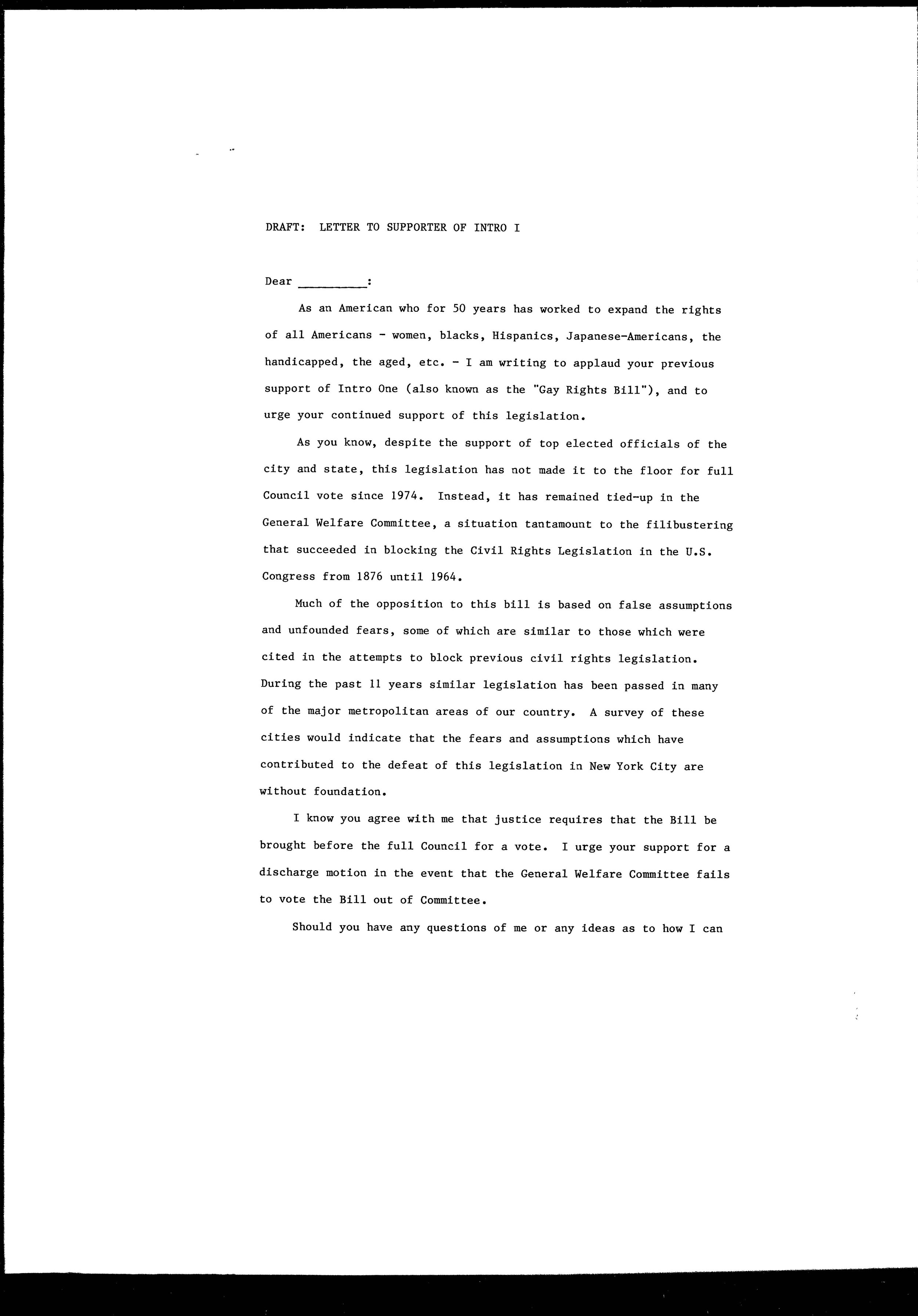

Rustin, Bayard. "Lobbying Correspondence to Mayor Edward I. Koch and New York City Councilmembers regarding Intro 2 Amendments." April 29, 1986.
