
Description
In this column published in The St. Louis American, Bayard Rustin reacts to the deadly assault by state authorities at Attica Correctional Facility in upstate New York. Rustin identifies two distinct tragedies: the immediate, needless loss of life among both prisoners and guards, and the certainty that similar violent uprisings will recur unless the American penal system is humanized. He grieves for the slain inmates while rejecting political rhetoric on both sides, refusing to excuse the state's military response or glorify the prisoners as revolutionary martyrs. Rustin points out that American prisons are filled with poor Black men who are embittered by systemic racial bias and jailed for minor, nonviolent offenses like gambling or drug addiction.
The column details Rustin’s clear proposal for structural prison reform. He argues that traditional prisons act as "schools for crime" that shatter men's spirits rather than rehabilitate them. To fix this, Rustin demands that society separate nonviolent lawbreakers from violent offenders, insisting that nonviolent individuals should never be placed behind prison walls. For those who commit violent crimes, he proposes placing them in secure, hospital-like facilities focused on medical care, psychological counseling, and job training. Rustin admits this transformation will require billions in tax dollars, but insists the investment will reduce crime, rebuild trust in the legal system, and prevent future prison massacres.
Historical Context
The September 1971 Attica prison uprising marked one of the most violent confrontations in American carceral history. On September 9, 1971, over 1,000 inmates seized control of the overcrowded facility, demanding basic human rights, better medical care, and an end to physical abuse by guards. Four days later, New York Governor Nelson Rockefeller ordered state troopers to storm the prison with tear gas and heavy gunfire, resulting in the deaths of 29 inmates and 10 civilian hostages who were killed by state bullets.
This bloody intervention sparked national outrage and exposed the severe failures of the American criminal justice system. The tragedy occurred during a period when conservative politicians were aggressively promoting "law and order" platforms, leading to mass incarceration and overcrowded nineteenth-century facilities. Rustin’s column captures a critical moment in the post-civil rights era where civil rights strategists tried to redirect public outrage away from retaliation and toward long-term, class-based penal reform and economic investment in poor communities.
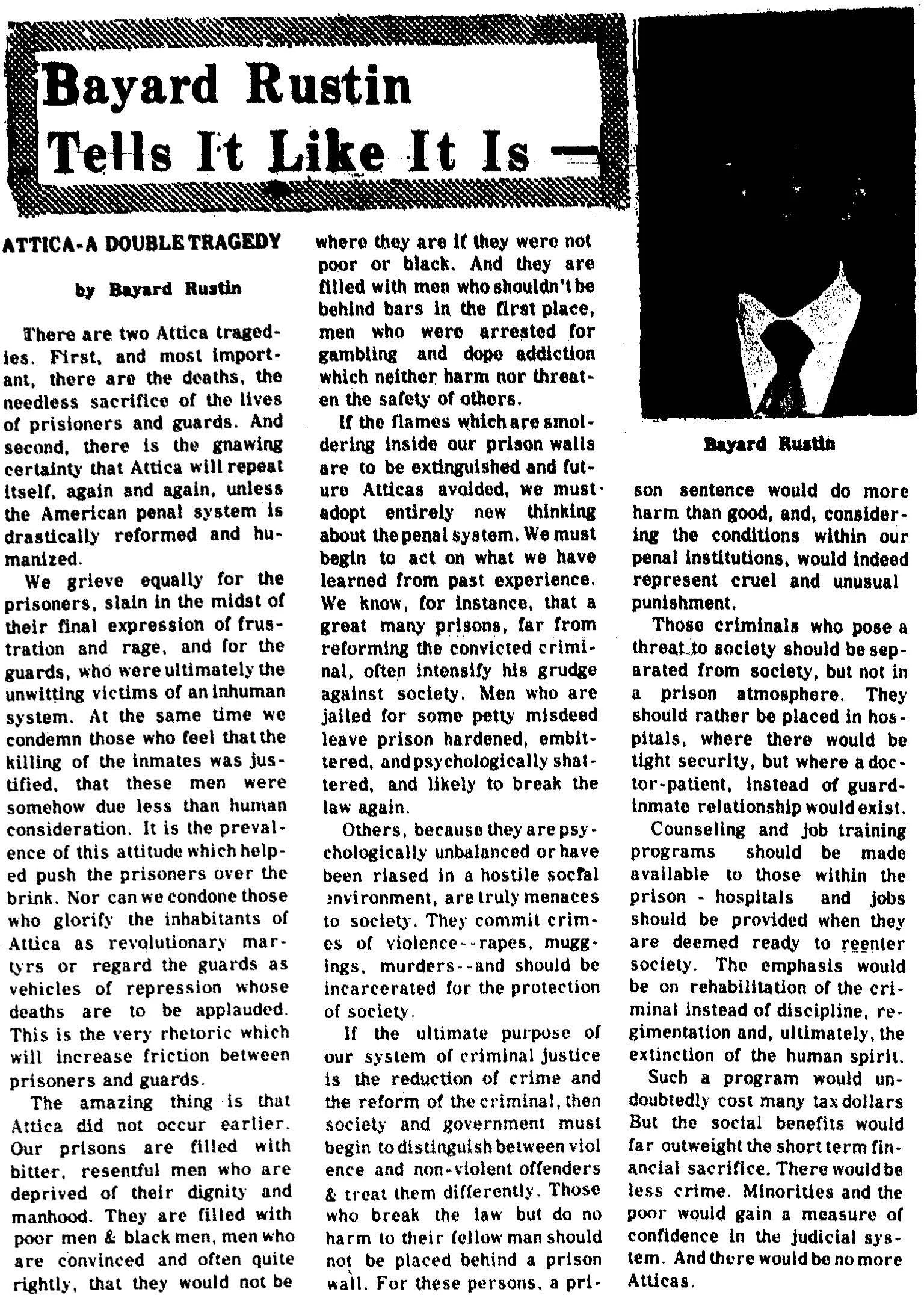
Rustin, Bayard. "Bayard Rustin Tells It Like It Is: Attica—A Double Tragedy." The St. Louis American, September 30, 1971, p. 6.
