Image

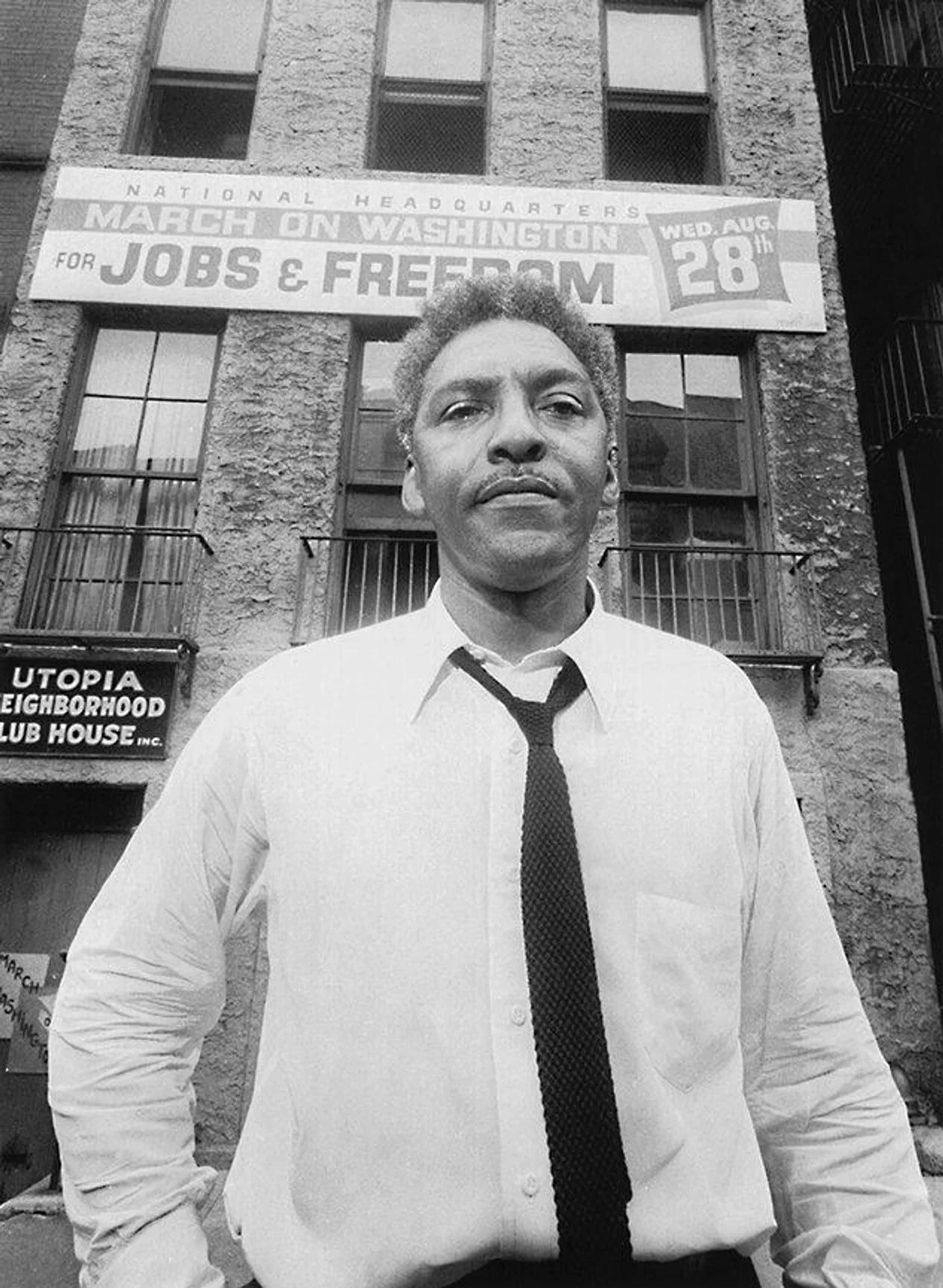
With the March on Washington Less Than a Month Away, Rustin Poses in Front of the National Headquarters Office (August 1, 1963)

Bayard Rustin stands outside the National Headquarters for the March on Washington for Jobs and Freedom, located on West 130th Street in New York City, just weeks before the historic demonstration. The iconic headquarters sign looms overhead, signaling the urgency and scale of preparations underway for one of the most pivotal events in American civil rights history.

This moment documents the relentless groundwork of movement organizing that preceded the landmark demonstration on August 28, 1963. At this time, Rustin and fellow strategists worked from New York’s Harlem—far from the spotlight—to coordinate transportation, logistics, and coalition-building for a multi-racial march with unprecedented scope. Behind the scenes, Rustin navigated deep tensions within the civil rights movement, including doubts about his visibility due to homophobia and red-baiting, as well as skepticism from activists who questioned whether mainstream, nonviolent organizing could confront entrenched Southern resistance. The image stands as testament to the labor, negotiation, and resilience required to transform a local mobilization hub into the strategic nerve center of one of the largest mass protests in U.S. history.

Advocate.com Editors. 2023. “Bayard Rustin’s Life and Civil Rights Legacy in Photos.” Advocate.Com, November 17, 2023. https://www.advocate.com/slideshow/2019/1/21/bayard-rustins-life-and-civil-rights-legacy-photos#rebelltitem3.
Bayard Rustin Explains March on Washington Route with Map, August 1963

Bayard Rustin displays and explains a detailed map of the March on Washington route, addressing logistical and strategic planning to organizers and media ahead of the historic event.

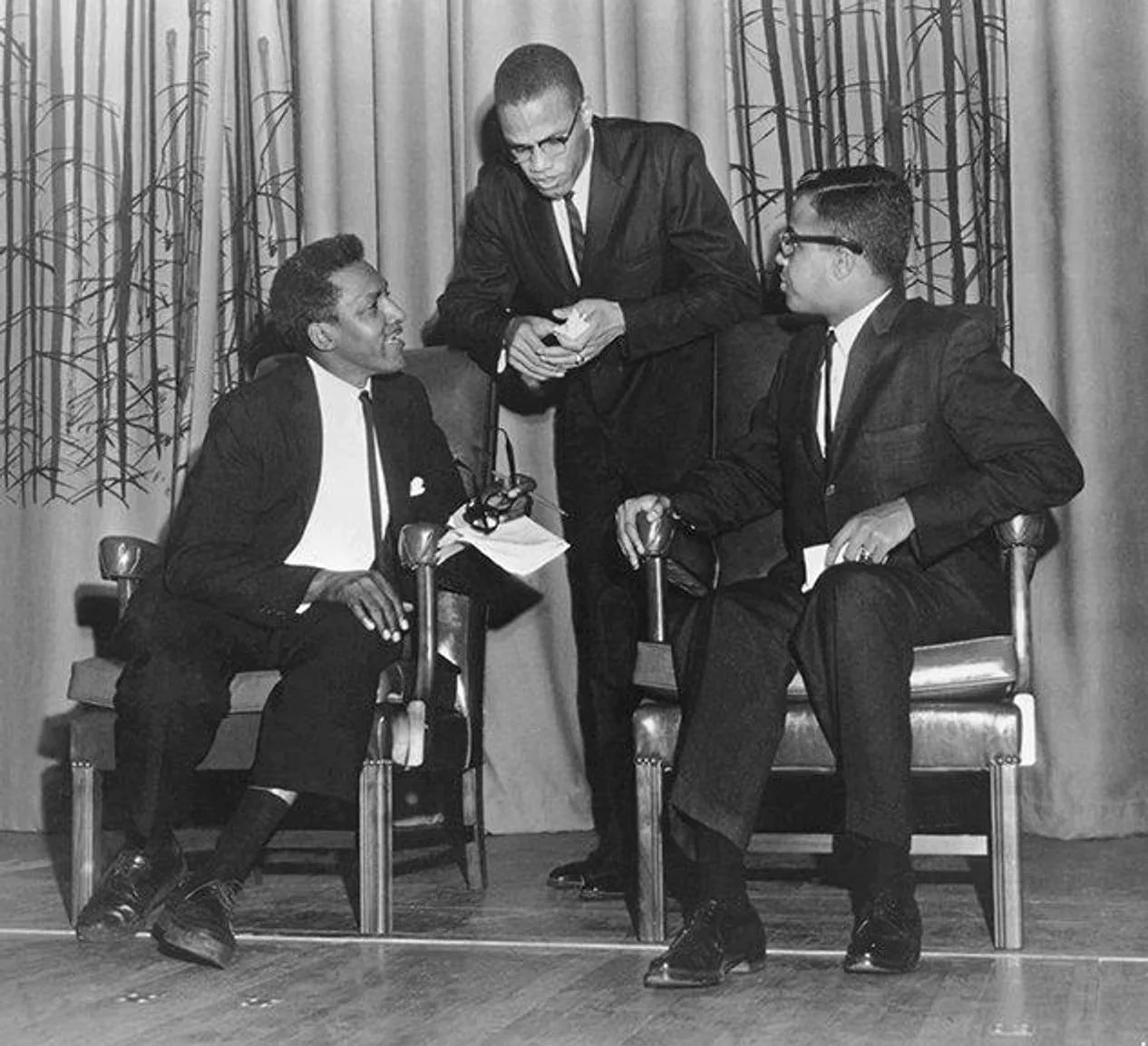
Taking a Break with Malcolm X and Michael R. Winston at Howard University, 1961.

*Please note: The exact date of this photograph is unknown.

Bayard Rustin sits to the left alongside Malcolm X, who stands in the center, and debate moderator Michael R. Winston at Howard University. This photograph captures a moment during a pivotal 1961 event where these prominent figures engaged in dialogue connecting the struggles for civil rights and Black empowerment in America.

In October 1961, Howard University hosted a significant debate featuring Bayard Rustin and Malcolm X, moderated by Michael R. Winston, a noted historian and administrator. The gathering symbolized a meeting of two towering leaders—Rustin, renowned for his advocacy of nonviolent resistance, and Malcolm X, a champion of Black self-determination and direct action. Their exchange reflected divergent philosophies in the movement, fostering intense discussion on the future of social justice strategies in the United States.


Advocate.com Editors. 2023. “Bayard Rustin’s Life and Civil Rights Legacy in Photos.” Advocate.Com, November 17, 2023. https://www.advocate.com/slideshow/2019/1/21/bayard-rustins-life-and-civil-rights-legacy-photos#rebelltitem3.

Bayard Rustin at the Forefront of Anti-Segregation Organizing, 1950s

Rustin sits before a striking sign that reads "Jim Crow Can't Teach Democracy," encapsulating the spirit of his grassroots campaigns to expose and dismantle segregation in American society. The placard signals both protest and political messaging, emblematic of Rustin’s commitment to challenging the hypocrisy of racial discrimination in a nation founded on democratic principles.

Bayard Rustin Travels to India to Study Gandhian Principles, Meets Indian Prime Minister Nehru

Bayard Rustin sits with Indian Prime Minister Jawaharlal Nehru and other officials during a gathering at the All India Congress Party. This historic meeting occurred during Rustin's pivotal journey to India to study Gandhian principles of nonviolent resistance.

Strings of Defiance: Bayard Rustin and the Lute in Prison, 1947

Bayard Rustin is pictured with a lute he taught himself to play while imprisoned for his refusal to serve in the military during World War II. Despite the challenges of incarceration, Rustin used music to maintain morale and resist the oppressive conditions of a racially segregated prison system. His time in prison was marked by persistent activism against segregation and injustice within the prison walls.

The Wilberforce Quartet, 1933

This photograph shows Bayard Rustin at the far right in the Wilberforce Quartet, capturing one of the early moments of his public life during his college years. The image underscores Rustin’s formative engagement with African American cultural and intellectual communities at Wilberforce University, a historically Black university known for cultivating leaders committed to social justice and civil rights.