
Description
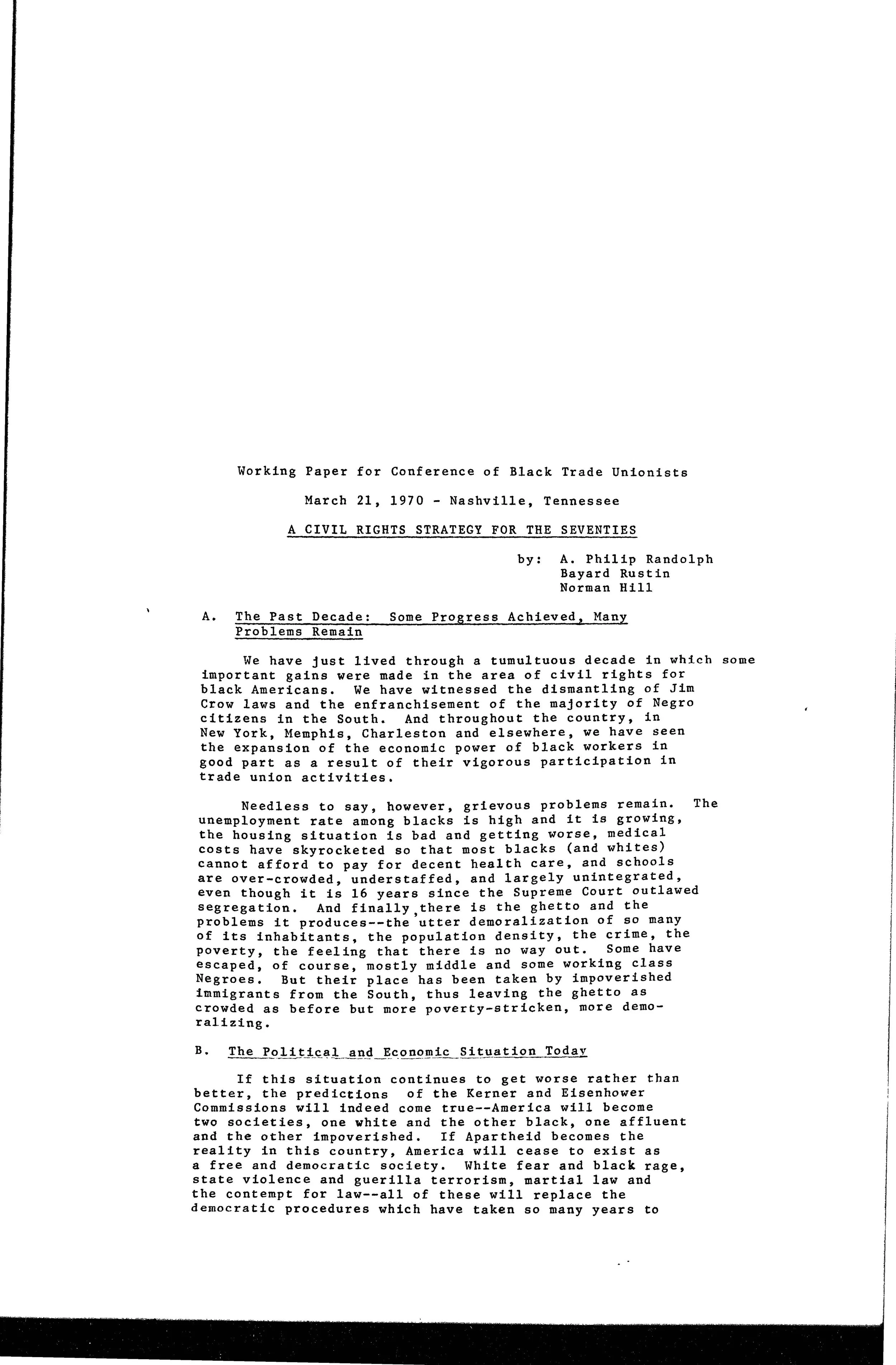
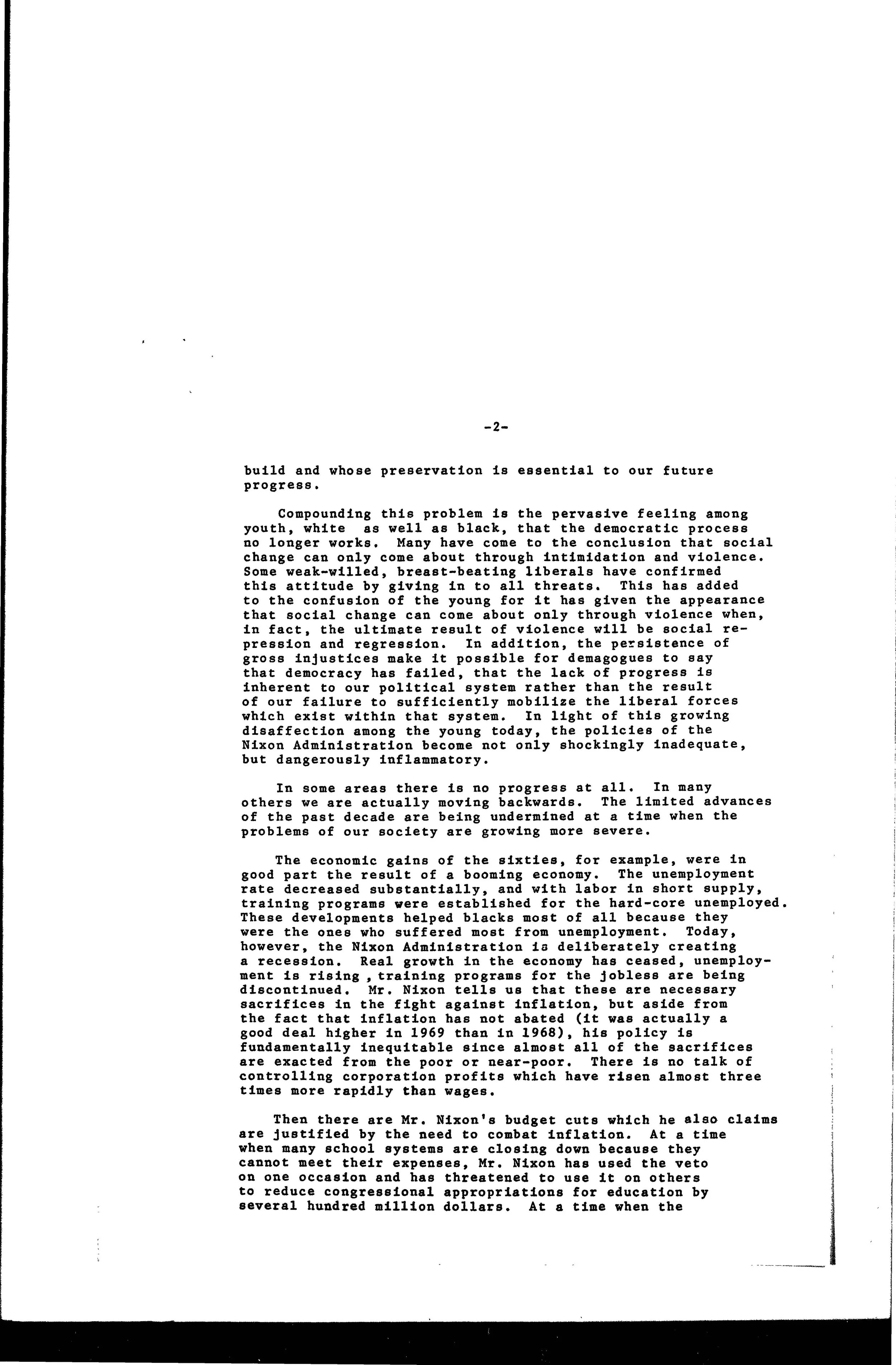
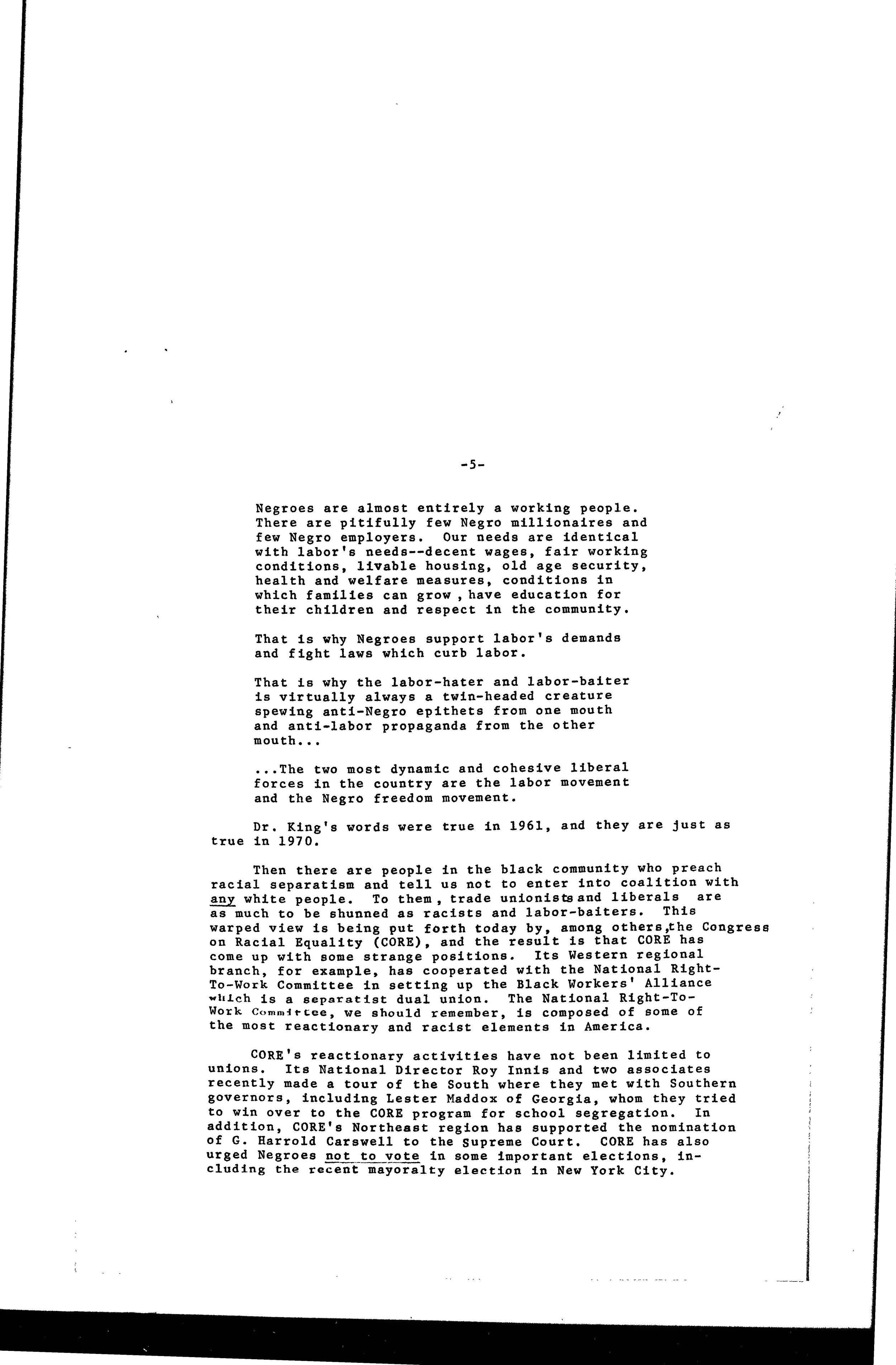
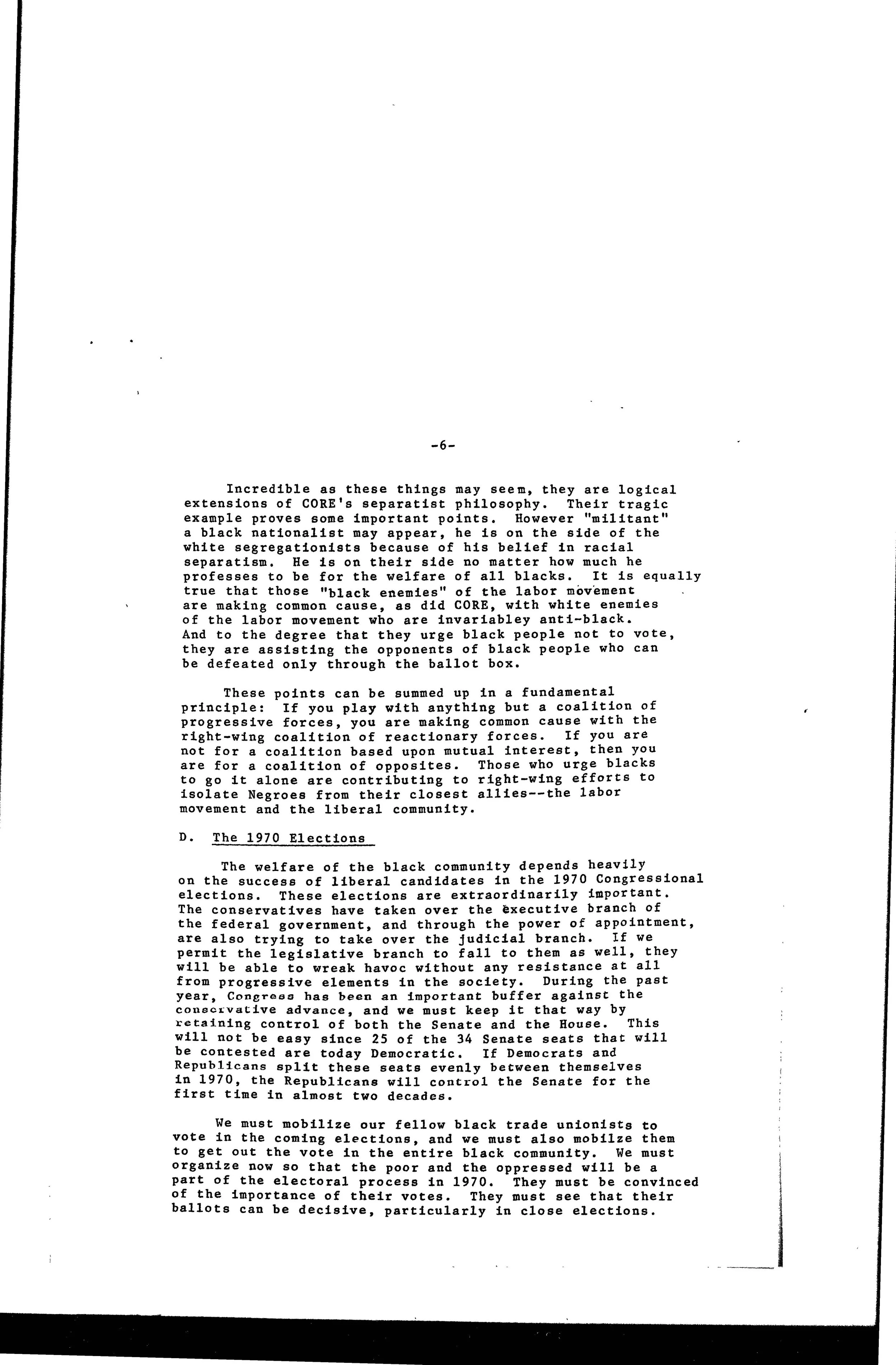
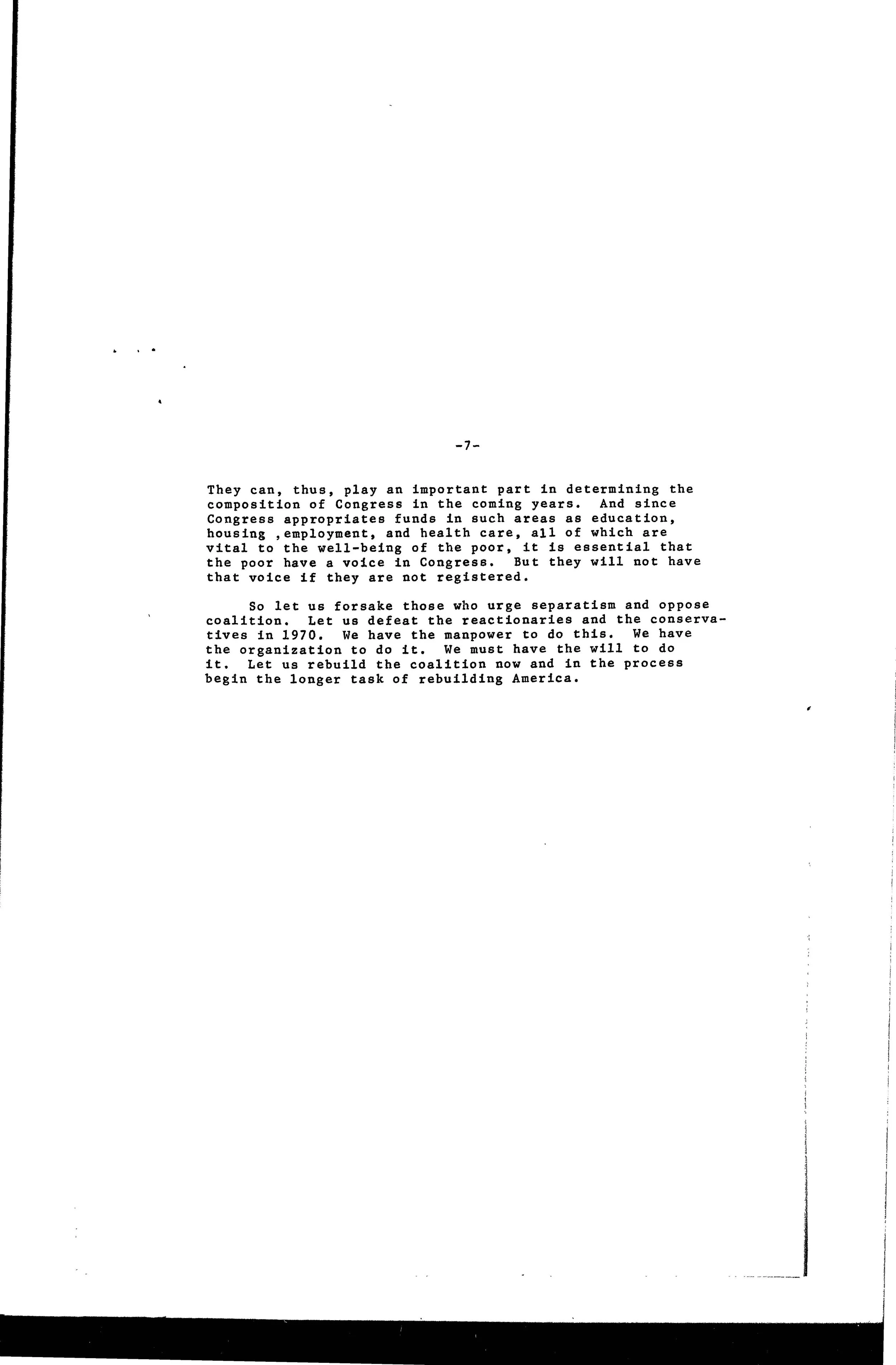
In this working paper prepared for the Conference of Black Trade Unionists in Nashville, Tennessee, A. Philip Randolph, Bayard Rustin, and Norman Hill argue that the civil rights victories of the 1960s remain incomplete and vulnerable. Written for the Conference of Black Trade Unionists in Nashville, the paper acknowledges the dismantling of Jim Crow laws, expanded Southern Black voting, and gains achieved through labor organizing in cities including Memphis and Charleston. It then names the conditions that legal reform has not removed: rising unemployment, inadequate housing, unaffordable medical care, overcrowded schools, and persistent segregation. The authors accuse President Richard Nixon’s administration of placing the burden of fighting inflation on poor and working people through policies that restrict growth, employment, education spending, and construction. They also warn that Nixon’s Southern strategy and judicial appointments threaten school integration and voting rights. Their criticism connects economic retrenchment with the danger of deeper racial division and political repression.
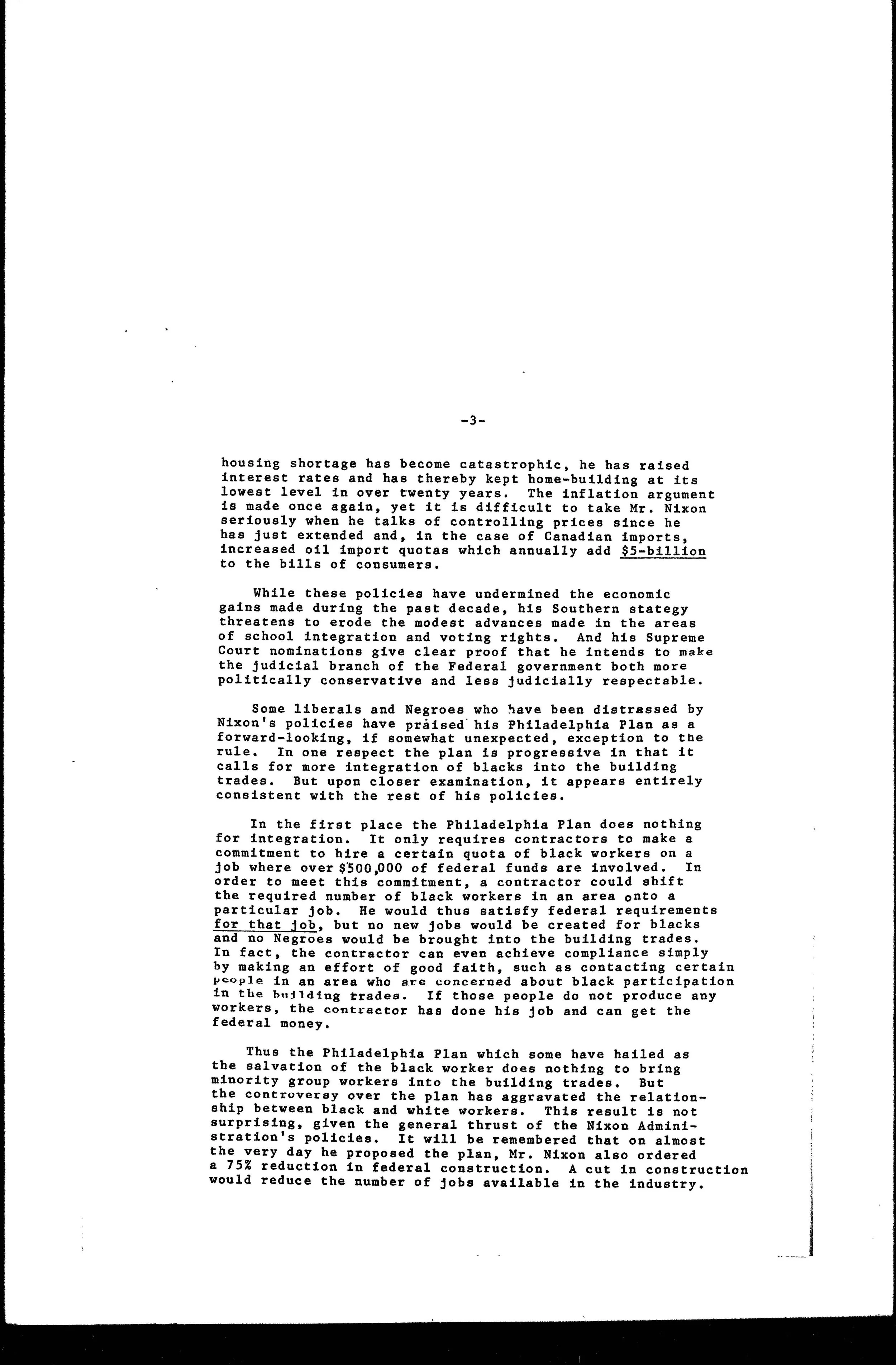
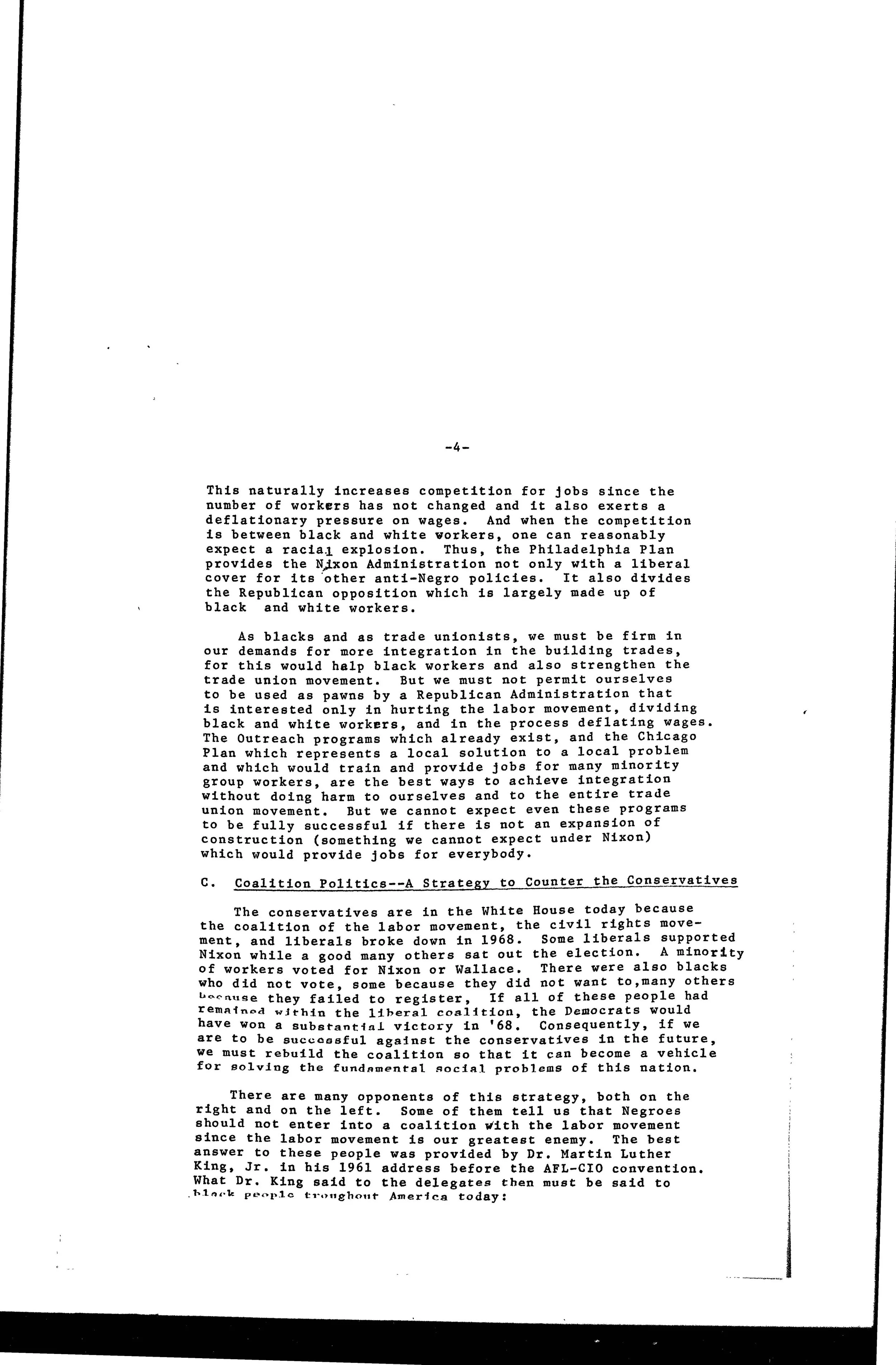
The authors give particular attention to the Philadelphia Plan, a federal construction-hiring initiative intended to increase minority employment. They argue that contractors can satisfy its requirements by moving existing Black workers between projects or demonstrating good-faith recruitment without creating new opportunities. They contend that reduced federal construction makes the resulting competition for scarce jobs more divisive. As alternatives, they favor apprenticeship Outreach programs and the Chicago Plan, emphasizing training, employment, and expanded construction rather than compliance alone. The paper then calls for rebuilding the labor–civil rights–liberal coalition that fractured in the 1968 election. It sharply criticizes the Congress of Racial Equality under national director Roy Innis for separatist positions and alleged cooperation with anti-union forces. Its operational demand is voter registration and turnout: Black trade unionists should organize fellow workers and the wider Black community for the 1970 congressional elections because Congress controls funding for housing, education, employment, and health care.
Historical Context
The March 21, 1970 Nashville conference took place during an active struggle over minority access to construction employment. In the summer of 1969, protests against discriminatory hiring had shut down construction projects in major cities, placing pressure on contractors, unions, and the federal government. That September, the Nixon administration implemented the revised Philadelphia Plan, requiring covered contractors to establish minority-employment goals and make good-faith efforts to meet them. In February 1970, the Labor Department announced that it would extend the approach to other cities unless they developed their own procedures for ending construction-industry discrimination. Randolph, Rustin, and Hill were therefore preparing a response to a policy being expanded at that very moment—not merely expressing a general position on affirmative action. Their concern was whether federal hiring requirements would produce training and additional employment or deepen conflict between workers competing for limited jobs.
The conference also met while President Nixon’s nomination of federal appeals judge G. Harrold Carswell to the Supreme Court remained before the Senate. Nominated on January 19, Carswell faced opposition over his record, including past support for racial segregation; his eventual rejection on April 8 had not yet occurred when the paper was prepared. Alongside this judicial struggle, the authors confronted administration policies they believed were reducing employment and public investment, as well as divisions over racial separatism within civil rights organizing. The approaching November congressional elections gave the Nashville meeting a concrete purpose: mobilizing Black trade unionists to register voters and protect congressional support for education, housing, health care, and jobs. With executive policy already moving against their priorities and the Court’s direction in dispute, they treated Congress as an institution whose composition could determine whether further economic and civil rights gains remained possible.
Randolph, A. Philip, Bayard Rustin, and Norman Hill. "A Civil Rights Strategy for the Seventies." Working Paper for the Conference of Black Trade Unionists, Nashville, Tennessee, March 21, 1970. New York: A. Philip Randolph Educational Fund, 1970.
