Description
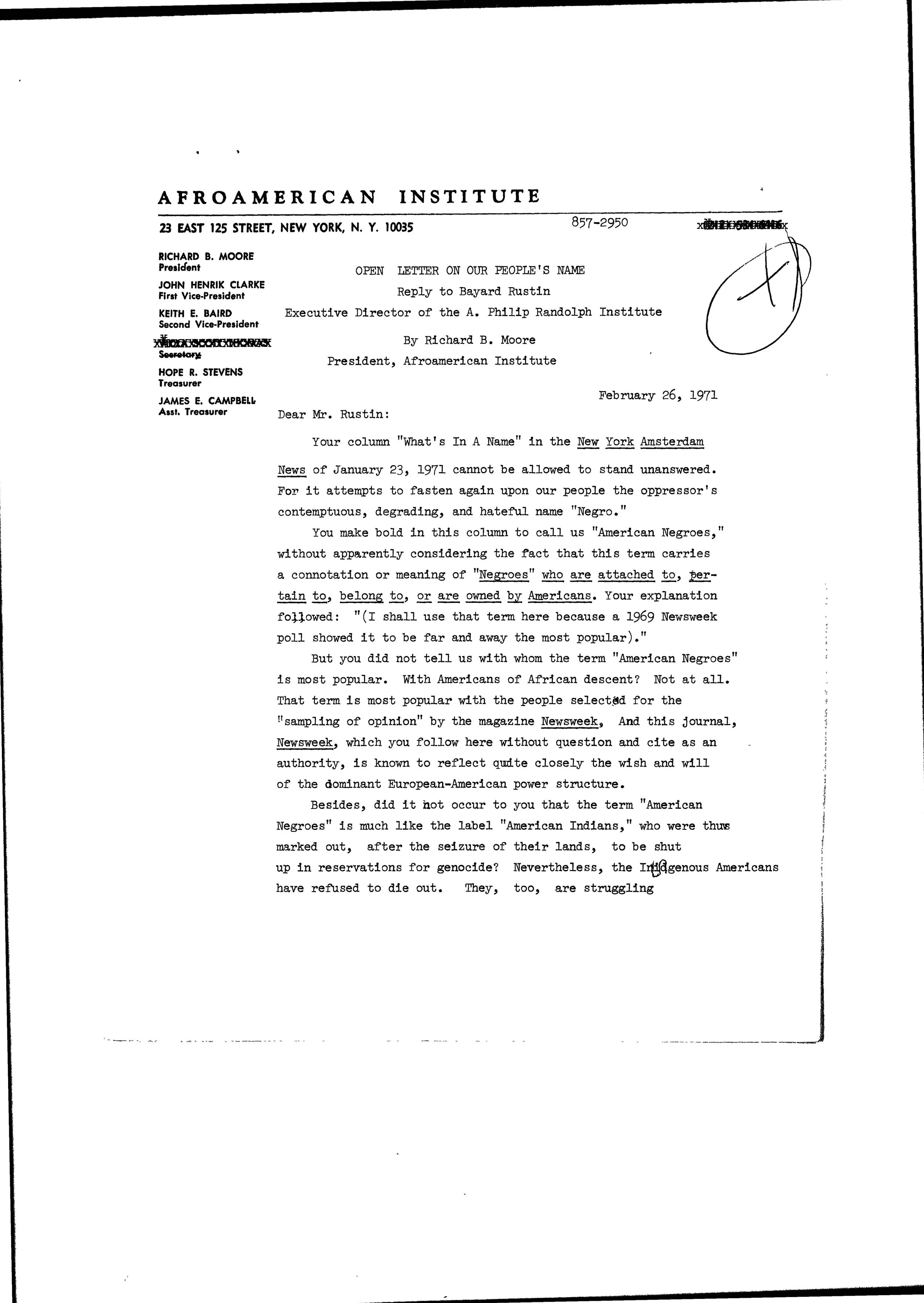
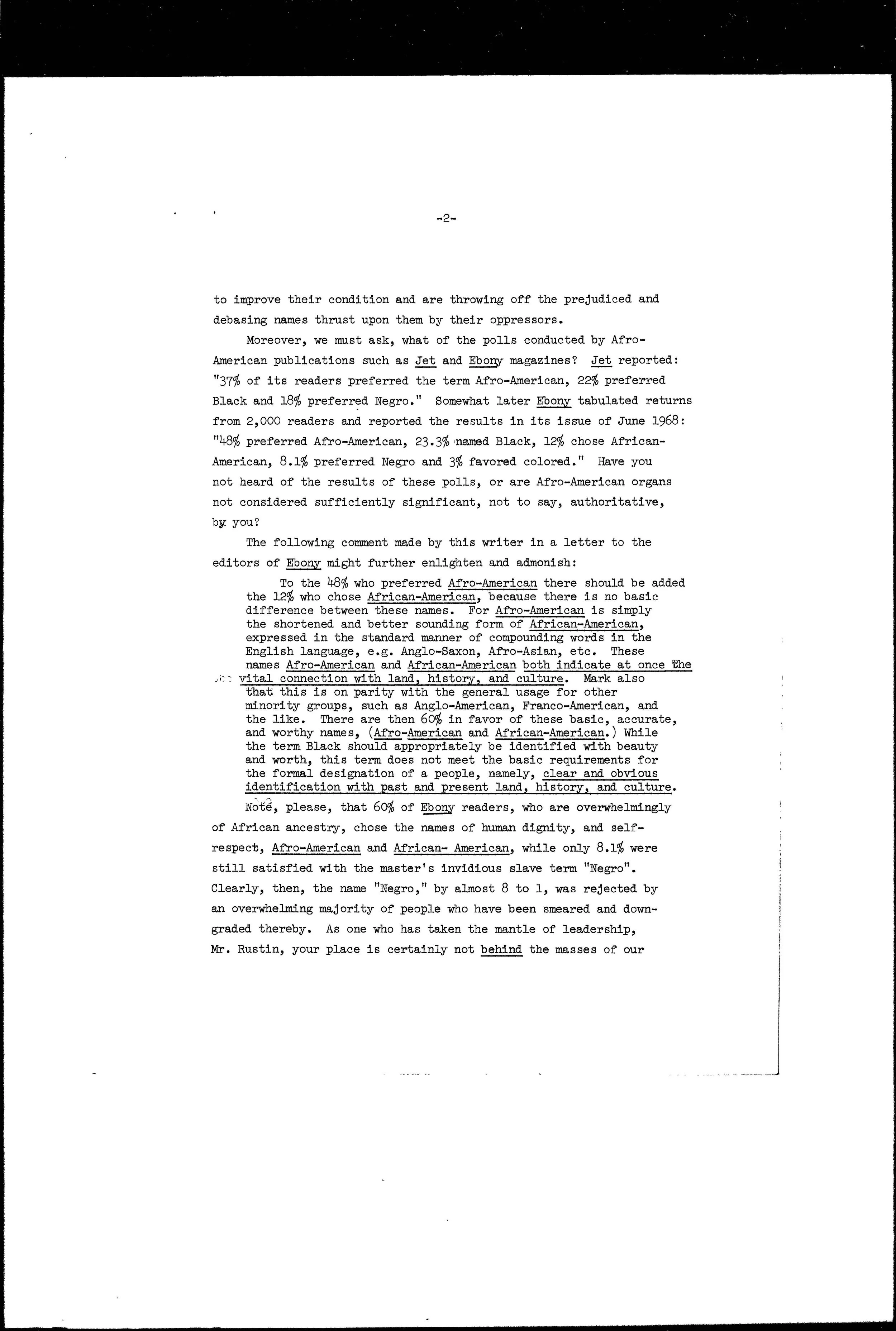
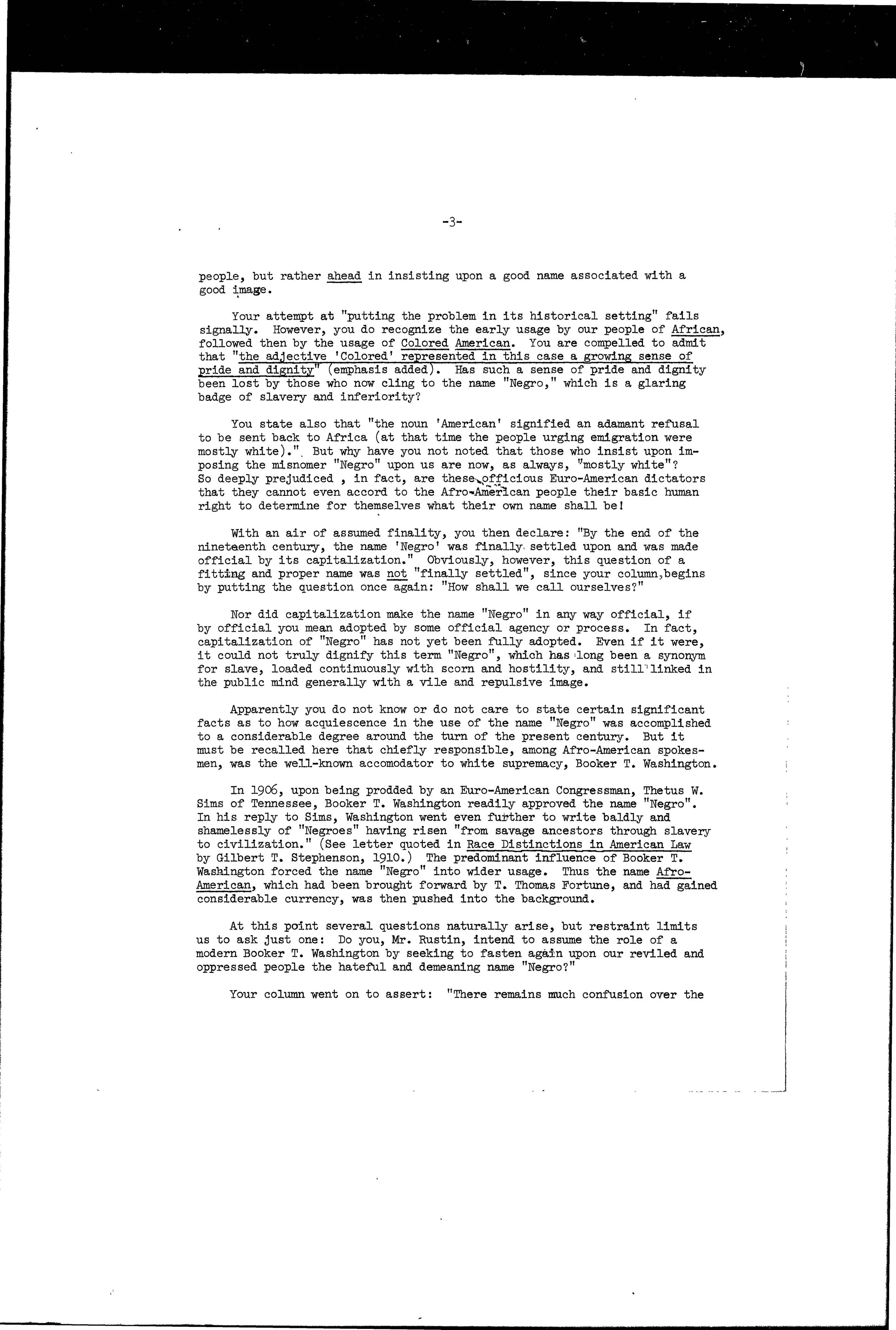
This eight-page open letter from Richard B. Moore, President of the Afroamerican Institute, serves as a direct and scholarly challenge to Bayard Rustin’s defense of the term "Negro." Moore responds to Rustin’s column "What’s In A Name," published in the New York Amsterdam News, where Rustin had argued that the push to adopt "Afro-American" or "Black" was a symbolic distraction from the material struggle for economic parity. Moore offers a naked historical critique, labeling the term "Negro" a badge of slavery and a "linguistic chain" that maintains a psychological connection to a colonized past. He maintains that for the Afro-American people, the utility of politics must include the right to self-determination in nomenclature, asserting that a name is not a slogan but a foundational act of human dignity.
The correspondence highlights the deep-seated ideological friction within the movement’s professional leadership. Moore accuses Rustin of a sterile adherence to traditionalism and argues that Rustin’s integrationist blueprint fails to account for the necessary psychological revolution required for true liberation. While Rustin viewed the shift in language as a retreat into mythology, Moore’s letter documents a growing scholarly consensus that linguistic identity was a essential partner to political and economic power. This document captures the moment when the interracial majority strategy was being fractured by internal debates over the cultural soul of the struggle.
Historical Context
Written in early 1971, this letter reflects the enduring disappointment of many radical intellectuals with the perceived stagnation of the post-1965 civil rights old guard. It documents the transition from the "Negro" era of the 1950s and 60s to the "Black Power" and "Afro-American" identity of the 1970s. Rustin, the architect of the 1963 March, was increasingly seen by figures like Moore as out of step with the burgeoning consciousness of the youth and the urban underclass. This document is a vital record of the intellectual stamina required to debate the very definitions of race and identity during a period of revolutionary transition.
The strategic tension here demonstrates that Rustin’s "Protest to Politics" evolution was not universally accepted as the definitive path forward. It reveals the role of Richard B. Moore, whose Afroamerican Institute provided a scholarly counter-blueprint to Rustin’s class-based universalism. Ultimately, the document serves as a record of a critical crossroads in Black political history, where the fight for material resources (Rustin’s focus) clashed with the fight for cultural and historical visibility (Moore’s focus).
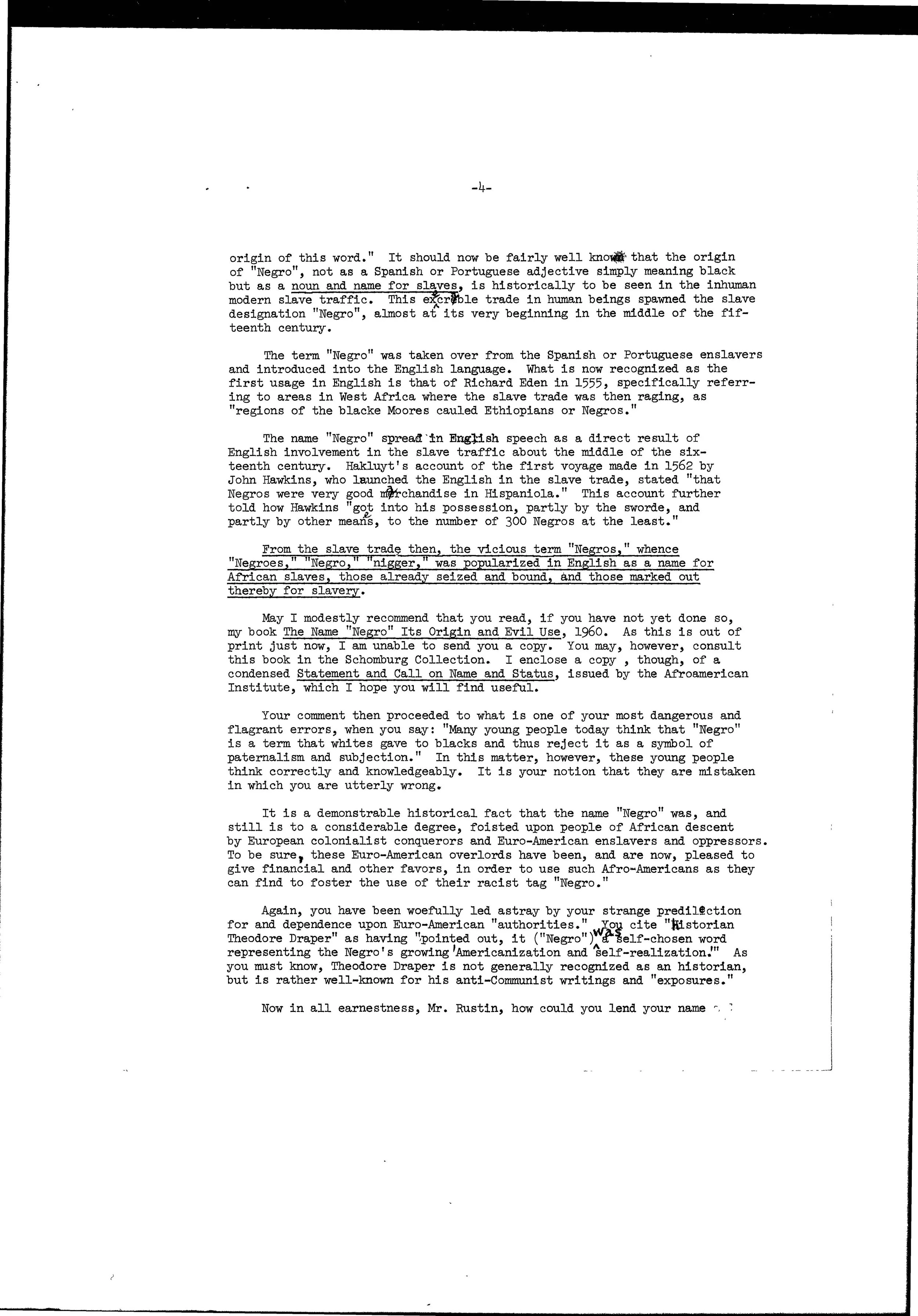
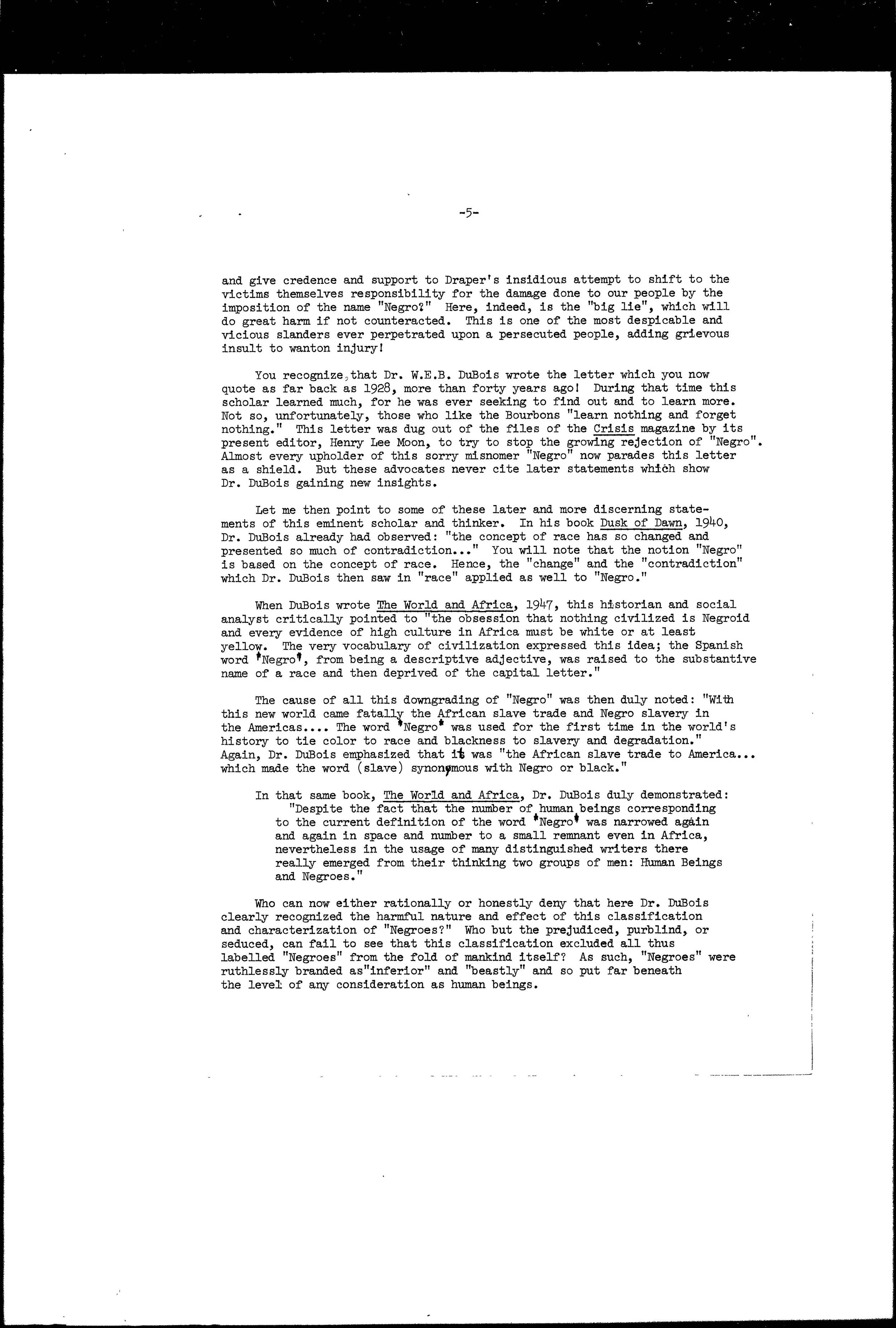
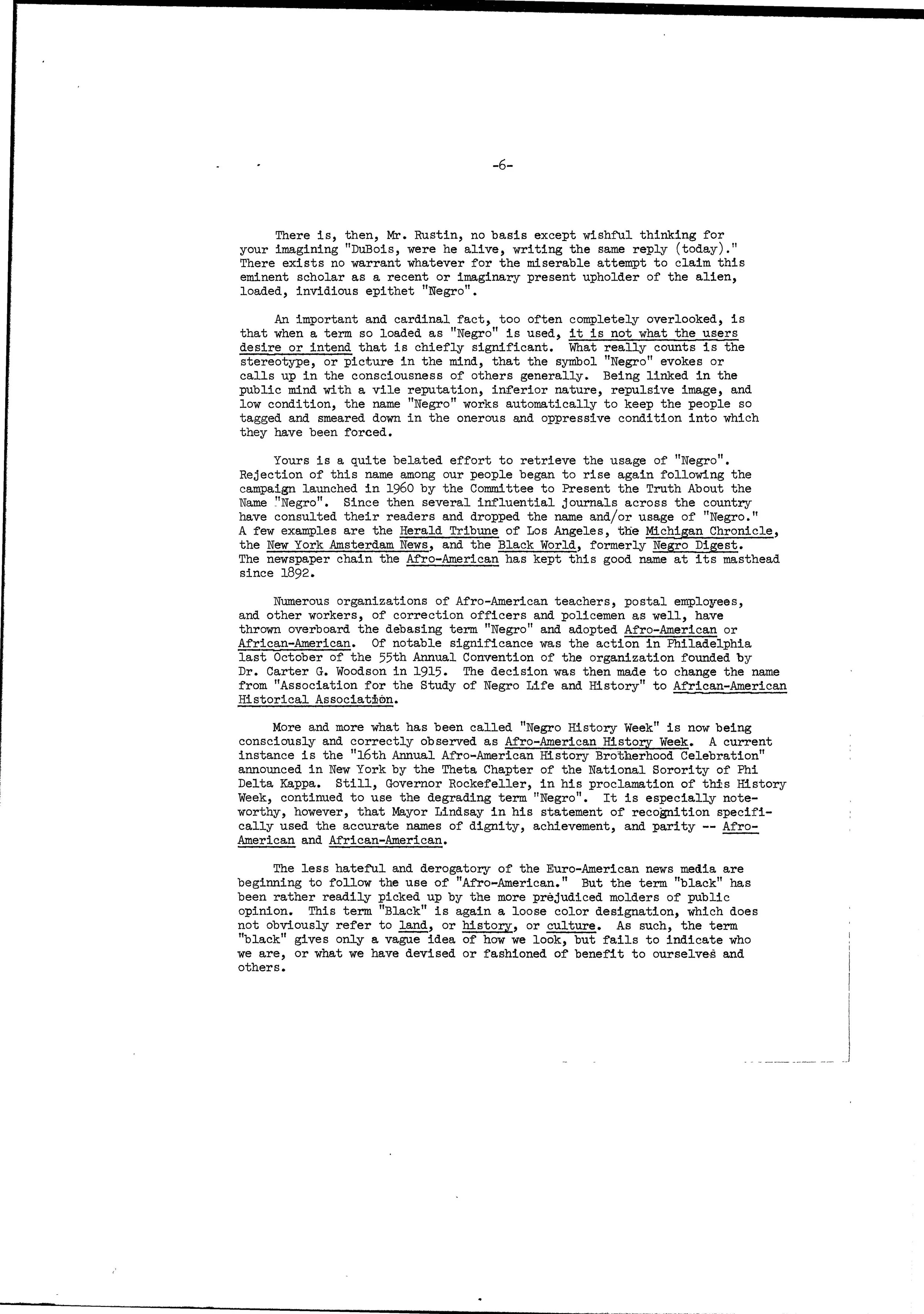
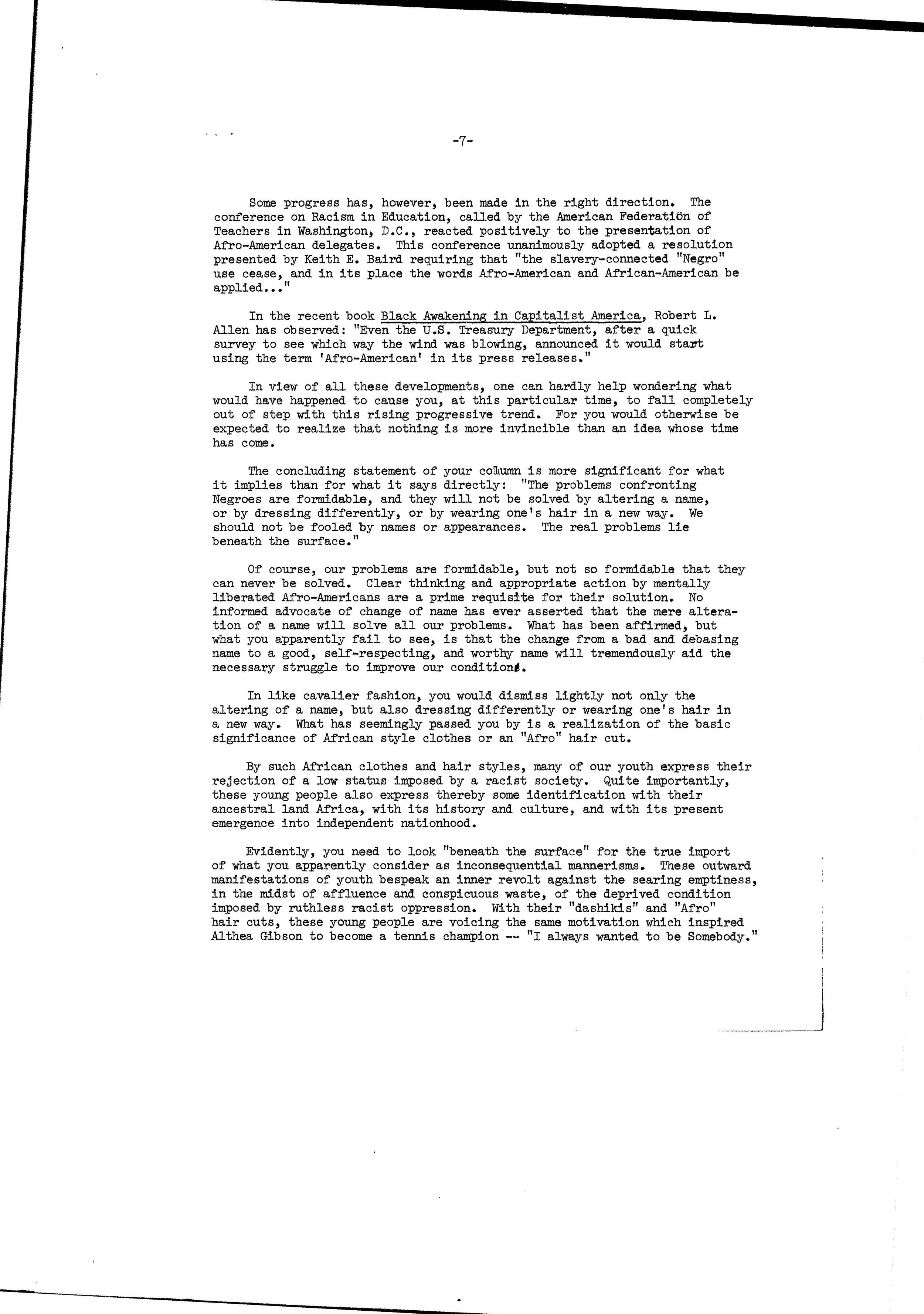
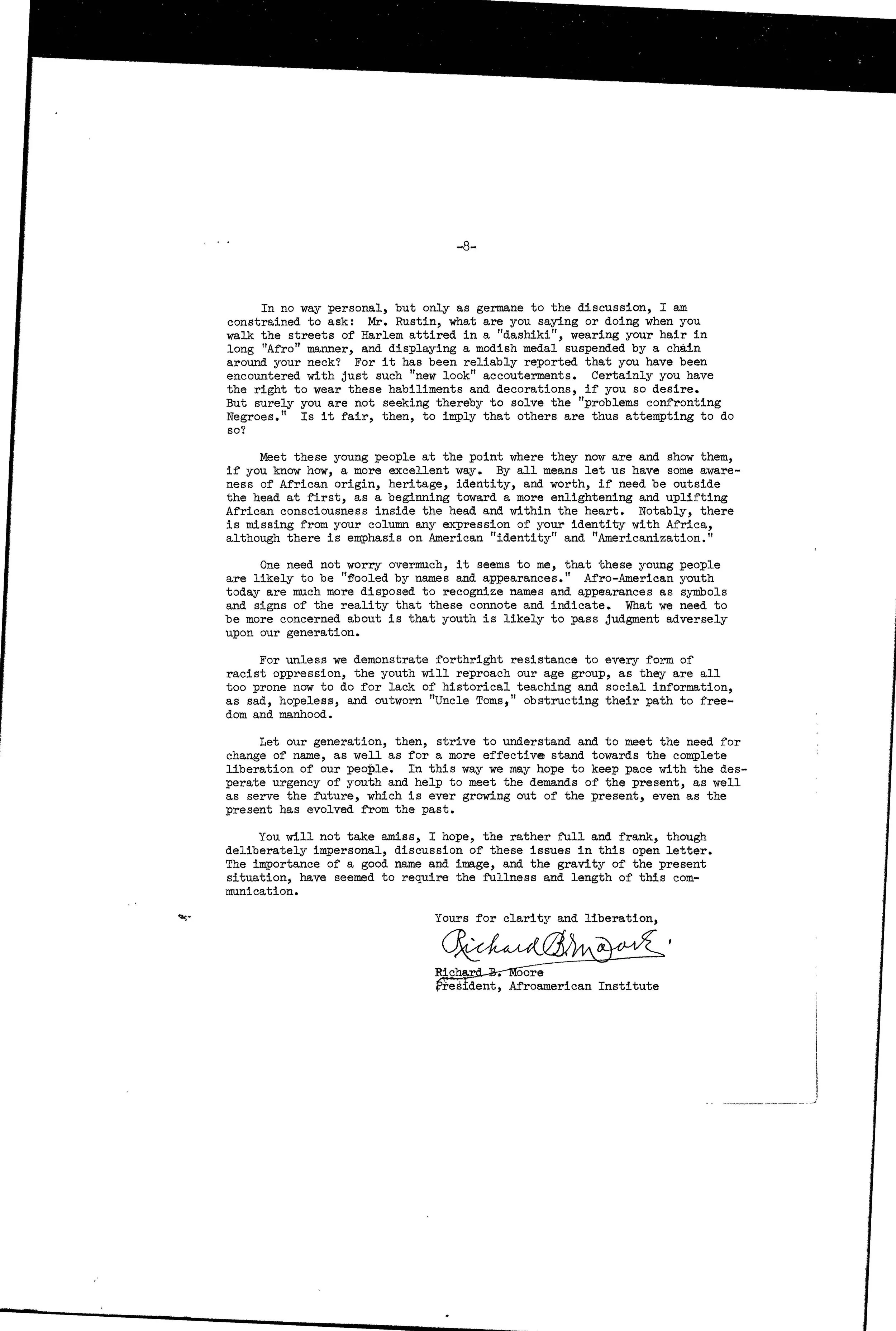
Moore, Richard B. "Open Letter to Bayard Rustin: Our People's Name." Correspondence, February 26, 1971. Bayard Rustin Papers, General Correspondence.
